This post contains affiliate links. If you make a purchase through these links, I can earn a commission at no extra cost to you. Thank you!
My one day in Faro came at the very end of a longer Portugal trip. After four nights in Porto, three in Lisbon, and three in Lagos, Faro was the final stop. The decision was partly practical. An early flight out of Faro Airport made staying in Lagos one more night unrealistic, so spending one night in Faro made more sense.
That timing turned out to be ideal. Faro gave me a slower, more grounded way to end the trip. The pace is calmer than Lagos and far removed from the energy of Lisbon or Porto.
With just one night and one full day, the city never felt rushed or overwhelming. The city is compact, walkable, and straightforward to navigate, making it an easy stop within a Portugal itinerary.
Even though my reason for spending a day in Faro was to make the logistics of getting to the airport easier, I was pleasantly surprised by how much I enjoyed it here. Faro is definitely worth visiting if you have the time, especially if you are flying in or out of Faro Airport.
Table of Contents
Getting Oriented: Faro, Portugal
Faro is in the southern tip of Portugal. By train, bus, or car, It’s about 3 hours south of Lisbon.
Faro is the capital of the Algarve region, although it feels noticeably smaller and calmer than other Portuguese cities. Its location along the Ria Formosa lagoon shapes both the landscape and daily life.
The city center, marina, Old Town (Cidade Velha), train station, and main sights sit within a compact area. I was able to explore Faro comfortably on foot in one day without needing public transport or a car.
Faro has been continuously inhabited since Roman times, later shaped by Moorish rule before becoming part of the Kingdom of Portugal in the 13th century. These layers of history are still visible in the street layout, city walls, and religious buildings.
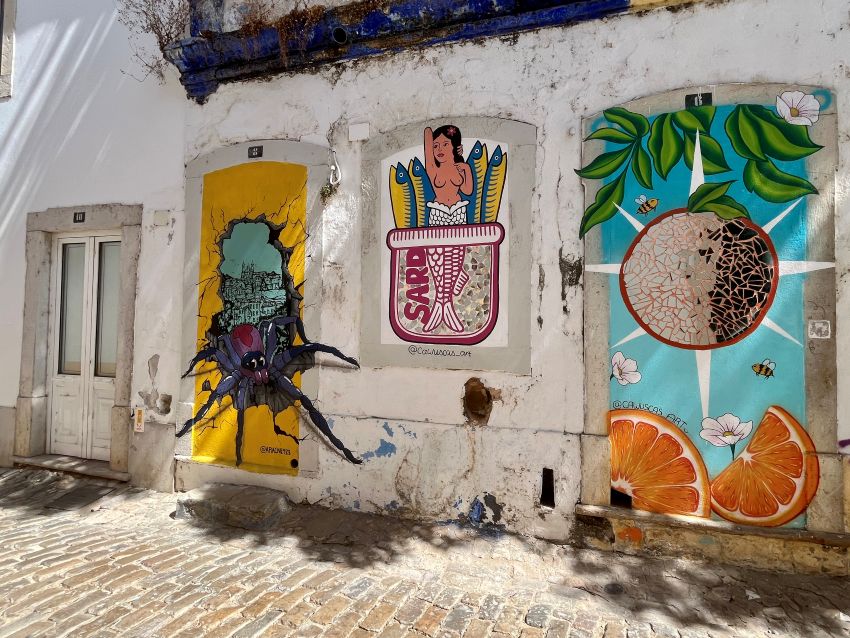
Street art in Faro
What to See in Faro
Faro has a surprising number of interesting spots to see, even if you only have a day. I’m sure there’s more to discover than what I have listed here, but for me, it was all about taking it at an easy pace.
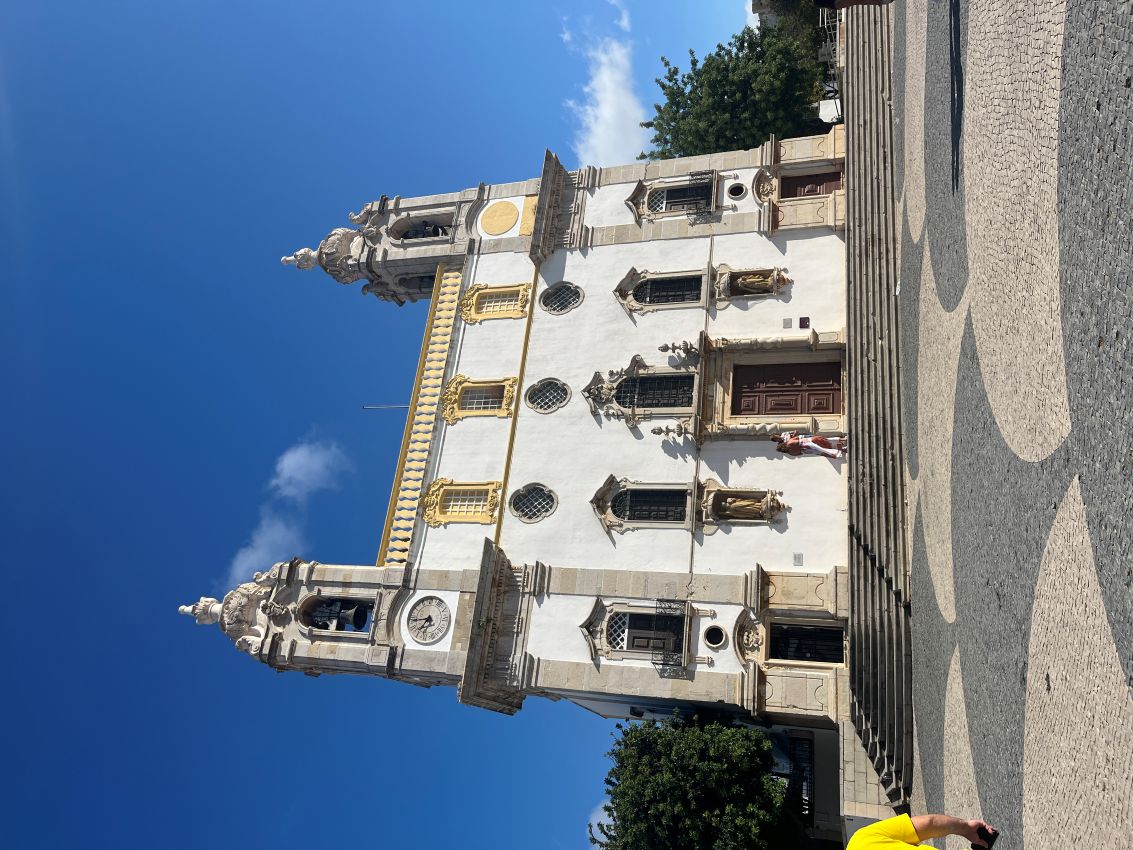
Carmo Church and Capela dos Ossos (Chapel of Bones)
Yup, you read that correctly – BONES!
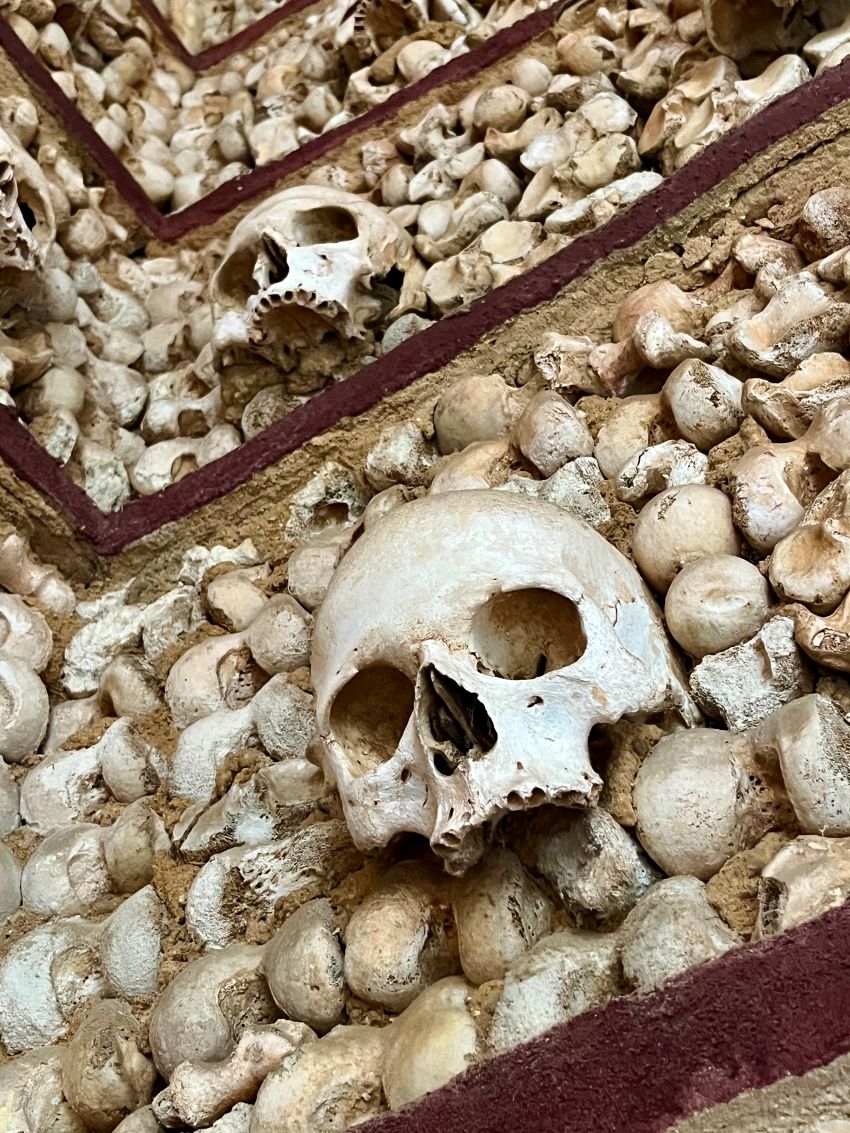
The Capela dos Ossos is one of Faro’s most unusual and striking sights—so unique that it becomes the reason many people choose to stop in the city.
Inside the Carmo Church, there’s a chapel with the walls and ceilings lined with the bones and skulls of Carmelite monks. The effect is haunting and beautiful at the same time – something you truly have to see to believe.
Plan 20 to 30 minutes for the visit. For more about my visit, check out my Bones Chapel in Faro is Something You Have to See post.
Arco da Vila: The Main Gateway
The Arco da Vila is the main entrance to the Old Town from the marina side. It is one of Faro’s most recognizable landmarks.
From the outside, the arch looks understated. Walk through, and you suddenly find yourself in a quiet square surrounded by historic buildings. Above the arch is a bell tower, and if you look closely, you will see a statue of Saint Thomas Aquinas.
The arch was rebuilt in the early 19th century, incorporating older medieval elements. It is both a literal and symbolic entrance into Faro’s past.
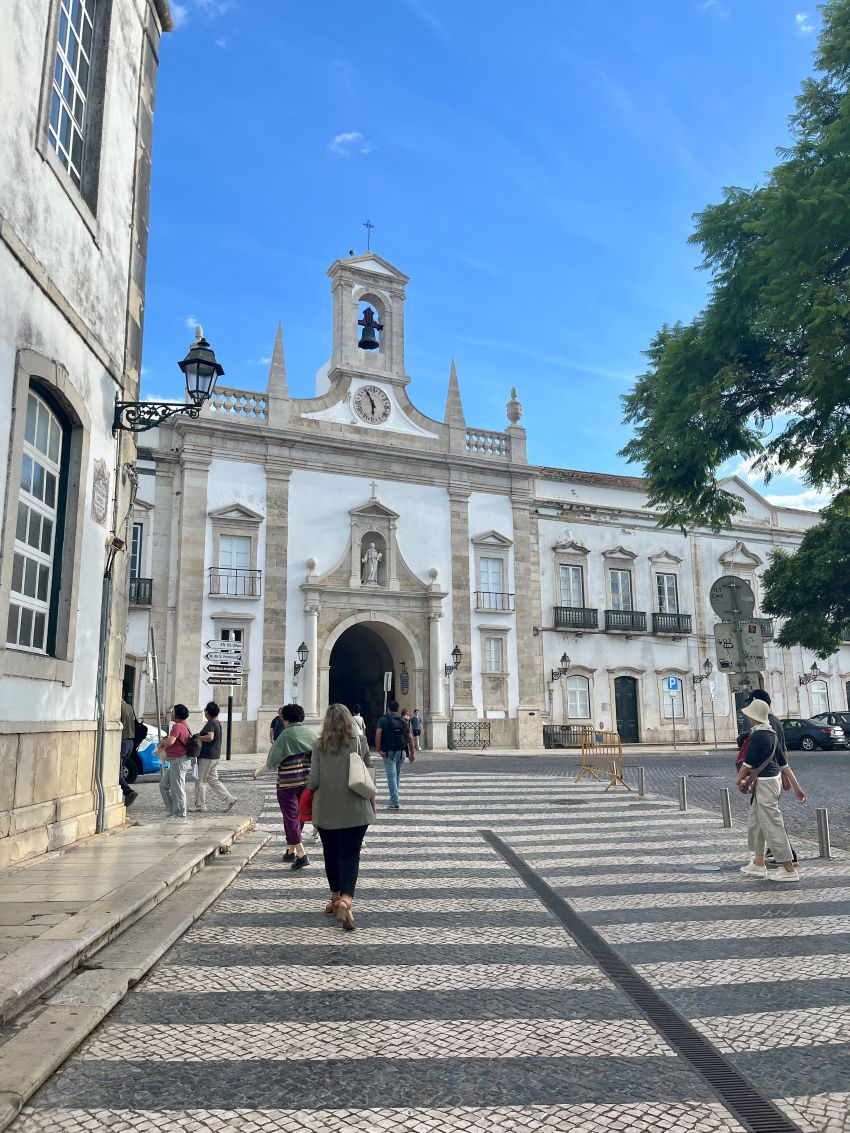
Looking at Arco da Vila from marina
Old Town Faro (Cidade Velha)
Old Town Faro, known as Cidade Velha, is enclosed by historic city walls originally built during Roman occupation and reinforced during Moorish rule. These walls once protected the city from coastal attacks and piracy.
Faro was affected by the 1755 earthquake that hit much of Portugal. Many buildings in the Old Town were damaged and later rebuilt. As a result, the area has a simple and consistent look, with historic charm rather than large or grand monuments.
Allow one to two hours to wander Cidade Velha at an unhurried pace.
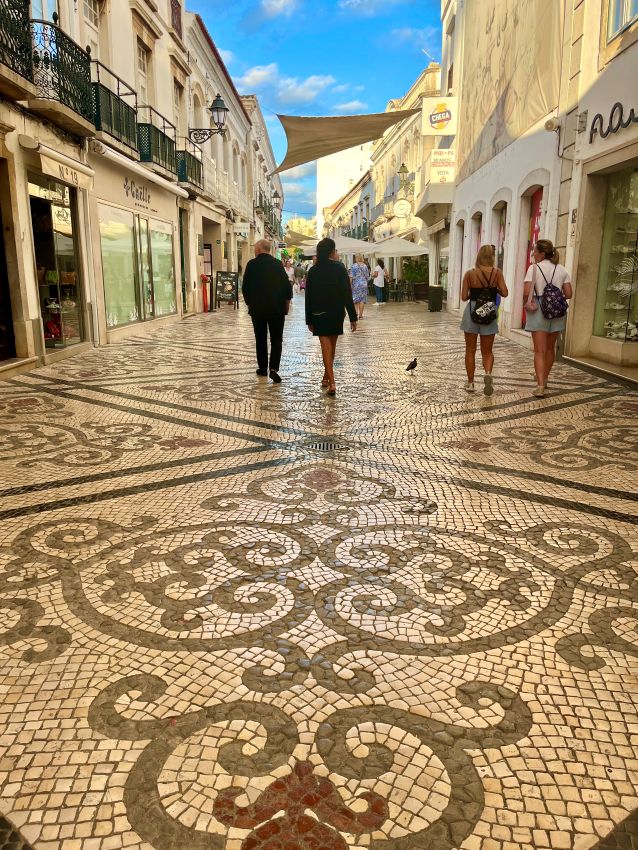
Patterned sidewalk in Faro
The City Walls and Gates
Faro’s city walls are among its most important historic features. Sections date back to Roman times, with later Moorish and medieval reinforcements.
The walls once formed a complete defensive ring around the Old Town. Today, they remain integrated into gardens, paths, and quiet residential edges. It was pretty neat to walk through them thinking about all they’ve been through. If walls could talk, right?
You don’t need a guided tour to explore the walls. Simply follow their curve around Cidade Velha to find multiple viewpoints and shaded walking paths.
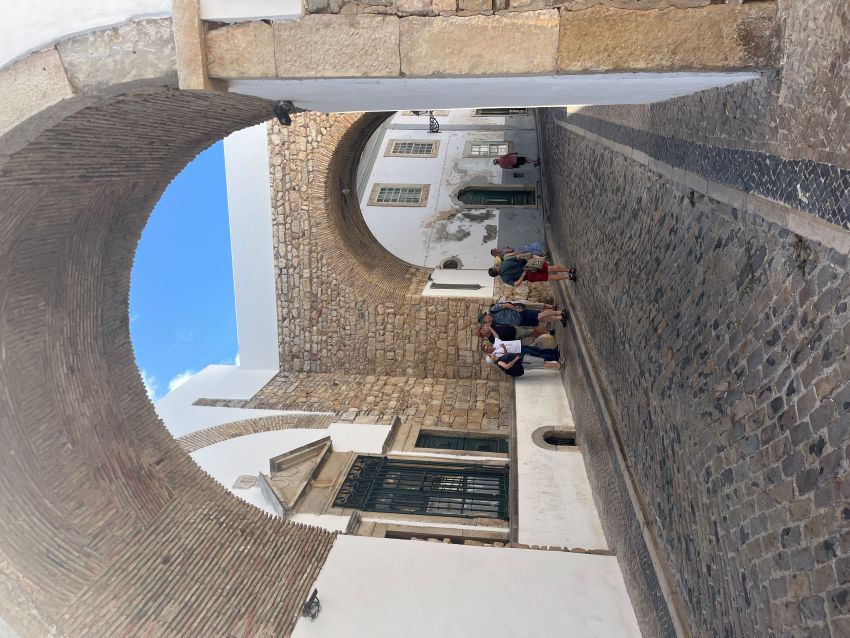
City walls in Faro
Faro Cathedral (Sé de Faro)
The Faro Cathedral sits at the center of the Old Town and dates back to the 13th century. It was built on the site of a former mosque after the Christian reconquest of the city.
Inside, the cathedral you’ll see centuries of changes. Gothic elements sit alongside Renaissance and Baroque additions. Much of the interior was repaired after the 1755 earthquake, resulting in a simpler exterior and a more restrained interior than some of the cathedrals I saw in Porto and Lisbon.
You can climb the bell tower for views over the Old Town rooftops, marina, and Ria Formosa lagoon. Plan about 30 to 45 minutes for a visit, including the tower climb.
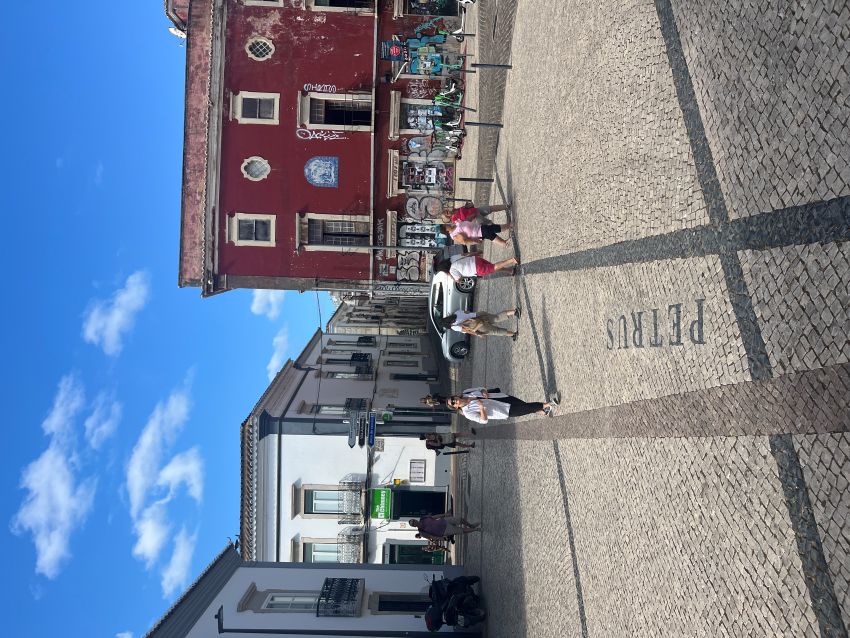
Petrus in sidewalk at St Peters Church in Faro
St. Peter’s Church
Igreja de São Pedro, or St. Peter’s Church, is located just outside the Old Town walls.
Before even stepping inside, look down. The patterned Portuguese pavement in front of the church includes the words Petrus and Ichthys worked into the design. Petrus is Latin for Peter, referencing the apostle the church is dedicated to. Ichthys is an early Christian symbol meaning fish, used by early Christians as a discreet sign of faith.
Inside, the church is richly decorated. Gilded woodwork frames the altar, and blue azulejo tiles line sections of the walls. The contrast between the modest exterior and the ornate interior makes this stop especially worthwhile.
Plan 20 to 30 minutes here. It is a calm, uncrowded visit and a good stop between wandering sections of the city.
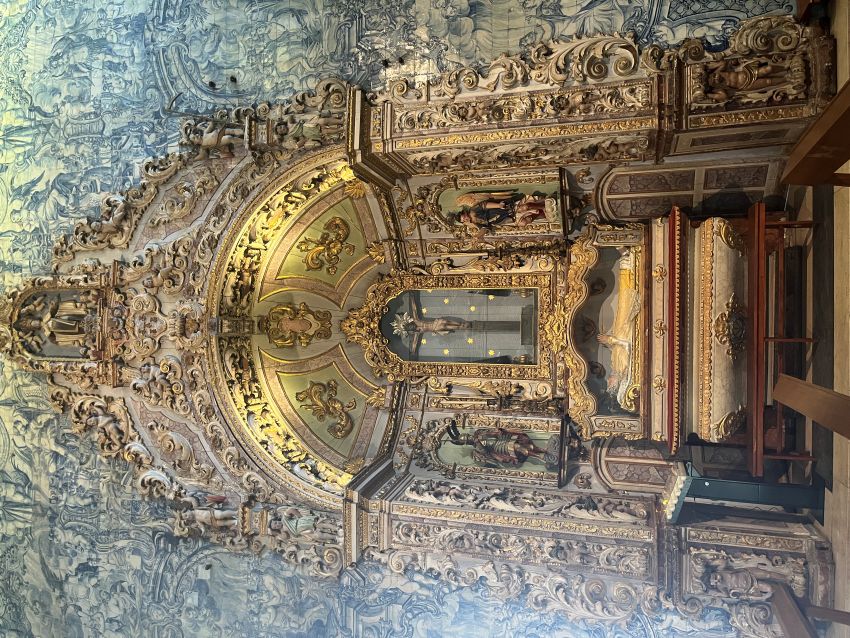
Inside St Peters Church
The Ria Formosa Lagoon and Natural Park
Faro sits alongside the Ria Formosa, a protected lagoon system and natural park stretching along much of the Algarve coast.
If you have spent time in Lagos, the difference is noticeable. Lagos is defined by dramatic cliffs, open ocean, and rugged coastline. The Ria Formosa lagoon is calmer and flatter, with shallow channels, barrier islands, and wetlands instead of rock formations.
Boat tours from Faro explore the Ria Formosa lagoon and nearby islands, including Ilha Deserta. These trips are popular day trips and have a completely different view of the Algarve region.
Even without a boat trip, the lagoon is visible from the marina, cathedral tower, and city walls.

At the marina looking towards the city
Sunset at the Marina (don’t miss this!)
I had been watching sunsets from different viewpoints each night the whole time I’ve been in Portugal so I wasn’t going to stop now. For me, watching the sunset feels like a small reward after a day of navigating a city alone. Whether it’s the culmination of a successful day of exploration or the bright ending to a challenging one, it’s a simple but satisfying win.
Faro’s marina is one of the easiest places in the Algarve to watch the sunset. It doesn’t take any planning or effort.
Walk toward the back of the marina and look for the narrow walkway that leads directly to the water’s edge. People gather informally along the dock, sitting with their feet over the edge and watching the sun drop behind the lagoon.
Everyone even clapped at the end – how cool is that?!
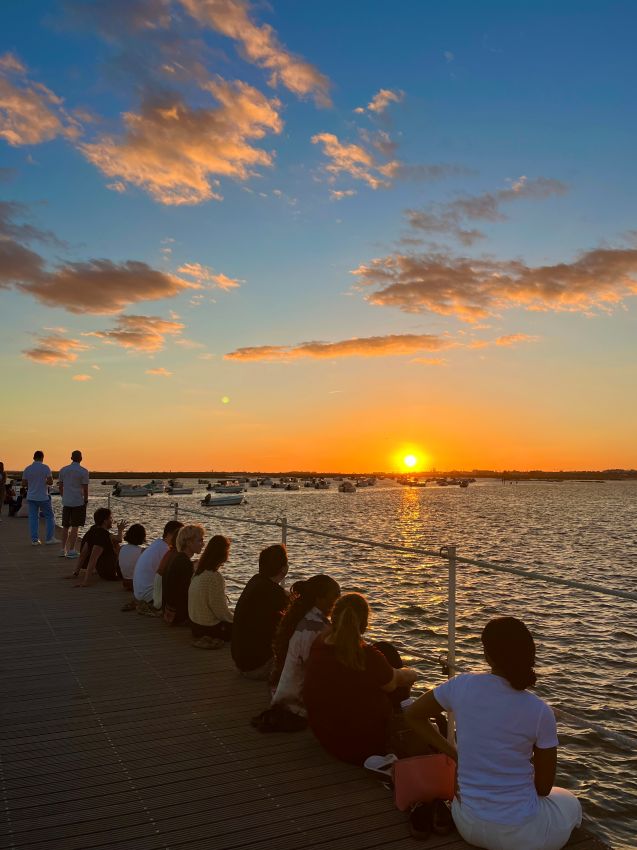

Food in Faro
Faro is a good place to eat well, especially if seafood is high on your list. I came to Portugal with a short list of foods I wanted to try, and grilled octopus was still unchecked. I’d had octopus salad and octopus rice, but not the grilled version, so I saved it for my last meal in Portugal. It was tender, lightly charred, and simply prepared. A perfect way to end my trip!
Seafood is a natural focus here, thanks to Faro’s location near the Ria Formosa lagoon. Besides octopus, you’ll also find dishes like cataplana de marisco (seafood stew), grilled sardines, and clams with garlic and olive oil.
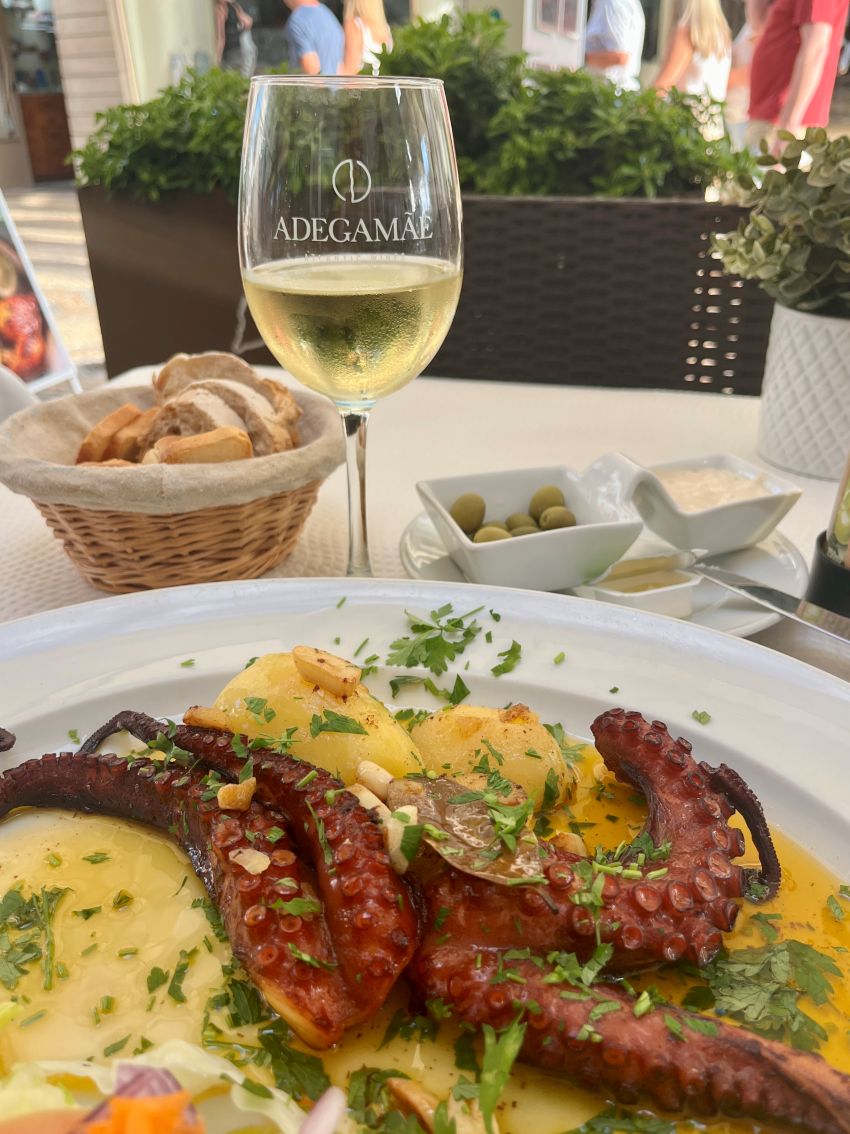
Grilled Octopus in Faro
Solo Travel in Faro
Faro is an easy city to navigate solo and felt safe throughout the day.
The city center, Old Town, marina, and train station are close together, which limits the need for transport. Streets are well-used, even the narrow alleys, and there is a steady flow of locals going about daily life. Wandering through side streets and quieter corners never felt uncomfortable.
Dressing simply and blending in helps. Comfortable walking shoes, neutral clothing, and a crossbody bag were all that I needed.
People in Faro are warm and welcoming. Café staff, shop owners, and fellow travelers were friendly without being intrusive. For solo travelers who value ease and calm over constant stimulation, Faro is a solid choice.
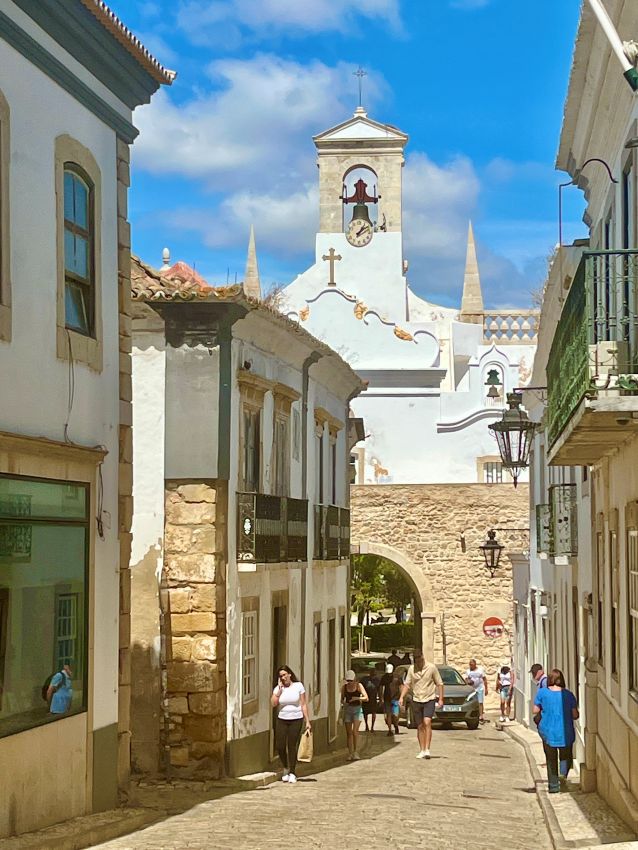
View of the gate from inside the old city
Where to Stay in Faro
Choosing a hotel close to the city center and transportation makes exploring Faro easy, especially if you only have one day.
Hotel Sol Algarve Kavia is a great option for first‑time visitors and solo travelers. It’s where I stayed and is only about a five‑minute walk from the train station and roughly ten minutes to the heart of the Old Town.
The hotel itself is straightforward and comfortable, with clean rooms, helpful staff, and key services (like luggage storage) that make short stays convenient.
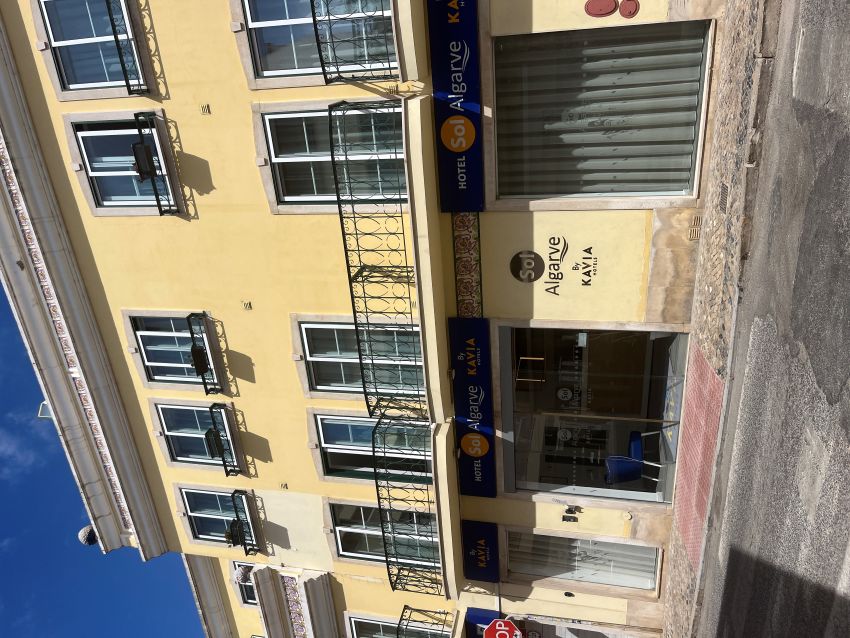
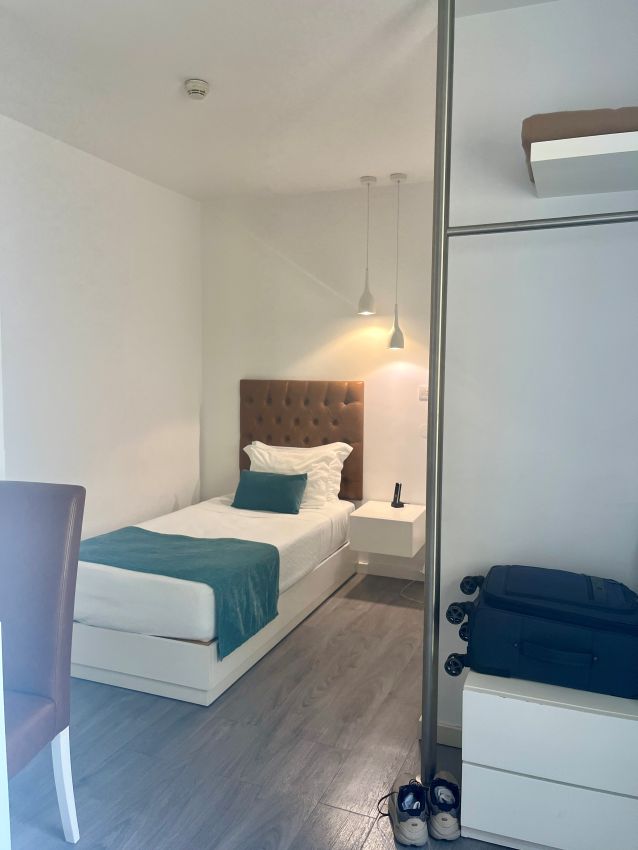
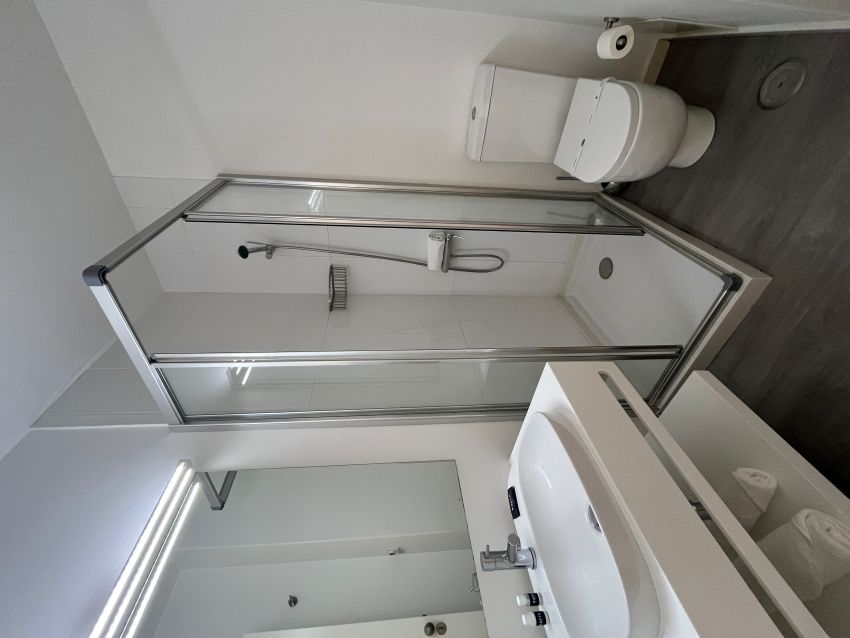
Because Faro is compact, most centrally located hotels will give you a similarly walkable experience. If you’re planning your stay around practical access to the train station, Old Town, or even an early flight from Faro Airport, choosing accommodation in this area keeps everything simple.
Below is a map of other hotel options in the area to help you choose what fits your style and budget.
How to Get to Faro
I arrived in Faro from Lagos by train, which was easy and on time. Faro’s train station is centrally located, and with only a carry-on, it was simple to walk to my hotel. If I had more luggage though, I would have taken a taxi or rideshare to my hotel.
If you’re coming from Lisbon, the train runs directly to Faro and is the easiest option. The trip takes about three hours and arrives at the same central station. Buses also run from Lisbon, but the train is usually more comfortable and straightforward.
To get to the airport, I used FlixBus, the green bus you’ll see all over Portugal. It runs a direct route to and from Faro Airport and costs about $4, which is hard to beat. The bus station is less than a five-minute walk from the train station, just down the street.
Taxis and rideshares are also available for airport transfers, but they cost more. I like using public transportation when I can, and in Faro it felt simple and efficient.
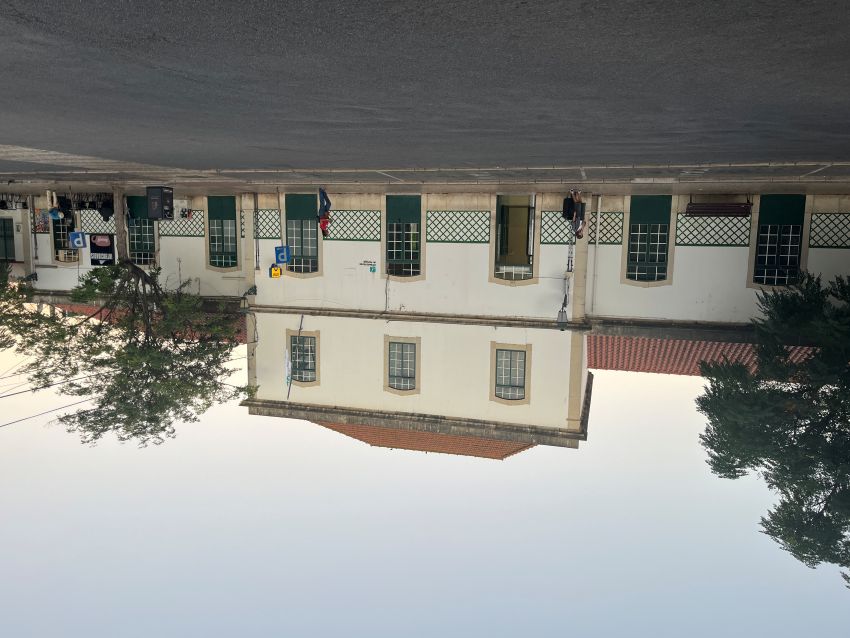
Train station in Faro
Is Faro Worth Visiting for One Day?
Yes, Faro is worth visiting, especially if you have one day, are flying in or out of Faro Airport, or want a calmer stop in the Algarve.
Faro feels more local and low-key than Lagos. The Old Town is compact and walkable, with city walls, gates, churches, and small streets that are easy to explore without a plan. Add in the marina, good seafood, and a chapel made of bones, and it makes for a relaxed but interesting visit.
It’s not a place that requires a packed schedule, and that’s part of the appeal. Faro works well as a wind-down at the end of a trip or a soft takeoff at the start. If you’re looking for something approachable, easy to navigate, and genuinely pleasant for a day, Faro delivers.