This post contains affiliate links. If you make a purchase through these links, I can earn a commission at no extra cost to you. Thank you!
There’s something truly magical about Christmas market food in Germany. The smell of roasted nuts, sizzling sausages, and sweet treats fills the air long before you even see the lights.
I spent several days wandering through the markets in Frankfurt, Cologne, and Heidelberg, hopping from stall to stall, trying everything that caught my eye (and nose!).
Traveling solo, I had no one to share the food with, which was both a blessing and a curse. On one hand, I could eat whatever I wanted without having to split anything. On the other, there were definitely moments when I wished I could share it all.
If you’re planning to visit the markets yourself, here’s a look at some of the best Christmas market food in Germany that you won’t want to miss.
Table of Contents
How the Deposit System Works
Before we get into the food, let’s talk about something that surprises a lot of visitors — the deposit system.
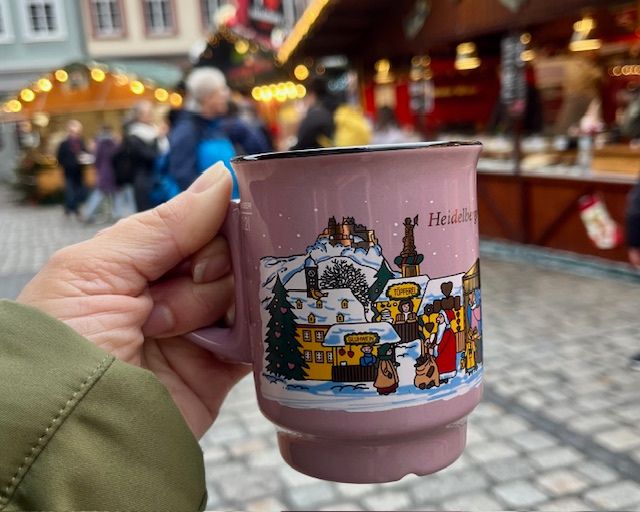
When you order drinks like Glühwein or hot chocolate, you’ll pay a small deposit for the mug (usually a few euros). You can return it when you’re done and get your money back or keep it as a souvenir.
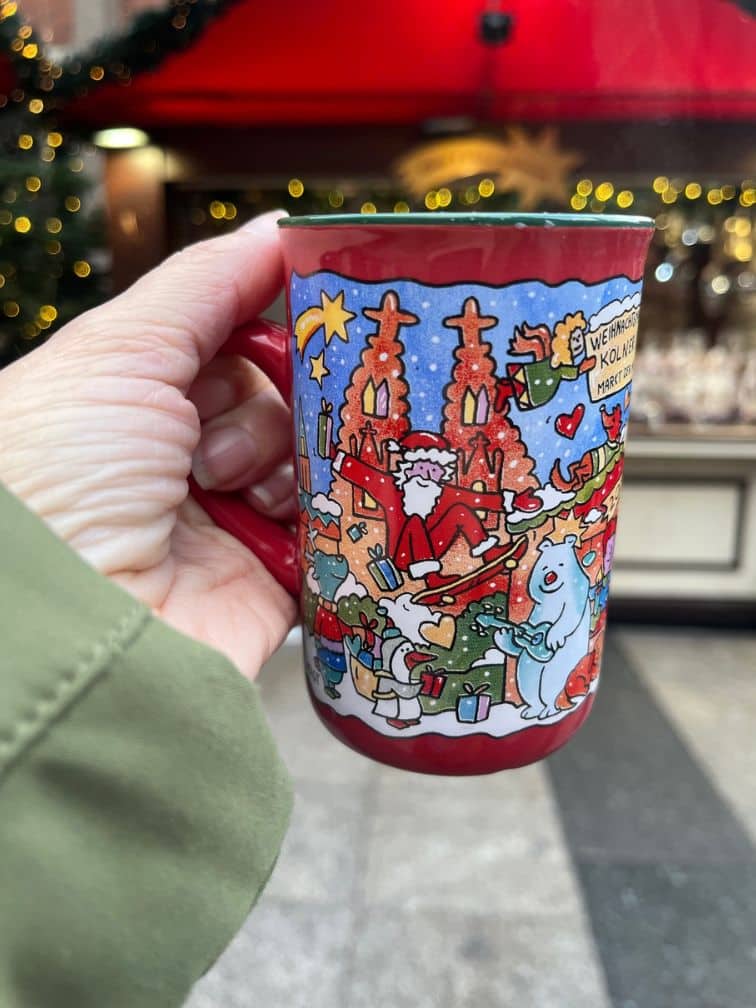
Each city and sometimes each market has its own mug design, which makes it really tempting to collect them. I ended up keeping one from Frankfurt, Cologne, and Heidelberg. They’re such fun memories of my trip – and a great way to have a little German Christmas market feel at home.
The deposit system doesn’t just apply to mugs. Food stalls all use reusable silverware, bowls, and boards. My goulash came in a little ceramic tureen with a real spoon and my Flammkuchen was served on a wooden cutting board. Each requiring a deposit.
If they can’t serve it to you on a napkin or paper square, you’ll probably pay a deposit.
Honestly, I liked it. It cuts down on trash, keeps the markets cleaner, and makes everything feel just a little more special. It’s like you’re at a cozy outdoor restaurant rather than a crowded food stall.
14 Foods and Drinks You Have to Try at German Christmas Markets
1. Bratwurst & Currywurst
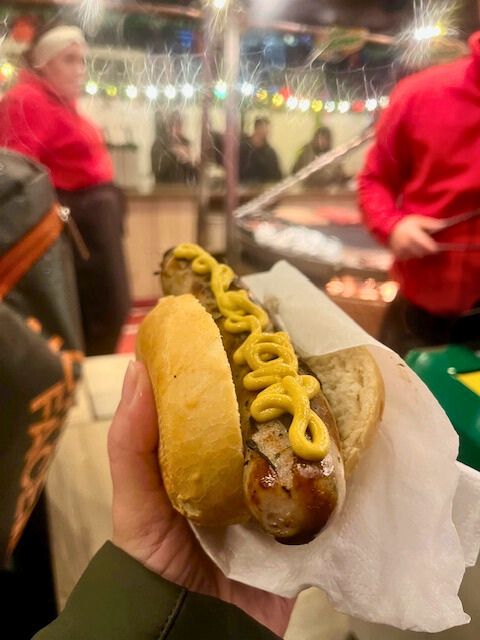
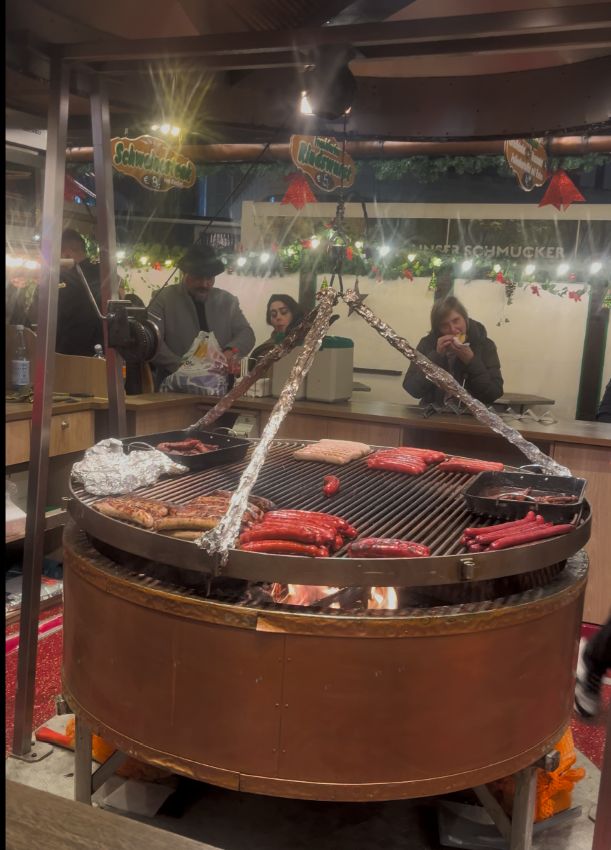
You can’t talk about Christmas market food in Germany without starting here. Bratwurst and Currywurst are the heart and soul of every market. You’ll spot them sizzling on giant round grills that hang over open flames. The smell alone will pull you in.
Bratwurst is the classic German sausage, served in a crusty roll with mustard. Simple, satisfying, and perfect with a mug of Glühwein. Currywurst is its spicy cousin that’s chopped sausage covered in a tangy ketchup-and-curry powder sauce. It’s messy, flavorful, and absolutely worth trying.
2. Flammkuchen
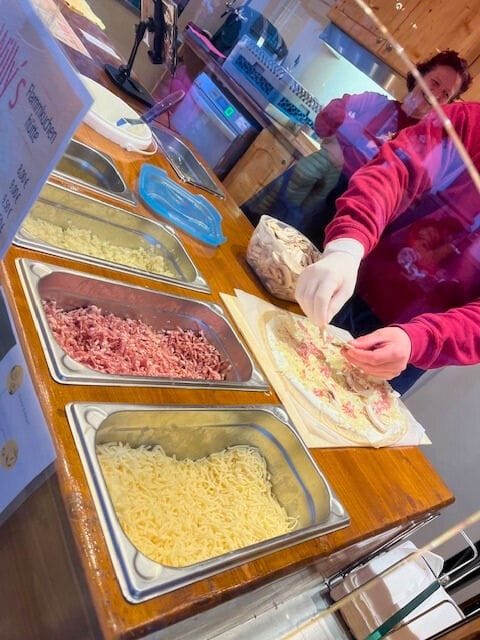
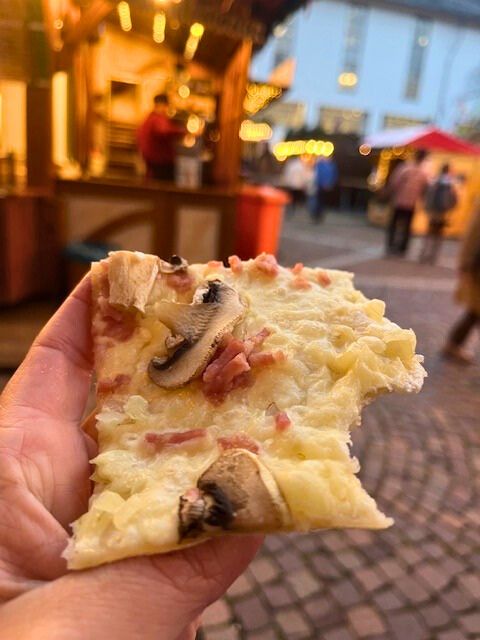
Flammkuchen is one of those foods that makes you close your eyes after the first bite. It’s like a super thin, crispy flatbread topped with crème fraîche, onions, and bacon.
The blessing and curse part of visiting Christmas markets by yourself? You can’t just order one slice. You get the whole thing. And yes, I ate the whole thing too. No shame.
Mine came on a wooden board with a 9 euro deposit.
3. Kartoffelpuffer
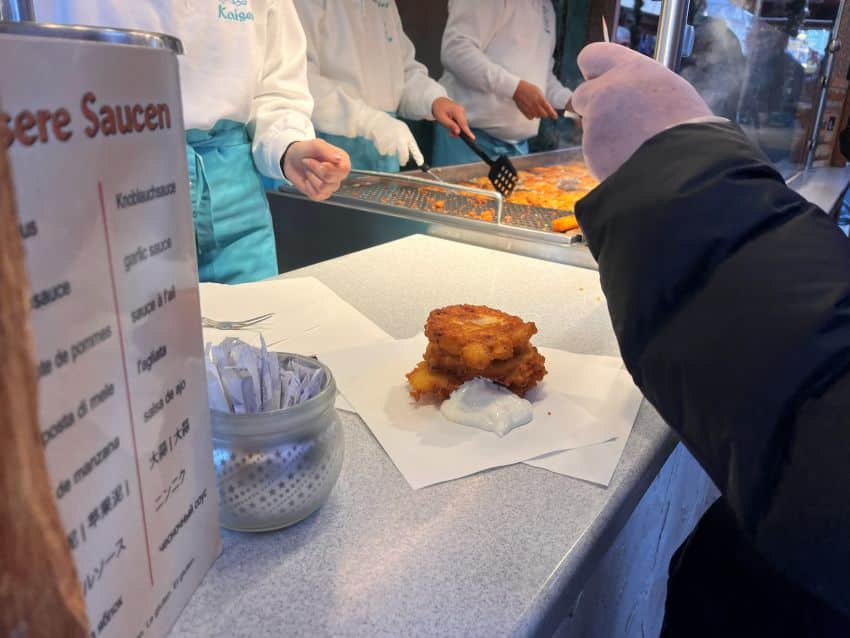
Kartoffelpuffer are little crispy potato pancakes that are puffier than what we usually call latkes in the States. They’re fried until golden brown and served three to an order.
You also get a choice of dipping sauces. Go with applesauce and garlic sauce. Trust me. That combination of sweet and savory mix is unexpectedly perfect!
They’re one of the most popular foods at the markets, and for good reason. They’re hot, crunchy, and easy to eat while walking around.
4. Goulash and Soups
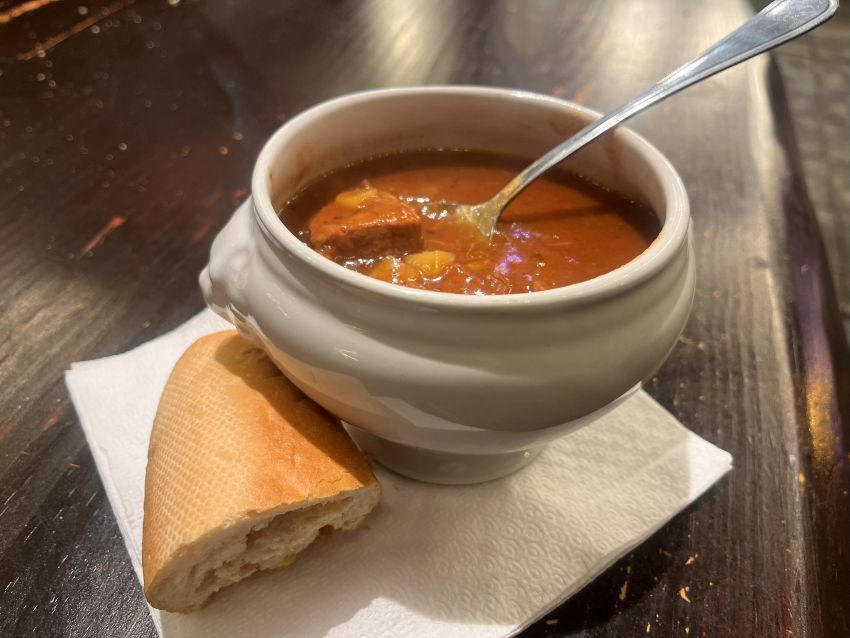
When the temperatures drops, a hot bowl of soup is one of the best things you can find. I ordered a steaming bowl of Goulash soup at the Frankfurt Christmas market, and it hit the spot after hours of walking in the cold. It was rich, hearty, and full of tender beef and paprika flavor. Exactly what I needed to warm up.
Soups are surprisingly popular at German Christmas markets, especially in the bigger cities where locals come straight from work and want something filling. Along with goulash, you’ll often find pea soup with sausage, creamy potato soup, or pumpkin soup all served in sturdy ceramic bowls.
I loved that it felt like a proper meal rather than just a snack.
5. Salmon

This was one of the most unexpected things I found at the markets. There were open wood fires with giant salmon fillets leaning over the flames on wooden boards, slowly smoking until perfectly cooked.
The smell was incredible. Smoky, rich, and impossible to resist.
You can watch the salmon being sliced right off the board and served on fresh bread. It’s warm, buttery, and one of the best things I tried all week.
6. Giant Pretzels
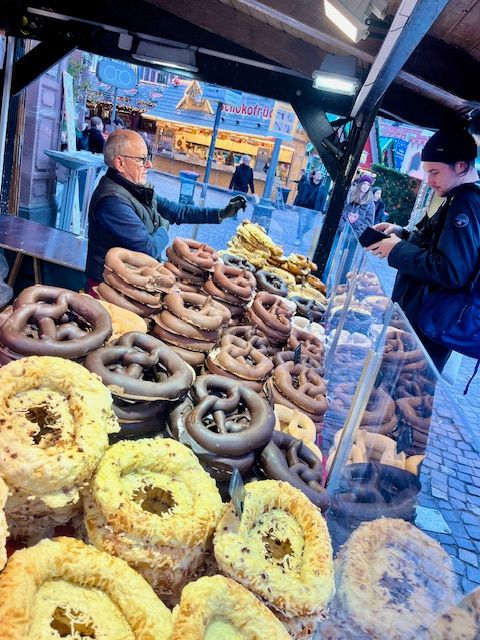
Pretzels are everywhere at the markets, and they’re massive. Seriously, some were the size of my head. You can get them plain, salted, cheesed, or covered in chocolate. Yes, chocolate.
They’re the ultimate comfort snack and perfect to nibble on while you wander. Pair one with hot chocolate for an indulgent holiday treat.
7. Crêpes
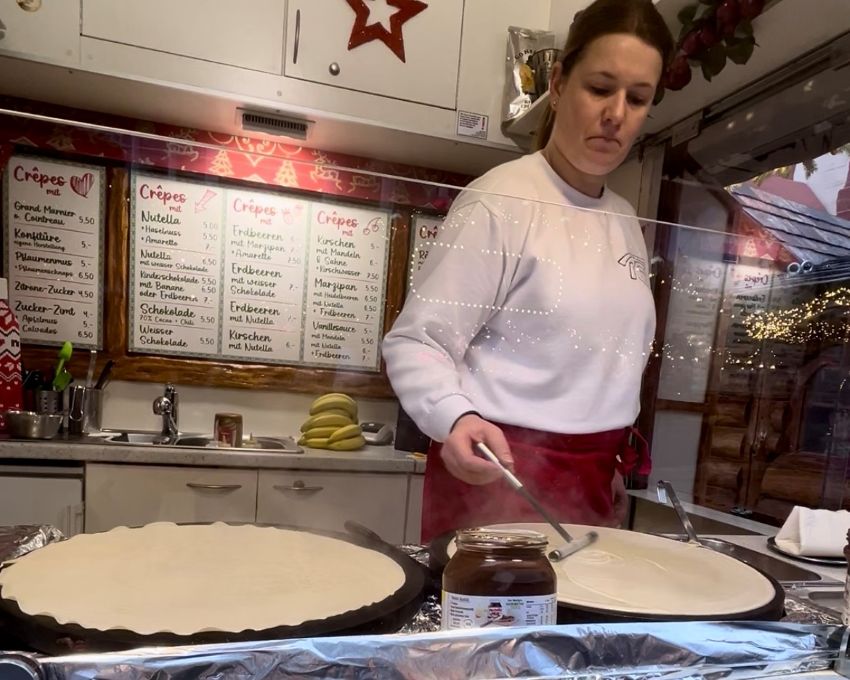
German Christmas markets love their crêpes. You can find them with everything from Nutella to fruit to cinnamon sugar. I loved that they were served on top of a thin wafer that acted as an edible plate. No waste, no mess, and no deposit!
Watching the vendors swirl the batter onto those big round griddles is half the fun.
8. Kürtőskalács (Chimney Cake)
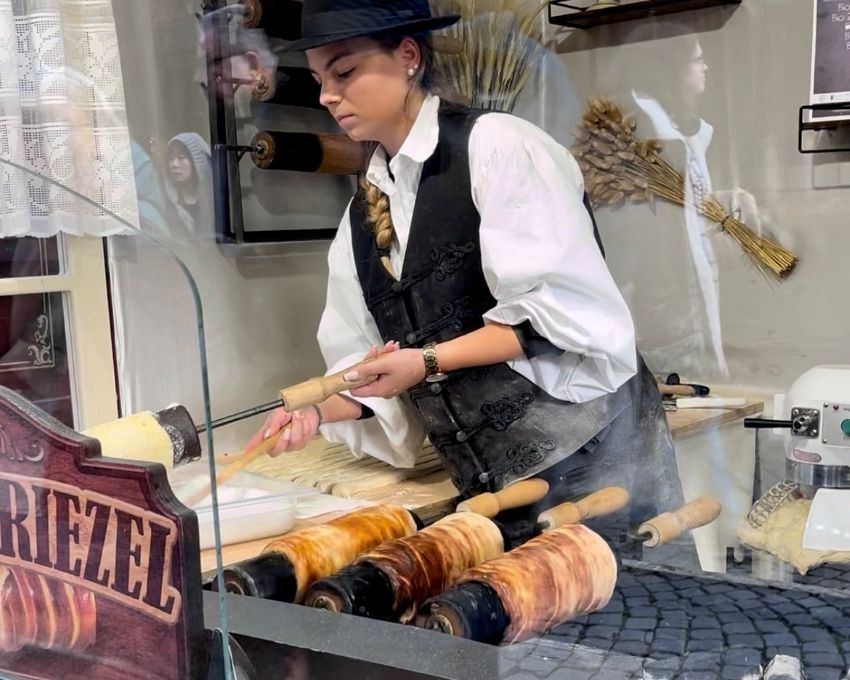
This sweet treat actually originated in Hungary, but it’s become a favorite at Christmas markets all over Germany. Long strips of dough are wrapped around a wooden roller, baked until golden, and coated in sugar that caramelizes on the outside.
The result is a hollow, warm, sugary spiral that’s slightly crisp on the outside and soft inside. You can even get them dusted with cinnamon, nuts, or chocolate.
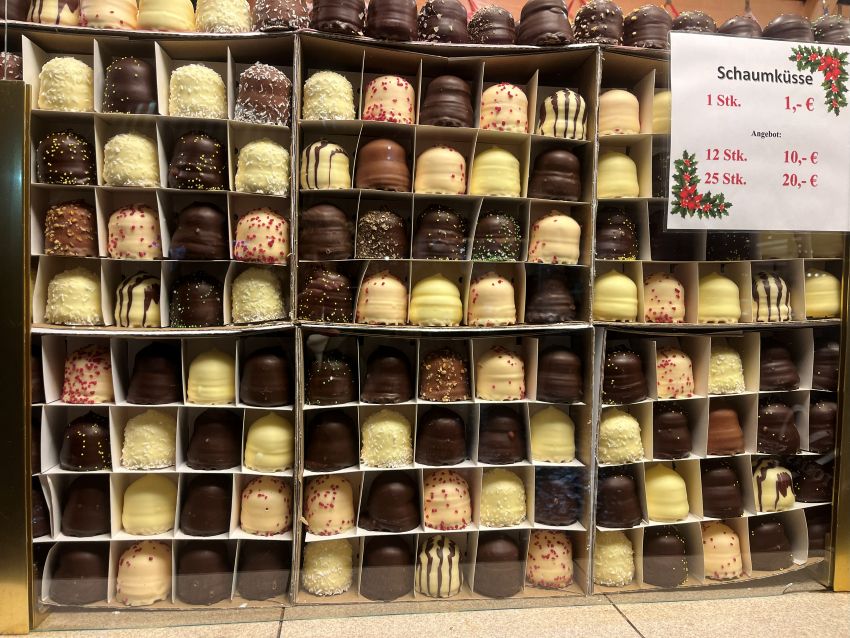
9. Schaumkusse
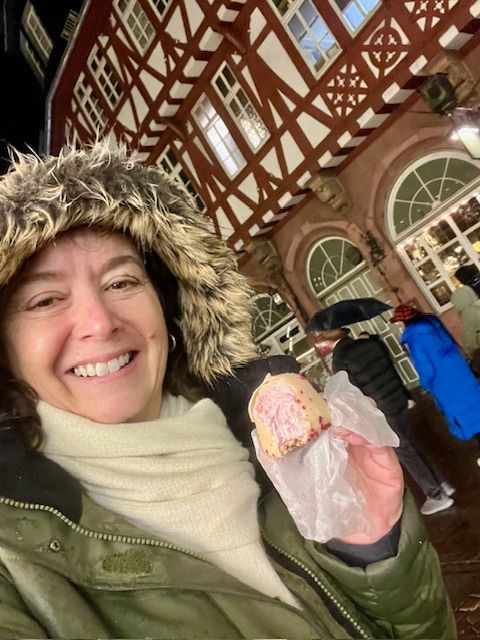
Schaumkusse are marshmallow-like domes coated in chocolate, usually sitting on a thin wafer. They come in different flavors like chocolate, vanilla and even cherry and mint.
They’re light and fluffy and somehow manage to feel nostalgic, even if you’ve never had one before.
10. Handbrotzeit
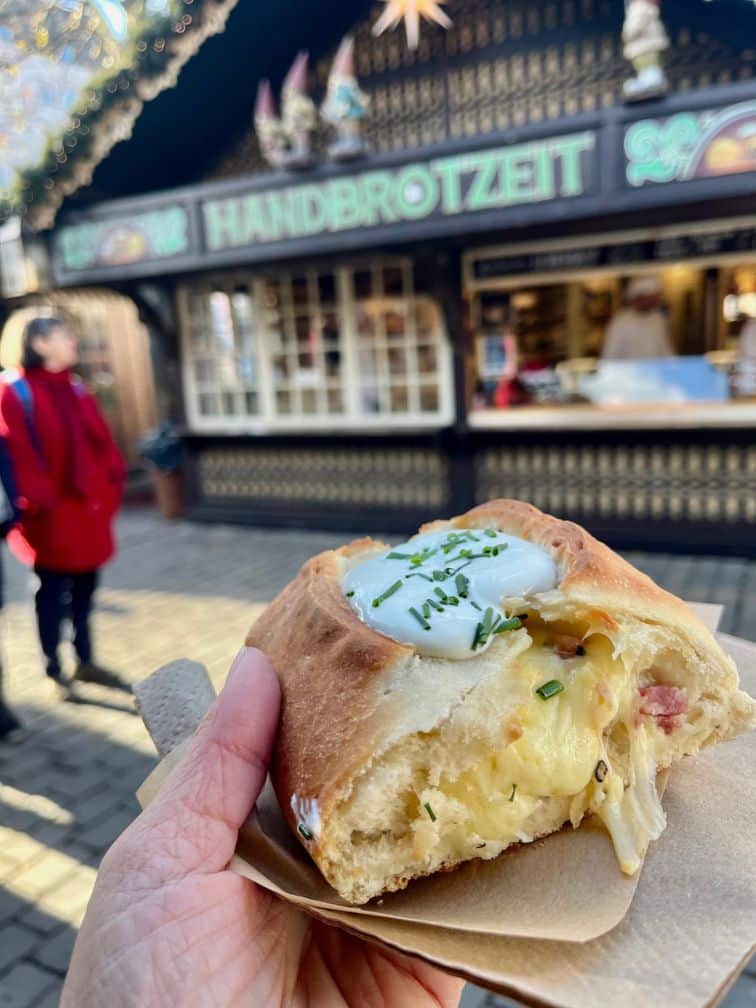
Handbrotzeit is a warm, stuffed bread filled with melted cheese and ham, then topped with a dollop of sour cream.
This was one of my favorite finds and one of my most memorable meals. I grabbed one from a stall decorated with little gnomes in Cologne and then walked across the famous Hohenzollern Bridge during the sunset. Perfect cold weather warm food moment!
11. Maroni (Roasted Chestnuts)
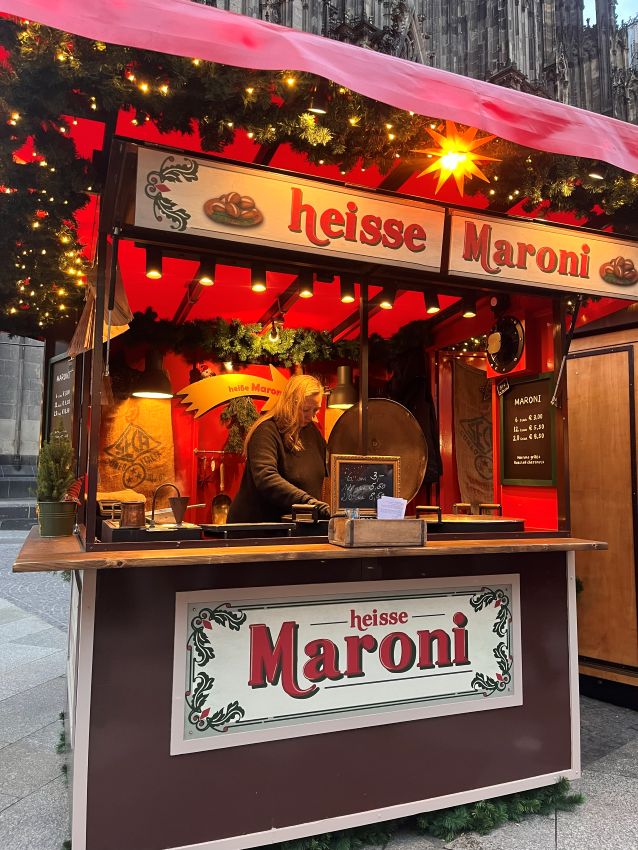
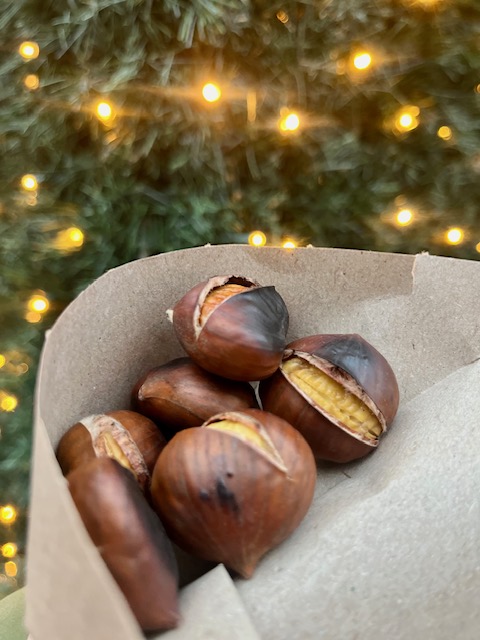
This was my most embarrassing food moment.
I had never eaten roasted chestnuts before, and it was dark out when I finally bought a bag. They smelled amazing, warm and nutty, and I was so tired from walking all day that I didn’t pay much attention.
I picked one up, and it felt soft, so I popped the whole thing in my mouth. I immediately wondered why people liked them — the texture was strange and kind of like coffee grounds. Then I realized… I hadn’t taken the shell off. Oops. Once I figured that out, I understood the hype.
12. German Gingerbread (Lebkuchen)
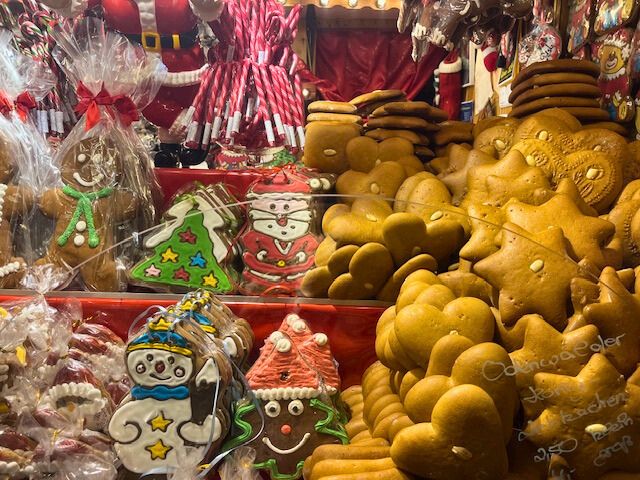
Lebkuchen is not like the crunchy gingerbread cookies we’re used to in the States. German gingerbread is soft and cake-like, made with honey, spices, and nuts, often topped with a sugar glaze or covered in chocolate.
You’ll see heart-shaped Lebkuchen hanging in the stalls with sweet messages written in icing — more for decoration than eating — but the real stuff is delicious with a mug of hot wine.
13. Hot Chocolate
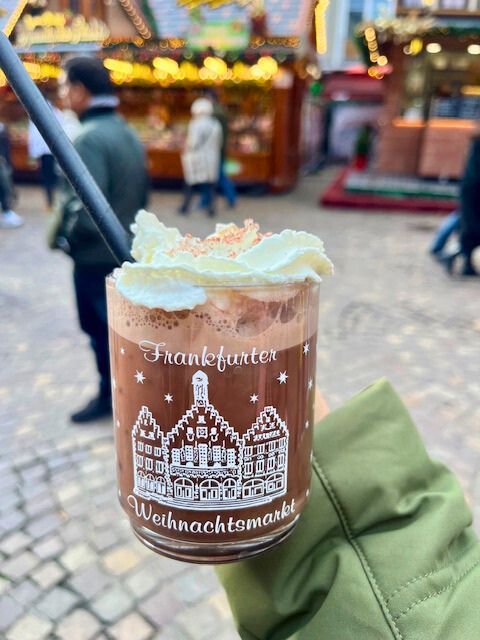
Hot chocolate at German Christmas markets is rich and creamy — the kind that warms you all the way through. Some stalls even offer it with a shot of Baileys or rum for an extra kick.
It’s the perfect non-alcoholic option if you’re not drinking Glühwein. Each town usually has its own collectible mug, and sipping from one while wandering through twinkling lights is one of my favorite memories.
14. Glühwein
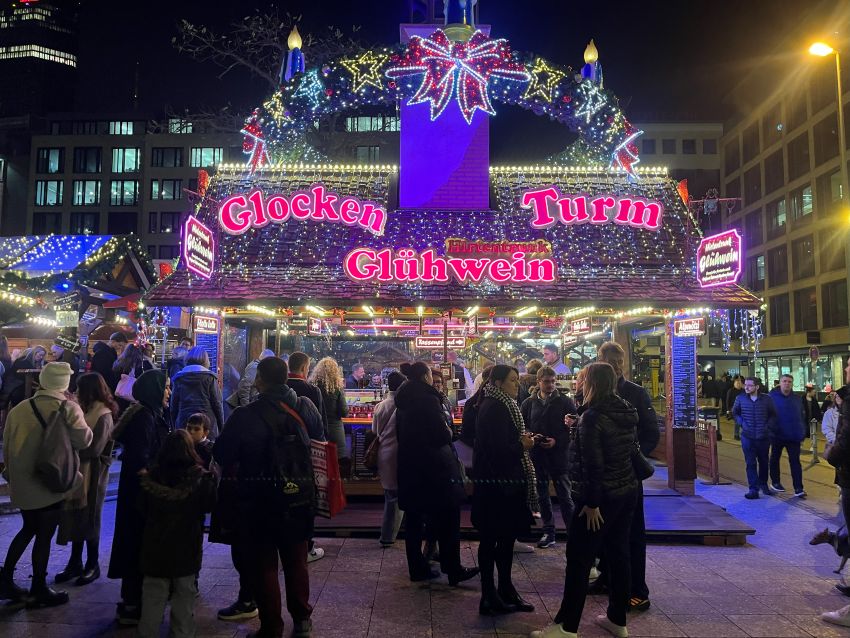
The star of every German Christmas market. Glühwein is warm, spiced wine — the ultimate holiday drink. You’ll find traditional red versions, white wine versions, and sometimes even ones mixed with amaretto or brandy.
Each stand has its own recipe, and you can smell the cinnamon and cloves from a mile away. There are also other fun options like Eierpunsch (a creamy egg-based drink, sort of like German eggnog) and spiked cider.
After dark, Glühwein becomes the centerpiece of the markets — people gather around high tables, chatting and laughing, hands wrapped around their mugs.
To be honest, at night it’s a little lonely being by yourself especially if you’re an introvert like me. But it’s still cozy and festive and being solo I can head back to my room when I’ve had enough.
FAQ: Christmas Market Food Germany
Do I need to bring cash?
Yes! Very few stalls take credit cards, so bring euros.
When are the markets open?
Most Christmas markets in Germany open in late November and run until just before Christmas. A few larger cities keep smaller markets open through New Year’s Eve.
Are the markets open after Christmas?
Some stay open a few days after, but most start closing by December 23 or 24. Always check ahead if you’re traveling late in the season.
Is there an entry fee?
Christmas markets are completely free to enter. You just pay for whatever food or drinks you buy.
How does the mug deposit work?
When you order a drink, you’ll pay a small deposit (Pfand). You can return your mug to any stall using the same design and get your money back — or keep it as a souvenir.
How can I avoid the crowds?
Go very early in the day. By evening, some of the markets get so packed it’s hard to navigate through the stalls.
Are there multiple markets in one city?
Yes! Larger cities like Cologne, Frankfurt, and even Heidelberg have several markets, each with its own vibe and specialties.
 Final Thoughts on Christmas Market Food in Germany
 Final Thoughts on Christmas Market Food in Germany
German Christmas markets are an experience for all your senses. The lights, the music, the laughter — and especially the food.
Yes, it sometimes felt a little lonely when everyone else was huddled together over steaming mugs of Glühwein. But going solo gave me the freedom to explore at my own pace, to wander without a plan, and to try whatever caught my eye.
If you ever find yourself at a German Christmas market, come hungry and maybe bring a friend. Trust me — you’ll want to try it all!