This post contains affiliate links. If you make a purchase, I may earn a small commission at no additional cost to you. As an Amazon Associate, I earn from qualifying purchases.
When it comes to traveling with carry on only, it just makes life easier.
Less waiting around. Less dragging bags through airports and train stations. Less stress trying to manage multiple pieces of luggage when there’s nobody there to help. And honestly, one of the best parts, no lost luggage.
Once you get used to it, it’s really hard to go back.
If you’re new to solo travel, learning how to simplify the logistics can make the whole experience feel much easier. My guide to how to plan your solo trip walks through the practical steps to get ready to leave.
Why Traveling With Carry On Only Saves So Much Time
One of the biggest reasons I prefer traveling with carry on only is because it saves so much time.
On domestic flights, there’s usually no need to stand in line to check a bag. Just head straight to security and then on to the gate.
International travel is a little different because airlines often still want to see your passport at the counter before the trip, but even then, not having checked luggage makes everything smoother.
And when the plane lands, there’s no standing around baggage claim waiting for bags to show up.
Straight to customs and immigration while everyone else is still waiting on their suitcase.
It helps you hit the ground running a little faster.
When you’re traveling solo, getting through the airport efficiently matters. The sooner I’m out of the airport, the sooner I can get settled into my hotel and start enjoying the trip.
Since I travel solo, choosing the right accommodation is one of the things I spend time researching before every trip. I share exactly how I choose safe hotels for solo female travel here.
Traveling Solo With Multiple Bags Is Miserable
Trying to manage multiple bags while traveling alone is honestly a nightmare.
When you’re traveling with someone else, they can watch your luggage while you run to the restroom or grab a coffee. They can help carry a bag up a flight of stairs or onto a train.
Solo travelers don’t have that luxury.
I’ve done the multiple bag thing a couple of times out of necessity. Once for my son’s wedding in Indonesia, and another time for a trip I barely even remember.
What I do remember is how miserable it was trying to drag all that luggage around by myself.
Lugging bags onto trains. Pulling them up bus steps. Wrestling them down staircases. Trying not to hit strangers with oversized luggage in crowded stations.
Never again.
At this point, it’s easier to buy what I need when I arrive than try to pack everything I might possibly need.
That mindset alone completely changed how I approach packing.
Carry On Only Requires Organization
Most trips start with way more items than I actually need to come along.
A couple weeks before a trip, everything gets laid out at home, then slowly edited down over a few days until it actually makes sense.
It turns into a simple capsule wardrobe approach where everything has to work together.
Because honestly, traveling with carry on only comes down to organization.
Every item needs a purpose.
Another thing that helps is that I’m not much of a girlie girl when it comes to beauty products.
My makeup routine is pretty minimal. Usually just mascara and maybe a little spot concealer.
I also don’t pack a hair dryer, curling iron, straightener, or any other styling tools. My hair routine is basically shampoo, conditioner, and a styling cream or gel. Then I let it air dry.
That definitely makes packing light easier because those products and tools can take up a surprising amount of room in your luggage.
Of course, everyone’s packing needs are different. If your daily routine includes more beauty products, you’ll need to account for that.
The “Just in Case” Trap
The hardest part of packing light used to be all the “just in case” things.
Just in case the weather changes. Just in case something comes up. Just in case another outfit is needed.
Most of it never gets used.
Now a few staples always make the cut.
A sarong is one of the most useful items I own for travel. It works as a scarf, shawl, beach cover up, lightweight blanket, or tied around the waist like a belt. It’s also perfect for temple visits where modest dress is required.
A white button down linen top works with almost everything and layers easily without taking up much room. It can also double as a swim cover-up
And after dealing with an infected mosquito bite in Indonesia, Neosporin always gets added too.
One realization that helped me stop overpacking was understanding that most destinations have stores. If I forget toothpaste, sunscreen, or another basic item, I can usually buy it when I arrive.
Packing Cubes Completely Changed My Mind
I never understood packing cubes until I actually used them.
Now they’re non-negotiable.
There are two ways people tend to use packing cubes. Some go with a one-cube-per-day system where each cube holds a complete outfit.
The other approach, and the one that works better for me, is grouping similar items together.
Instead of packing outfits together, I keep tops together, bottoms together, underwear and pajamas together, and another cube for miscellaneous items.
If you’re looking for the travel gear I actually use and recommend, I’ve put together a list of my favorite carry-on travel essentials, including the packing cubes that help keep me organized.
That works better because I mix and match my clothes rather than planning specific outfits for specific days.
Shoes don’t go in a cube. They usually fit along the sides of the luggage or tucked into the bottom near the handle grooves.
Once everything has a place, it’s easier to save space and stay organized.
I also almost never unpack during a trip. The suitcase basically becomes my dresser. The cubes make it easy to find what I need without digging through everything.
Sink Laundry Is Easier Than Dealing With Laundry Service
For one to two week trips, sink laundry just becomes part of the rhythm.
There are usually places to get laundry done, and some hotels offer it too, but most of the time it feels easier not to deal with it.
Quick sink washes are enough for a few items, especially when everything is being reworn anyway.
Not everything gets washed after every wear. Jeans, jackets, and some tops can usually be worn multiple times before needing a wash.
Hotel soap or shampoo usually works fine.
Lately though, I’ve also started bringing one of those laundry detergent sheets. I just tear off a small piece, dissolve it in the sink, and wash whatever I need.
One trick that makes a big difference: after washing, rinse the item, wring it out, then roll it tightly in a dry towel. It pulls out way more water than expected and helps things dry overnight.
Small systems like that make packing light easier to maintain.
What Goes In My Personal Item
My personal item is usually a zippered tote bag that fits under the seat, and it holds everything I want easy access to during travel.
Water bottle
Passport
Chargers
Headphones
Lip balm
Snacks
Medications
Travel documents
When traveling solo, I like having everything important within arm’s reach. My passport, medications, chargers, and travel documents always stay with me.
I always keep my important documents organized and accessible when I travel. Before leaving home, I use my international travel documents checklist to make sure I have everything I need.
Shoes Can Make or Break a Trip
When you’re traveling with carry on only, shoes take up a surprising amount of luggage space.
Usually it’s one pair of sneakers that can handle long walking days. Rubber soles matter for traction, especially on uneven streets, wet surfaces, or old cobblestone roads.
Depending on the season, either sandals or ankle boots get added.
If there’s beach time or swimming planned, water shoes or flip flops come along too.
That’s usually it.
Repeating Outfits Is Completely Normal
One thing that helps with packing light is accepting that you don’t need a completely different outfit every day.
For a two-week trip, I typically bring four tops and three bottoms. Every top matches every bottom, which gives me 12 different outfit combinations.
Add in the outfit I wear on the plane there and back, and that’s essentially 14 days covered.
Of course, some of those clothes get washed and worn again along the way. That’s part of why sink laundry works so well for me.
The other advantage of bringing versatile pieces is that they can change the look of an outfit without taking up much room in your luggage.
A sarong can be worn as a scarf, a shawl, or tied around the waist like a belt. A white linen top can completely change the look of an outfit while also adding a little extra layer of warmth when needed.
Those small additions make it feel like there are more options than there actually are, which makes packing light much easier.
One thing I realized years ago is that nobody on your trip knows what you wore yesterday. You’re probably never going to see most of those people again.
That’s especially true when traveling solo.
Hard Shell vs Soft Shell Luggage
People have strong opinions about luggage.
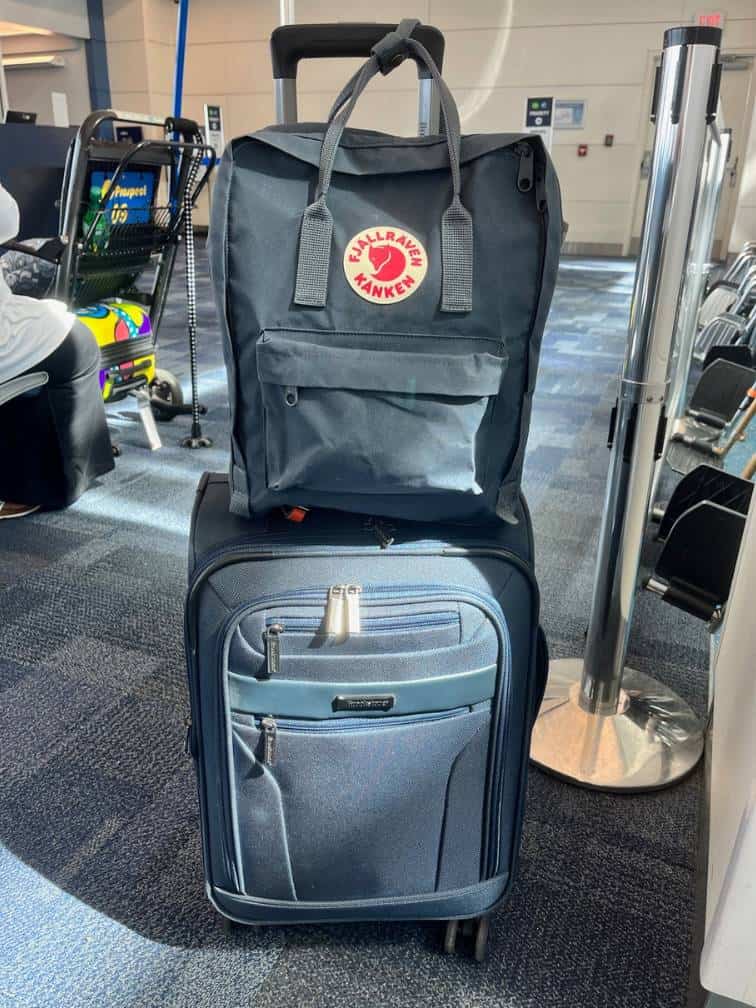
Soft sided luggage usually wins for me.
Hard shell luggage offers protection, especially for fragile items, but soft sided bags are more flexible.
The exterior pockets help with quick access, and they tend to squeeze into overhead bins more easily when space gets tight.
That flexibility matters when I travel carry on only.
Airline Rules, Weight Limits, and Credit Card Perks
One thing that matters with traveling with carry on only is that every airline has different rules.
Some are strict about size and weight limits, especially internationally.
Always worth a quick check before the trip so there are no surprises.
And if you’re someone who prefers checked luggage, many airline credit card perks can help offset baggage fees.
I have a United credit card, and one of the benefits is free checked bags along with reimbursement if United significantly delays or loses my bag.
So, if you’re in the checked bag camp, those are actually pretty useful perks.
If you like having a simple backup plan for things like lost luggage, missed flights, or a lost passport, I put together a free Just in Case travel guide that walks through what to do when travel doesn’t go as planned.
I also use travel credit card points and miles to help offset flights and make travel a bit more flexible. I go into how that works here.
How I use Points and Miles to Travel Better
One Bag Is Still Better Than Two
Not every trip is a good candidate for traveling with carry on only.
Sometimes it’s winter and clothes take up more space. Sometimes it’s a destination wedding. Sometimes the airline’s weight limit makes it difficult.
In those situations, I’d still rather travel with one larger checked bag than juggle multiple pieces of luggage.
If I know I have too much to fit in a carry on, I’ll usually use the smallest bag I can get away with and check it.
What I try to avoid is traveling with a checked bag, a carry on, and a personal item all at the same time.
For solo travelers, managing one bag is almost always easier than managing two or three.
There’s less to keep track of, less to drag through airports and train stations, and less to wrestle up staircases.
If You’re Nervous About Trying It
If traveling with carry on only feels like a big leap, start small.
Try it on a shorter trip first and see how it feels in real life.
Most people figure it out pretty quickly once they notice what they actually use and what never leaves the suitcase.
It doesn’t have to be perfect. It just has to be lighter than what you’ve been doing.
If you’re still figuring out your trip, my guide on how to plan a solo trip walks through the full process step by step, from picking a destination to getting ready to go.
If you’re deciding where to go next, you can also browse destination guides to help match your packing to the type of trip you’re taking.
Final Thoughts
At the end of the day, traveling with carry on only isn’t about being a minimalist.
It’s about making solo travel easier.
Less waiting. Less hauling luggage around. Less stress trying to manage too much stuff by yourself.
For me, that’s reason enough to stick with a carry on and personal item whenever possible.
Have you traveled carry on only? Let me know in the comments below.
Resources to Book Your Trip
Book Flights
I like using Skyscanner to find flight deals. It searches hundreds of airlines and booking sites so you can compare prices, dates, and even airports in one place.
Find a Place to Stay
Booking.com is my go-to for hotels, guesthouses, and apartments. I like being able to read reviews and filter for places with free cancellation.
Book Tours and Activities
I recommend GetYourGuide and Viator for walking tours, food tours, and day trips. Check the reviews and group size to find an experience that suits you.
Stay Connected
I use Airalo for mobile data when I travel, especially for maps and booking rides. Check that your phone is unlocked and supports eSIMs before buying.
Book an Airport Transfer
Welcome Pickups lets you arrange your airport transfer before you leave home. Having that first ride sorted can make arriving somewhere new feel a little easier.
Choose Travel Insurance
SafetyWing is one option to compare when shopping for travel insurance. Read the coverage details and exclusions to make sure the plan fits your trip and your needs.