This post contains affiliate links. If you make a purchase, I may earn a small commission at no additional cost to you. As an Amazon Associate, I earn from qualifying purchases.
The first time I traveled internationally, I assumed using my debit card and credit card would work pretty much the same way it did at home.
Swipe card. Get cash. Done.
Then I landed in Bangkok.
I was tired after a long flight and just wanted cash quickly. I walked over to the first ATM I saw in the airport and barely looked at the screen. I just kept pressing buttons.
Bad decision.
Before I knew it, I had somehow agreed to fees that added up to almost 20%.
Eek.
I remember standing there thinking I was being smart using the airport ATM. I was not.
Turns out there are a few little screens and questions that pop up while traveling that can quietly cost you money if you don’t know what they mean. Some are confusing on purpose, and when you are tired and trying to fight off jet lag, it is easy to just click through without thinking.
This is one of those small parts of travel planning that is worth knowing ahead of time.
If you’re still putting your trip together, my Plan Your Trip guide might help you sort things out step by step. It walks you through everything from choosing a destination to booking flights, accommodations, and preparing for your trip.
Table of Contents
What I Wish I had Known Before Traveling:
1. Always Decline Dynamic Currency Conversion
One of the most common surprises abroad shows up at the credit card terminal.
A message appears asking whether to pay in U.S. dollars or local currency. It often looks helpful:
“Pay in USD?”
“Pay in your home currency?”
“Guaranteed exchange rate”
It feels easier to choose dollars because the amount is instantly familiar.
This is called Dynamic Currency Conversion, or DCC.
What is actually happening is that the store or payment processor is doing the currency conversion instead of your bank. That usually means a worse exchange rate or added fees hidden in the transaction.
The better choice is always local currency.
In Portugal, euros. In Thailand, baht.
In some countries, the question may appear more than once in slightly different ways. The safest approach is to decline every time it is offered.
2. Use ATMs That Belong to Banks
ATM choice matters more than most travelers realize.
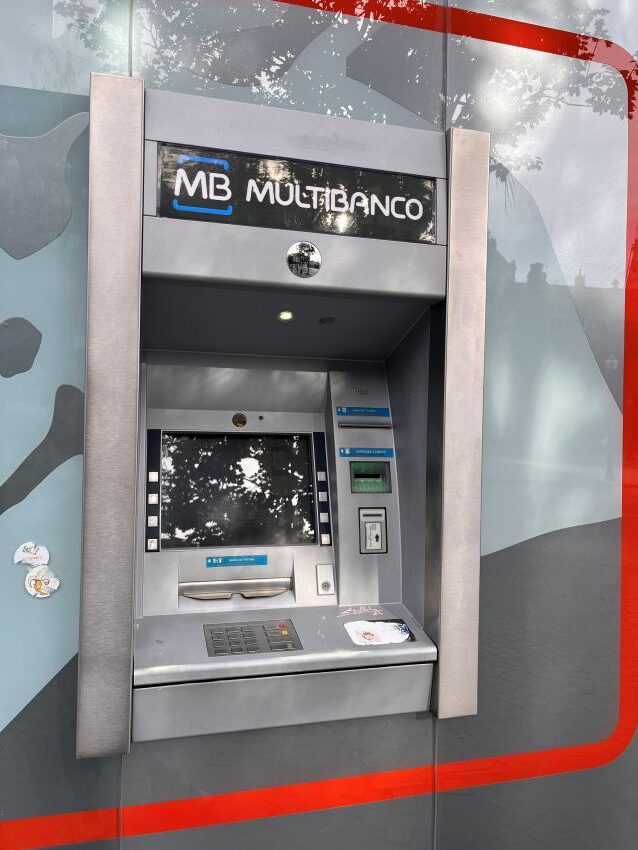
The safest option is a machine with clear bank branding. It doesn’t have to be physically inside a bank, but it should clearly belong to a bank.
Before leaving, it helps to spend a couple of minutes looking up common bank names in your destination and saving them in your notes. It is a simple step, but it makes it much easier to recognize a safe ATM when you are tired or in a busy area.
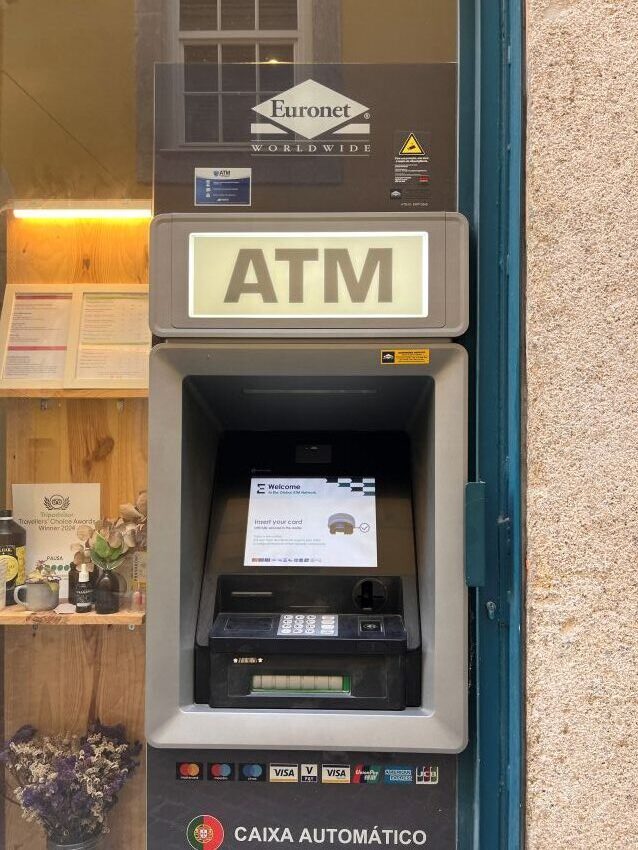
What to avoid are those standalone non-bank machines in tourist-heavy areas like train stations, convenience stores, and busy shopping streets. They are convenient but often come with higher fees and weaker exchange rates.
Euronet ATMs are a common example with high fees and should be skipped whenever possible. They’re placed in obvious, high-traffic spots where you’re most likely to use them quickly without even thinking. Don’t do it.
When in doubt, a bank ATM is the better choice.
3. Decline ATM Conversion Offers Too
ATMs often present their own version of currency conversion.
Messages appear such as:
“Accept conversion?”
“Guaranteed exchange rate”
“Recommended rate”
It sounds official, but it’s the same idea as Dynamic Currency Conversion.
Choosing this option allows the ATM to set the exchange rate. Declining it lets your bank handle the conversion instead, which is typically more favorable.
The best approach is simple: choose the local currency and continue.
4. Never Travel With Just One Card
One card feels like enough until it suddenly is not.
A machine may reject a card. A bank may flag international activity. And sometimes an ATM just doesn’t want to cooperate.
It doesn’t happen on every trip, but when it does, it can be stressful.
I always travel with at least one debit card and one credit card, and if possible, a backup credit card too.
I keep them in different places too, so I have options if something happens.
It’s one of those small travel habits that feels unnecessary until the exact moment it’s needed.
If something does go wrong while traveling, my FREE Just in Case travel guide walks through what to do step by step in those moments.
5. Prepare Your Debit Card Before You Leave
A few minutes of preparation before departure can prevent issues later.
While you’re getting your cards and accounts ready, it’s also a good time to organize your other travel documents. My International Travel Documents Checklist walks through the important items to prepare before you leave, including passport, visas, and emergency information.
Check that:
• The bank is aware of international travel if required
• The debit card has a PIN set up
• The PIN is numbers only
• The PIN is four digits
Some international ATMs are strict about PIN formats, so keeping it simple avoids problems.
6. Check for Foreign Transaction Fees Before You Go
Not all cards work the same way abroad.
Some credit cards charge foreign transaction fees on every purchase. These are usually small, around 1% to 3%, but they can add up over the course of a trip.
A travel credit card with no foreign transaction fees is often the easiest option for everyday spending abroad.
For those of you interested in earning rewards while traveling, I have a guide on how credit cards can be used for points and miles.
Final Thoughts
Most of this isn’t obvious until you have been through it once.
I learned it the hard way, standing in front of machines in places I had never been before, trying to figure out what was safe to press.
Now I slow down a little more, read the screens, and avoid assumptions.
Hopefully this helps you skip your own “why did I just agree to that fee” moment.