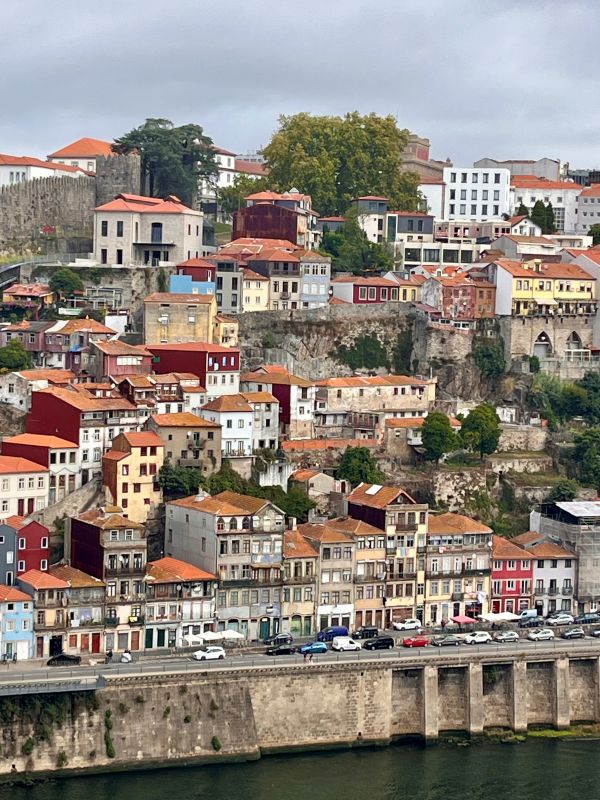
This post contains affiliate links. If you make a purchase, I may earn a small commission at no additional cost to you. As an Amazon Associate, I earn from qualifying purchases.
If you’re planning three days in Porto, I think you’ll have enough time to see a lot of the city without feeling like you have to rush from one attraction to the next. I had four nights and three full days, plus an early arrival that gave me almost an entire fourth day.
I knew almost immediately that I was going to enjoy Porto.
Maybe it was coming up from the Metro that first morning and suddenly finding myself surrounded by old buildings, churches, cafés and people going about their Sunday morning. Or maybe it was the tiles.
They are everywhere.
And not just the beautiful blue-and-white tiles you see in all the photos of Porto. I found colorful tiles covering ordinary buildings all over the city. I spent a ridiculous amount of time looking up.
Planning more of Portugal? My Portugal travel guide has all of my itineraries, transportation tips, food recommendations, and other places I visited during my two-week solo trip.
Table of Contents
My 3 Days in Porto at a Glance
Arrival day: Walking tour and Time Out Market
Day 1: São Bento, Porto’s tiled churches, Bolhão Market, Clerigos
Day 2: Porto Cathedral, Matosinhos, Pinhais sardine factory tour
Day 3: Ribeira, Dom Luís I Bridge, Vila Nova de Gaia, Port wine cellars, Jardim do Morro sunset
What to Expect From This Three Day Porto Itinerary
Porto felt very manageable on my own. I stayed in the city center near São Bento Station and could walk almost everywhere.
Ribeira, Santa Catarina, Clérigos and the Douro River were all easy to reach on foot, and when I wanted to go farther, public transportation was easy to use. If Porto is part of a longer trip, my guide to getting around Portugal covers how I traveled between cities without renting a car.
And yes, Porto has hills.
You’ll feel them when you’re on one, but it isn’t constant. There are enough flat stretches to give your legs a break, and I found Porto a bit easier to walk than Alfama in Lisbon.
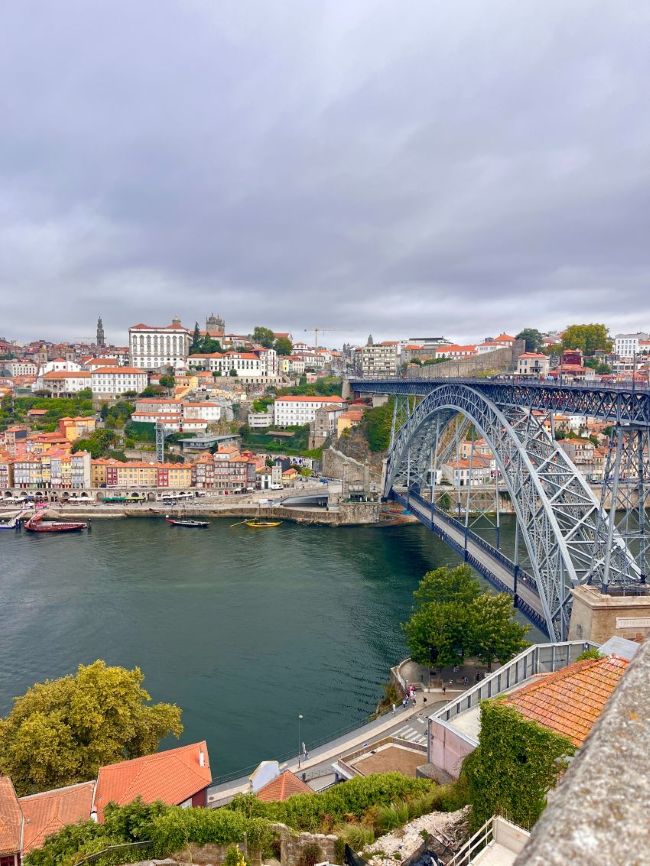
I also didn’t pack my days from morning until night. That’s not how I like to travel. I usually plan one or two things I really want to do or focus on and leave plenty of time to see where the day takes me.
Three full days felt like enough, but I was really glad I had that extra arrival day. I’ve included it below in case your travel schedule gives you some extra time too.
Where I Stayed in Porto
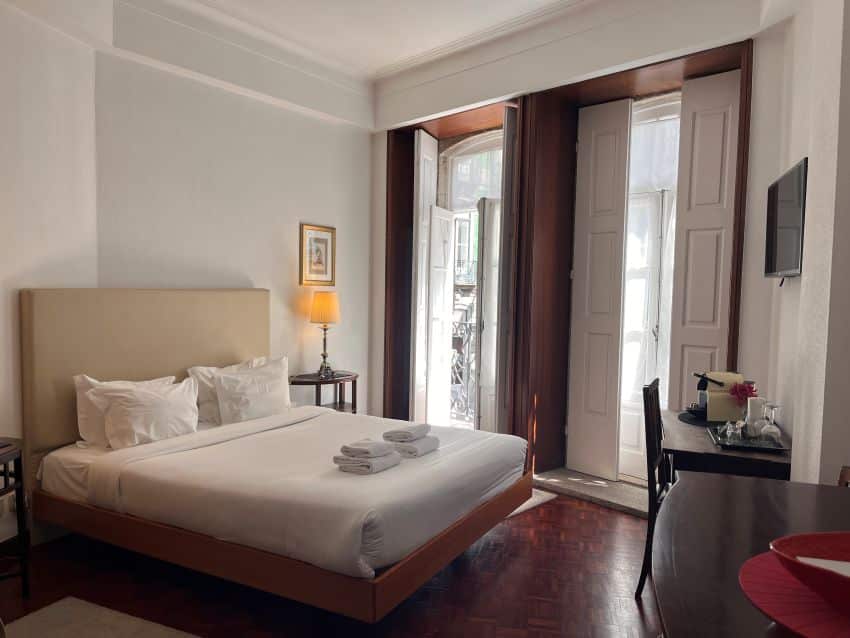
I stayed at Office Suits in Flores by D&S, right across from São Bento Station, and the location was perfect for this Porto itinerary.
I could walk almost everywhere. There were cafés and shops right outside, São Bento was across the street, and the Metro was close by. The building also had secure entry, which I appreciated traveling on my own.
They have a welcome center about a block away too, which came in handy when I arrived hours before check-in and needed somewhere to leave my suitcase.
If you’re spending three days in Porto without a car, I would absolutely look for somewhere around São Bento or this part of the city.
You can check current rates and availability for Office Suits in Flores by D&S here.
Arrival Day in Porto: An Extra Day If You Have It
My flight landed around 7 a.m. on a Sunday at Francisco Sá Carneiro Airport, Porto’s main airport, so I had most of the day ahead of me.
I took the Metro from Sá Carneiro Airport into the city center. It was easy to use, but what I remember most was coming up the escalator near São Bento and suddenly emerging right in the middle of it all.
People, cafés, shops, beautiful old buildings, and Santo António Church immediately to my right.
After months of planning, I was finally in Porto Portugal!
Since it was way too early to check in, I dropped my suitcase at my apartment’s welcome center a block away and spent some time exploring nearby before my 11 a.m. walking tour.
I was already geeking out over Porto’s architecture and tiles.
If your flight arrives later in the day, don’t try to squeeze all of this in. Explore around your hotel and move the walking tour to the morning of Day 1. Your three days in Porto will still work just fine.
Start With a Walking Tour
My walking tour of Porto lasted about three hours. Some of the stops on my tour were São Bento Station, Carmo Church, Porto Cathedral, Clerigos and viewpoints like the one below I probably wouldn’t have found on my own.
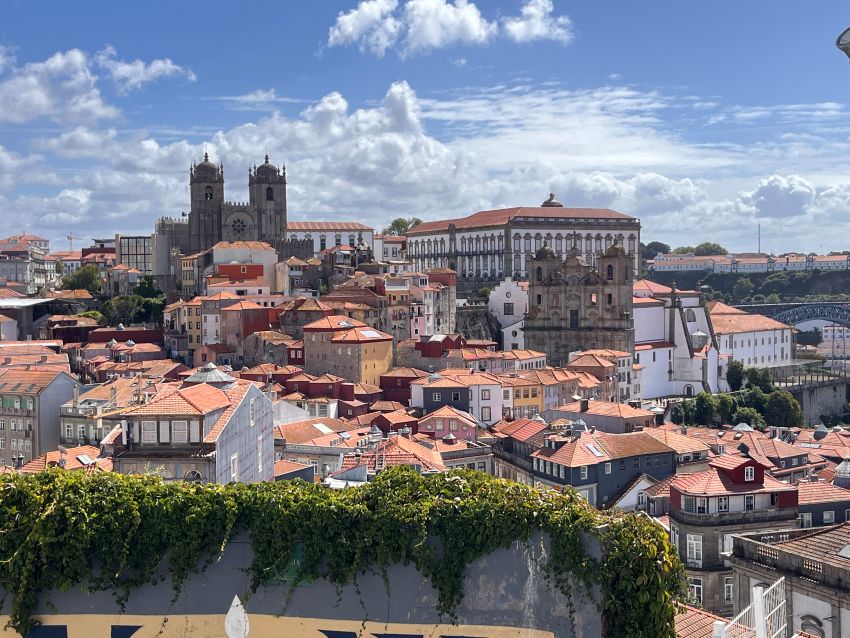
I highly recommend taking a Porto walking tour early in your trip, especially if you’re traveling solo. Besides learning what you’re actually looking at, you get your bearings. By the time the tour is over, you’ve already walked some of the streets and the city doesn’t feel quite so unfamiliar.
I always feel more confident heading out on my own afterward.
Lunch at Time Out Market
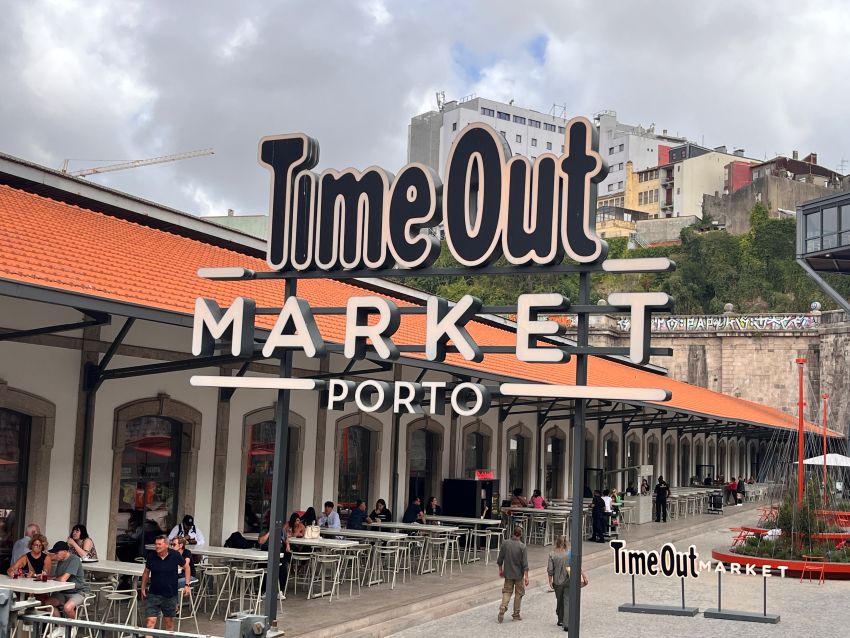
After the tour, I walked over to Time Out Market Porto, which was close by and an easy choice for lunch.
This is the kind of place where I could spend a while deciding what to eat. There are stalls from different Porto restaurants and chefs all under one roof, so you can walk around and see what looks good before committing.
I ordered an octopus salad and OMG. It was some of the freshest, most tender octopus I had in Portugal.
I came to Portugal with a list of foods I wanted to try, and I made my way through quite a few of them! You can see my favorites, and what I’d order again (including that octopus salad), in my guide to what to eat in Portugal.
If you’re traveling alone, Time Out Market is also an easy place to eat without feeling like you need to sit down for a full restaurant meal. There’s a Time Out Market in Lisbon too if your Portugal trip includes both cities.
After lunch, I grabbed my suitcase, checked into my apartment, and rested for a while. I’d been going since 7 a.m.!
Try a Bifana
Later, I stopped at Mago near Clérigos Tower for a bifana, a Portuguese pork sandwich. I tried several in Portugal, but Mago’s was my favorite. The pork was sliced incredibly thin and piled onto a soft roll that soaked up all those juices.
And because apparently I wasn’t finished eating, I went across the street to McDonald’s for an ice cream.
But this isn’t your average McDonald’s.
It’s inside an ornate historic building with chandeliers hanging from the ceiling. Yes, chandeliers in McDonald’s.
After that, I headed back to my apartment and called it a night. Not bad for an arrival day, especially since I still had three full days in Porto ahead.
Day 1 in Porto: São Bento, Churches and Wandering
I started my first full day in Porto at Fábrica da Nata, just steps from where I was staying. It became my usual breakfast spot while I was in Porto.
Every morning I had a toastie, a nata and fresh-squeezed orange juice or coffee. You can watch the natas being made through the glass, which makes eating one fresh even better. The shell is perfectly crispy, the middle is warm and creamy, and don’t forget to sprinkle cinnamon on top.
And that orange juice. The color is so vibrant, and it was some of the best I’ve ever had.
There’s a Fábrica da Nata in Lisbon too, so if Porto isn’t your first stop in Portugal, you don’t have to wait to try one.
My plan for the rest of the day was pretty loose. I wanted to go back to São Bento Station and see more of Porto’s churches. But this wasn’t a day of walking from one church directly to the next.
There are shops, cafés and little streets to explore everywhere along the way. Stop for coffee. Wander into a shop. Sit down for a while if your feet need a break. I spent just as much time looking around between the churches as I did inside them.
That’s generally how I like to travel anyway. I usually plan one thing a day, maybe two, and leave the rest open.
São Bento Station
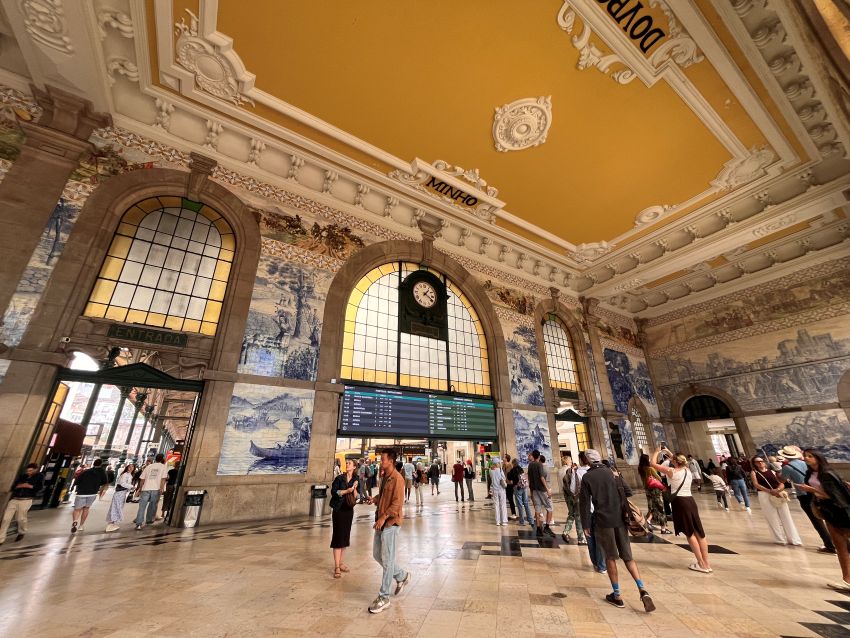
After breakfast, I walked over to São Bento Station, just a few minutes away.
I’d already been inside during my walking tour, but there were quite a few people around. I went back in the morning so I could actually stand there and look at everything without quite as many people squeezed around me.
And wow. I’d seen the photos. You probably have too. They’re nothing like standing there surrounded by those tiles.
The entrance hall of São Bento train station is covered with around 20,000 blue-and-white azulejos depicting Portuguese history and everyday life.
Meanwhile, people are dragging suitcases through the middle of it all because São Bento is an actual working train station.
That’s what made it even more interesting to me. This ridiculously beautiful room isn’t tucked away in a museum. People are walking through it on their way to catch a train.
You don’t even have to be catching a train to go inside. I wasn’t. I came back simply because I wanted more time to see the tiles.
Go in the morning if you can. It was noticeably less crowded when I went back.
Igreja de Santo António dos Congregados
You barely have to leave São Bento to find your first church.
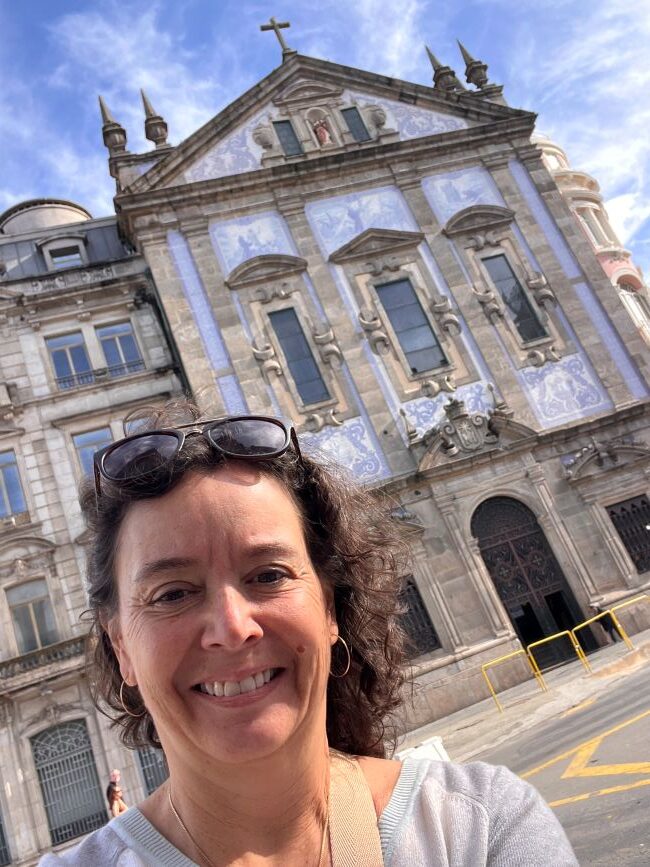
In fact, Igreja de Santo António dos Congregados is the church you see immediately to your right when you come up from the Metro escalator near São Bento.
It was literally one of the first buildings I noticed when I arrived in Porto.
The church dates to the late 17th century, although the blue-and-white tiles covering the front were added much later.
This became one of my favorite things about Porto’s churches. The outside didn’t always prepare me for what I’d find when I opened the door.
Some interiors were covered in gold and so elaborate I didn’t know where to look first. Others were much simpler.
Most of the churches I visited were free, so if it’s open, be sure to go inside.
Igreja de Santo Ildefonso
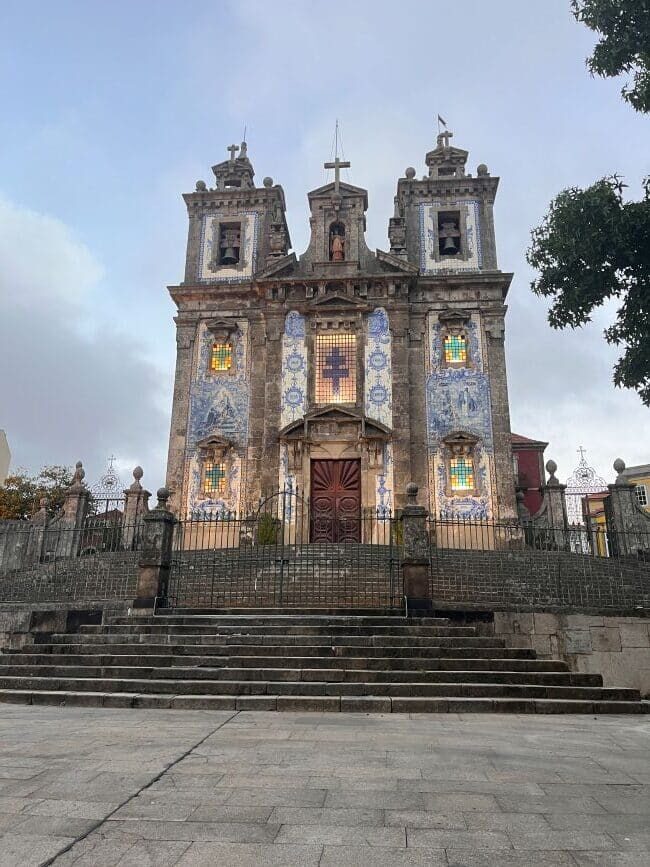
I thought this was one of the most beautiful churches in Porto! I mean, just look at it! Stunning.
Igreja de Santo Ildefonso was completed in 1739, but those beautiful blue-and-white tiles covering the front aren’t nearly that old. They were added in 1932.
There are around 11,000 of them.
The church sits above the street at the top of a set of steps, so step back far enough to see the whole façade before going inside. And if you’re nearby after dark, swing back by. The stained-glass windows lit from inside are worth seeing.
Chapel of Souls
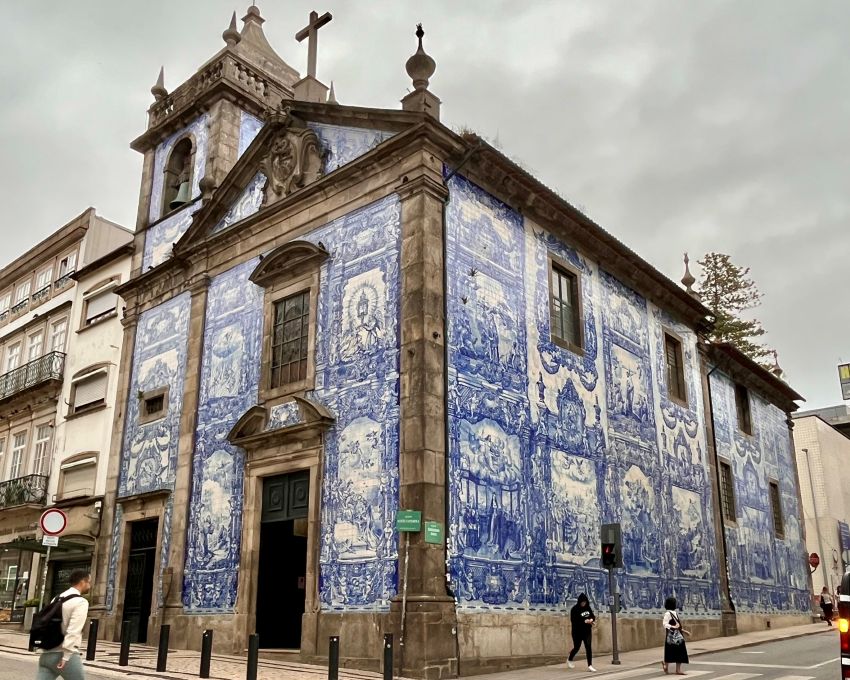
The Chapel of Souls, or Capela das Almas, was one I definitely wanted to see before I came to Porto.
The church itself dates to the 18th century, but just like Santo Ildefonso, the tiles came much later.
And there are a LOT of tiles.
They cover the front and wrap all the way around the side of the church along Rua de Santa Catarina.
This is one where you need to cross the street and look back at it to really appreciate the whole thing.
You’re also right on Santa Catarina, one of Porto’s main shopping streets. There are shops and cafés everywhere, so take your time looking around before heading toward Bolhão.
Bolhão Market
By this point, I was ready for something to eat.
Apparently visiting food markets was becoming a theme for me in Porto.
I’d been to Time Out Market after my walking tour the day before, but Bolhão Market felt completely different.
Bolhão has been part of everyday life in Porto for generations. The current market building dates to the early 20th century and has since undergone a major restoration.
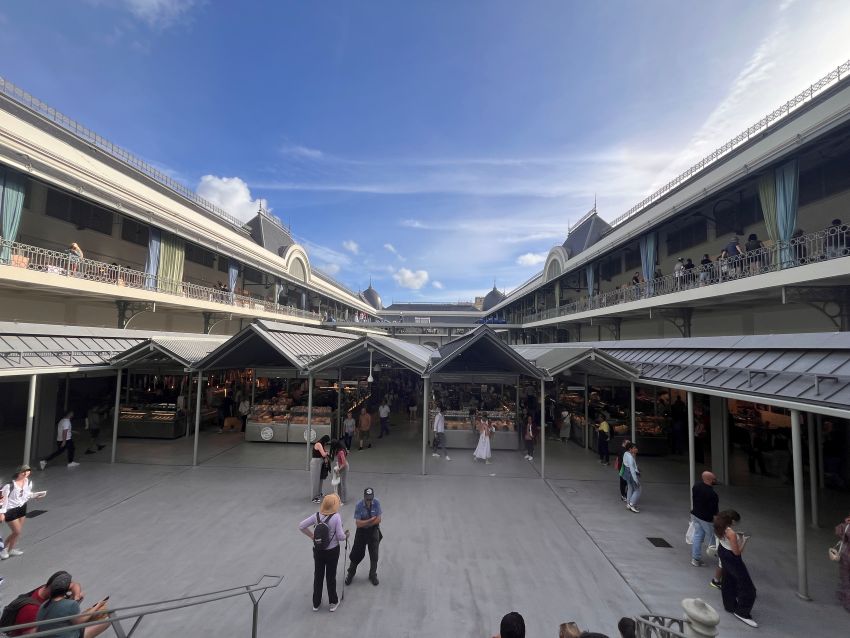
It still feels like a market rather than simply another tourist attraction.
Downstairs you’ll find stalls selling fresh fish and seafood, meat, fruit and vegetables, bread, cheese, flowers, wine and other Portuguese foods. There are also restaurants upstairs and shops around the outside of the building.
I loved it.
Instead of sitting down and ordering lunch, I wandered through the stalls and picked at different things, basically creating my own little food tour.
Then I saw the fresh oysters.
Yes, please.
I ordered fresh-shucked oysters and a glass of Vinho Verde and took them over to the steps, where other people were sitting and eating.
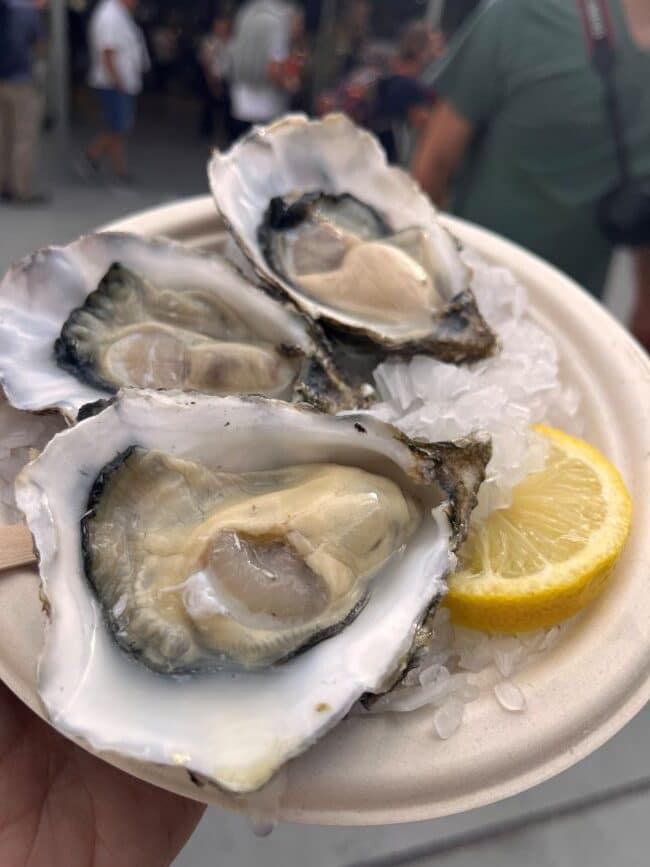
Bolhão wasn’t nearly as busy as I expected either. Time Out Market was fun, but Bolhão felt more relaxed and a little more local.
I’d just wander and try whatever looks good.
Clérigos Church and Torre dos Clérigos
After Bolhão, I made my way back toward Clérigos.
Torre dos Clérigos, or Clérigos Tower, was completed in 1763 and since it’s about 250 feet tall, it became one of the landmarks I used to orient myself while walking around Porto.
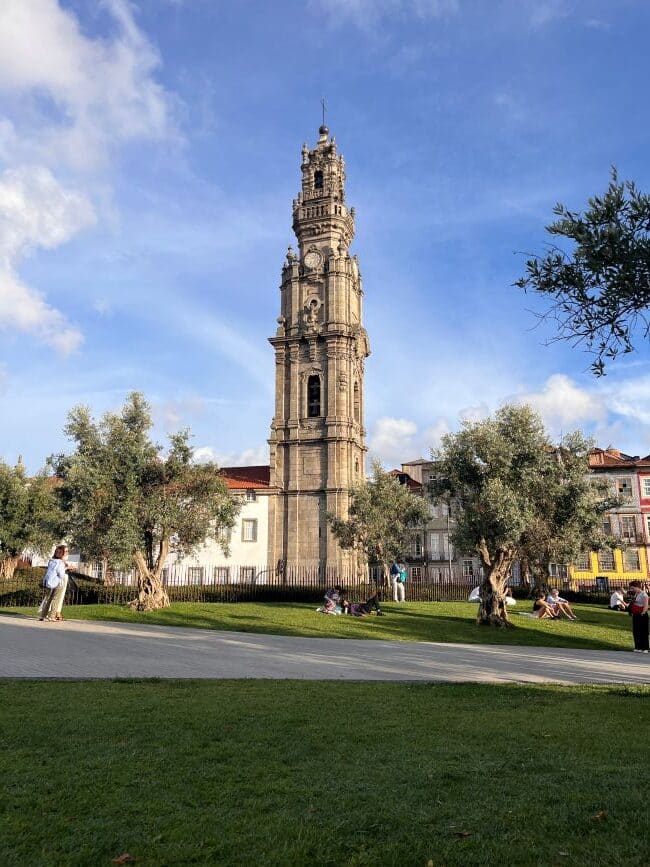
I need to point something out here because I found this confusing when I visited.
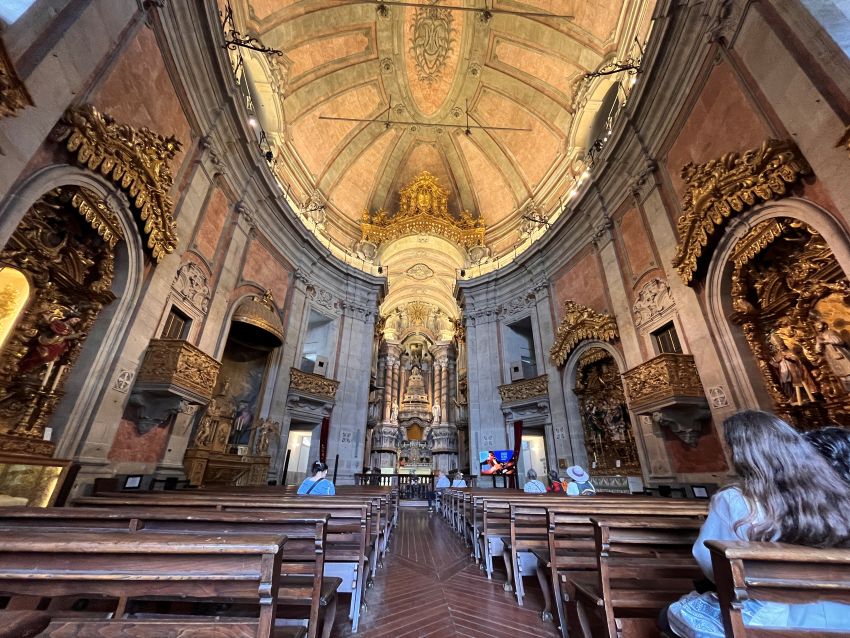
You do not have to buy a ticket to go inside Clérigos Church.
When you arrive, there’s so much focus on tickets for the tower that it can seem like you need one just to enter.
You don’t.
The church on the main floor is free. You only need a ticket if you want to climb the tower and visit the paid areas.
So even if you have no interest in climbing all those stairs, go inside the church.
What About Livraria Lello?
Livraria Lello is also right in this area and is one of Porto’s most famous attractions.
I didn’t visit it on this trip, so I’m not going to tell you it’s a must-see when I didn’t see it myself.
But if Livraria Lello is high on your list, this is the easiest place to work it into this itinerary since you’re already nearby.
I’d book your Livraria Lello tickets ahead of time rather than counting on walking straight in.
Carmo Church and Carmelitas Church
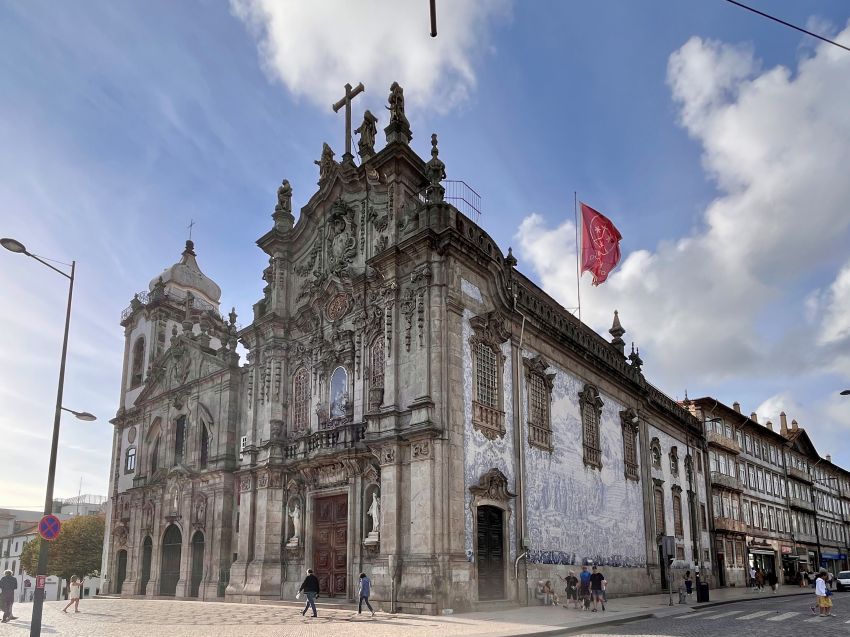
Carmo Church and Carmelitas Church sit right beside each other, but they’re actually two separate churches.
Carmelitas is the older of the two, dating to the early 17th century. Carmo came later, in the 18th century.
And squeezed between the two churches is an incredibly narrow house that was once actually lived in. Today you can go inside as part of a paid visit to the Carmo complex.
Carmo is also the one with that enormous blue-and-white tiled wall you’ve probably seen in photos of Porto. Definitely walk around the side so you can see the whole thing.
By this point, I’d seen a lot of churches, but they really didn’t start blending together. Some had incredibly ornate, gold-covered interiors, while others were much simpler.
If your feet are done at this point, head back to your hotel and rest for a while.
Try a Francesinha for Dinner
When you’re hungry again, Café Santiago is a great place to try one of Porto’s most famous foods: the francesinha.
It was only about a 10-minute walk from where I stayed near São Bento, so it was easy to head back out for dinner after a rest.
So, what exactly is a francesinha? A francesinha is a very hearty sandwich layered with different meats and sausage, covered in melted cheese and smothered in a rich tomato and beer sauce, with fries alongside it.
Café Santiago is famous for theirs, and I knew I wasn’t leaving Porto without trying one.
It’s a lot of food.
I made it through about half.
I’m glad I tried it, but once was probably enough for me. Still, I think you have to try a francesinha at least once while you’re in Porto and decide for yourself.
Day 2 in Porto: Porto Cathedral and Matosinhos
I started Day 2 heading toward Porto Cathedral, but first, breakfast.
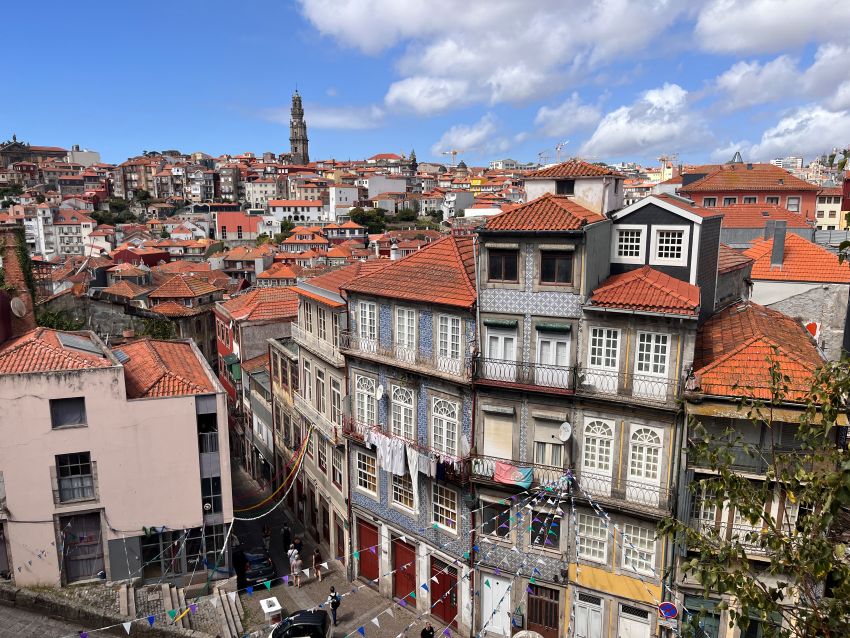
I popped into a local café for a coffee and pastry to go and found a spot at the viewpoint right by the cathedral.
Breakfast with a view!
I stood there with my coffee and pastry looking out over the rooftops, with Clérigos Tower in the distance. It was quiet, simple and such a good way to start the morning.
Porto Cathedral
Porto Cathedral, or Sé do Porto, isn’t just another beautiful church. It’s one of the oldest and most important buildings in the city, with construction beginning in the 12th century.
Because it was changed and expanded over hundreds of years, you’ll see a mix of Romanesque, Gothic and Baroque architecture.
Something our walking-tour guide said came back to me while I was up there. He told us to look at what’s sitting at the top of a city because sometimes it tells you something about the city itself.
Porto has its cathedral. Lisbon has its castle.
I loved that comparison.
Porto grew around its cathedral and the religious center established on this high ground during the Middle Ages.
Lisbon’s highest hill, on the other hand, is crowned by São Jorge Castle, a fortified site that was about defense, control and watching over the city and the Tagus River below.
It also helped me understand why there seem to be churches everywhere you turn in Porto. Religion played such a central role in the city’s history that all the churches and chapels I’d spent the previous day wandering into suddenly made a little more sense.
It’s obviously a simplified way of looking at two cities with very long histories, but once our guide pointed it out, I couldn’t unsee it.
The main cathedral is free to enter, but spend the few extra euros to see the cloisters.
I wasn’t prepared for how beautiful they were.
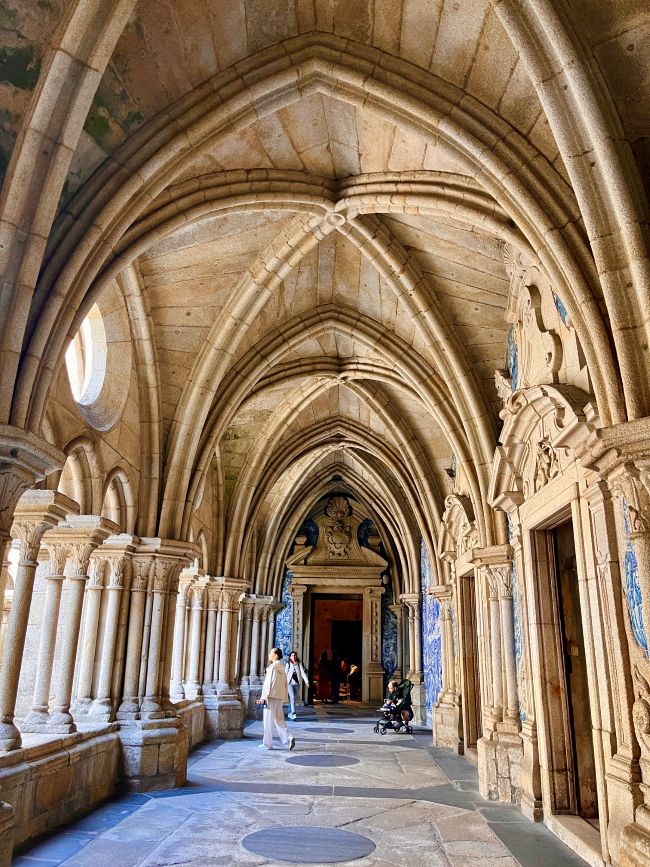
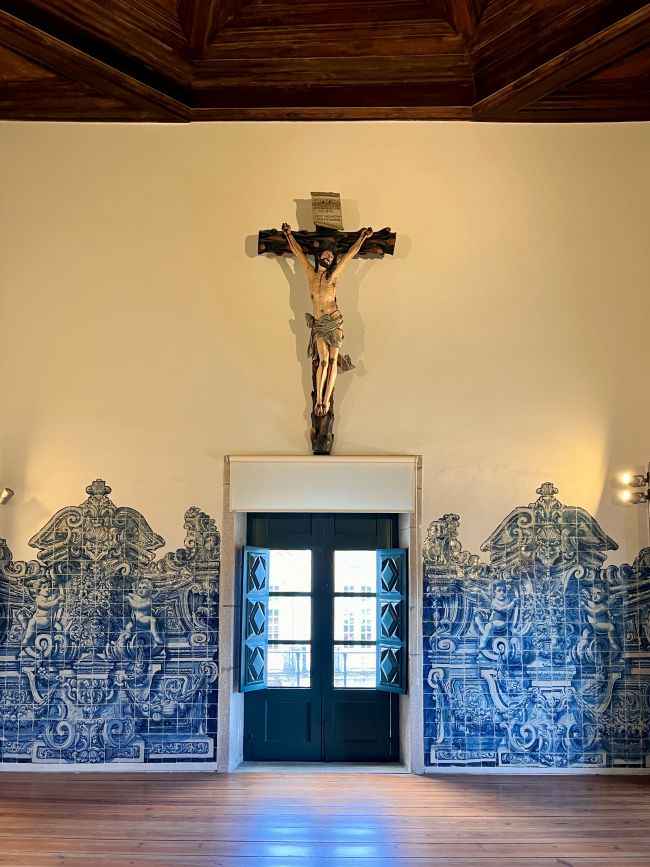
The Gothic cloisters date to the 14th century, and the walls are lined with blue-and-white tile panels that were added much later.
It almost didn’t feel like the same place I’d just been looking at from outside.
For only a few euros, don’t skip this part.
Take Bus 500 to Matosinhos
After the cathedral, I headed back toward São Bento to catch Bus 500 to Matosinhos. I’d actually noticed the bus stop while walking toward the cathedral that morning, which made finding it later really easy.
Bus 500 runs roughly every 20 minutes, and the ride to Matosinhos takes around 40 minutes.
Here’s the important part: sit on the left side of the bus going to Matosinhos.
Part of the route runs right along the water, and you’ll get much better views from that side.
On the way back to Porto, sit on the right.
I went to Matosinhos specifically for the Pinhais sardine factory tour. I wanted something a little more low-key and away from the busiest parts of Porto.
The reviews I’d read basically said, “Don’t miss this.”
They were right.
Mercado de Matosinhos
Apparently I wasn’t done with markets yet.
Bus 500 drops you near Mercado de Matosinhos, the city’s municipal market.
If you have a few minutes, go inside.
You’ll know pretty quickly that you’re in a coastal town known for its seafood. You can smell the fish almost as soon as you walk through the door.
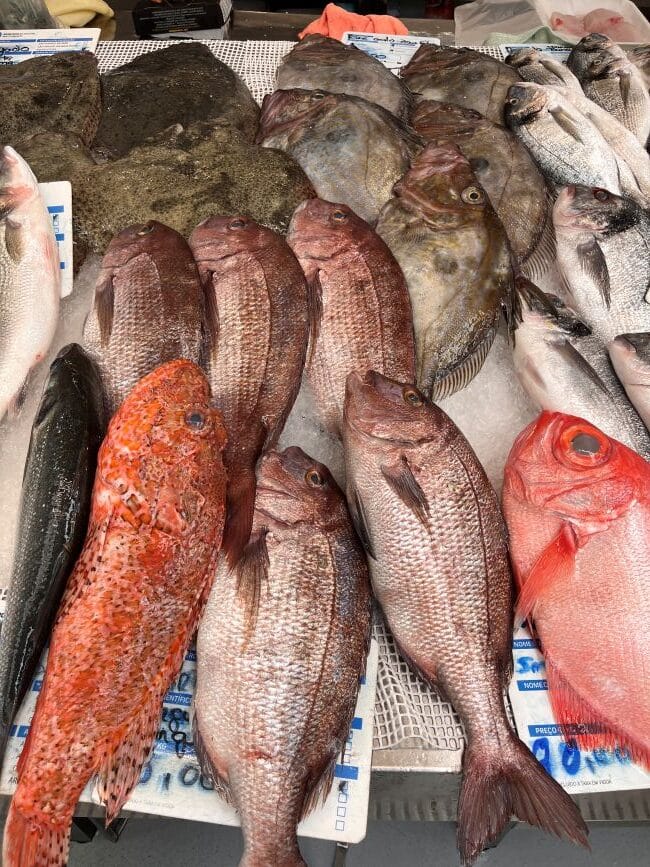
This isn’t a polished food hall like Time Out Market. It’s a working local market, with vendors selling fresh fish and seafood along with produce and other foods.
The Pinhais factory isn’t far from here, so the market is an easy place to look around before or after your tour.
Tour the Pinhais Sardine Factory
The Pinhais sardine factory tour was one of my favorite things I did during my time in Porto.
I have a full guide to the sardine tour in Porto with what the tour is like, what you’ll see, and what to know before you book.
The tour lasts about an hour and a half, and I would definitely book your tour ahead of time. Tours are scheduled by time and language, so don’t assume you can just show up and get the one you want.
Pinhais is still a working sardine factory, which is a big part of what makes the tour so interesting. You’re not walking through a museum showing how sardines used to be canned. You’re seeing the actual process.
And it’s surprisingly hands-on.
You even get to wrap your own sardine tin.
Then you get to eat them!
You can book the Pinhais Sardine Factory Tour here.
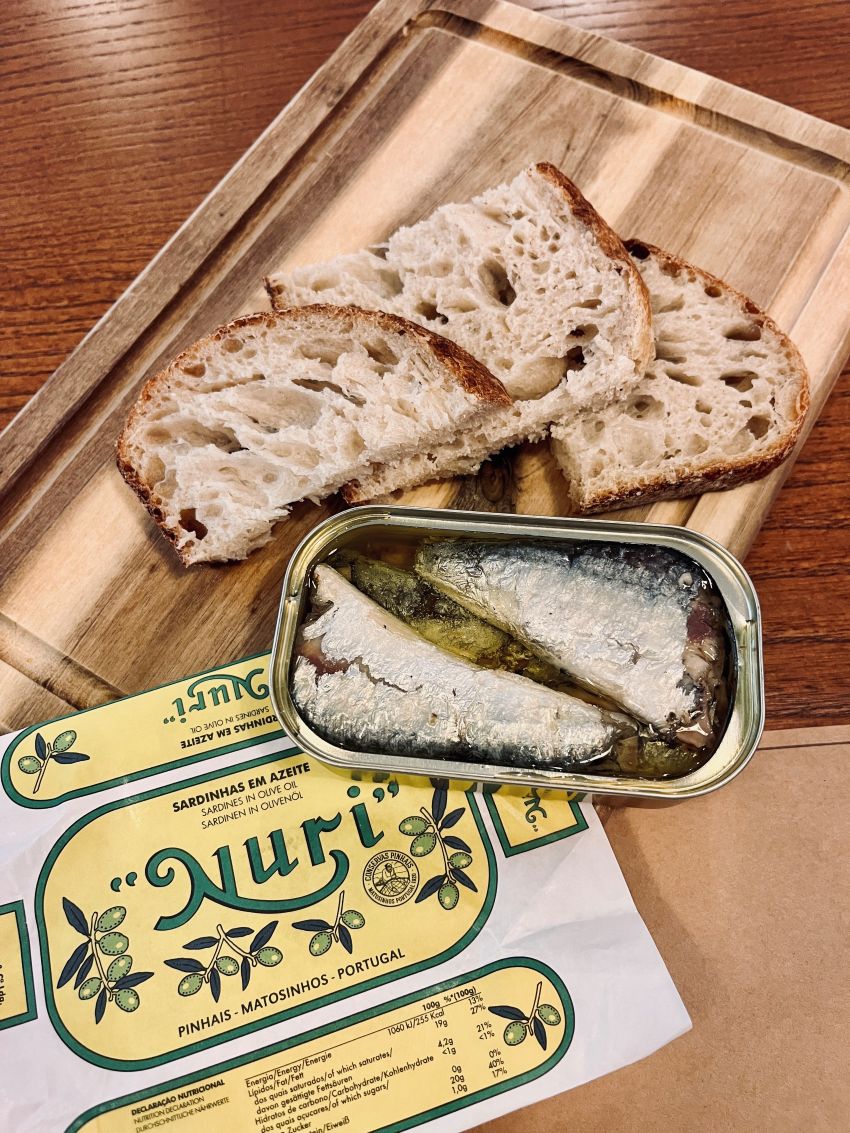
Tinned sardines at the Pinhais Sardine Factory
Before coming to Portugal, I’d never had sardines. I always pictured them as tiny little fish, almost like anchovies. I had no idea sardines were that big.
The tinned sardines were much meatier than I expected, almost more like tuna.
And yes, I ate the whole tin.
They’re served with bread, and together they’re surprisingly filling, so save room for dinner.
Spend Some Time Exploring Matosinhos
Don’t get right back on Bus 500 after the tour.
Matosinhos feels completely different from central Porto. It’s flatter, quieter and less touristy, which was exactly what I’d been looking for that afternoon.
There’s also a long beach here. You can walk along the water and watch the surfers, or make more of an afternoon of it. I saw several places offering surf lessons while I was there, so that’s an option if you want to try it.
Surfing wasn’t on my agenda. I was happy just wandering.
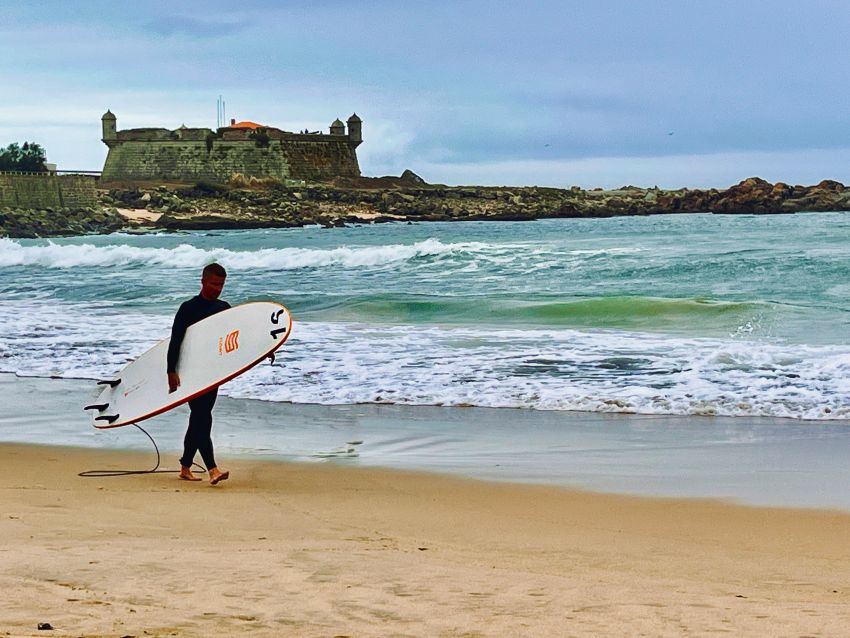
That’s how I ended up at Igreja Paroquial do Senhor Bom Jesus de Matosinhos, roughly translated as the Parish Church of the Good Jesus of Matosinhos.
This isn’t just a little neighborhood church. It’s an important pilgrimage church and one of the major religious landmarks in Matosinhos. The current Baroque-style church dates largely to the 18th century, although devotion to Bom Jesus de Matosinhos goes back much further.
I hadn’t planned to visit it.
I saw it while wandering and went over to take a look, then spent some time walking through the gardens around the church.
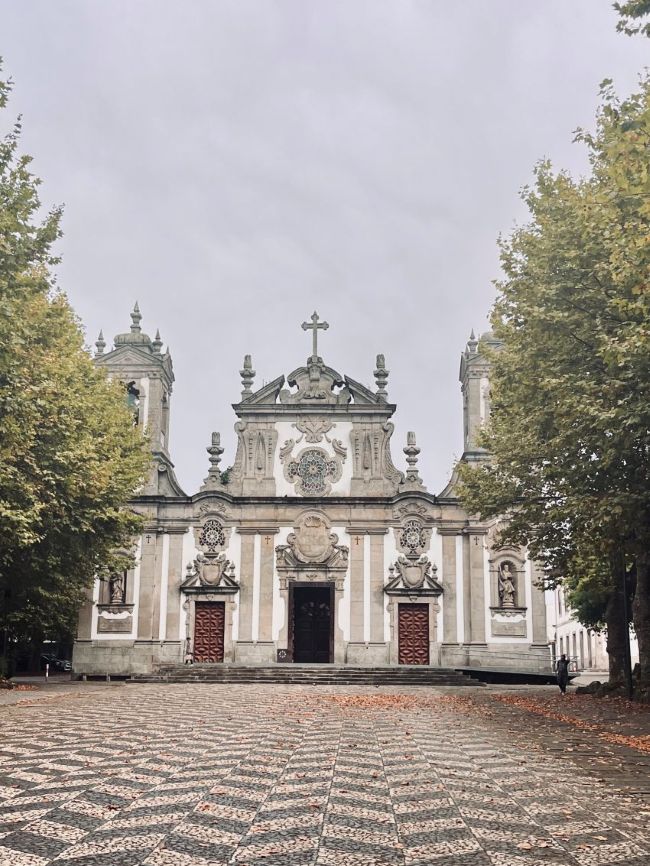
Eventually, I made my way back toward Mercado de Matosinhos and caught Bus 500 back into Porto.
Remember: sit on the right side this time for the water views.
Octopus Rice for Dinner
After getting back to Porto, I freshened up and went in search of something else I’d been wanting to try: octopus rice.
Finding octopus rice wasn’t the problem.
Finding a restaurant that would serve it to one person was.
I kept seeing it on menus as a dish for two, which isn’t particularly helpful when you’re traveling alone.
Then I found it at Casa da Companhia Hotel & Spa, just down the street from where I was staying.
Finally.
The octopus was incredibly tender, and the rice was so, so good.
Between sardines in Matosinhos and octopus rice back in Porto, this ended up being a very seafood-heavy day.
I wasn’t complaining.
Day 3 in Porto: Ribeira, Gaia and Port Wine
For my last full day in Porto, I headed down toward Ribeira early.
Ribeira is one of the busiest parts of the city later in the day, so I liked being down here earlier when I could actually slow down and look around.
And that’s exactly what I’d do.
Take Your Time Along the Ribeira Waterfront
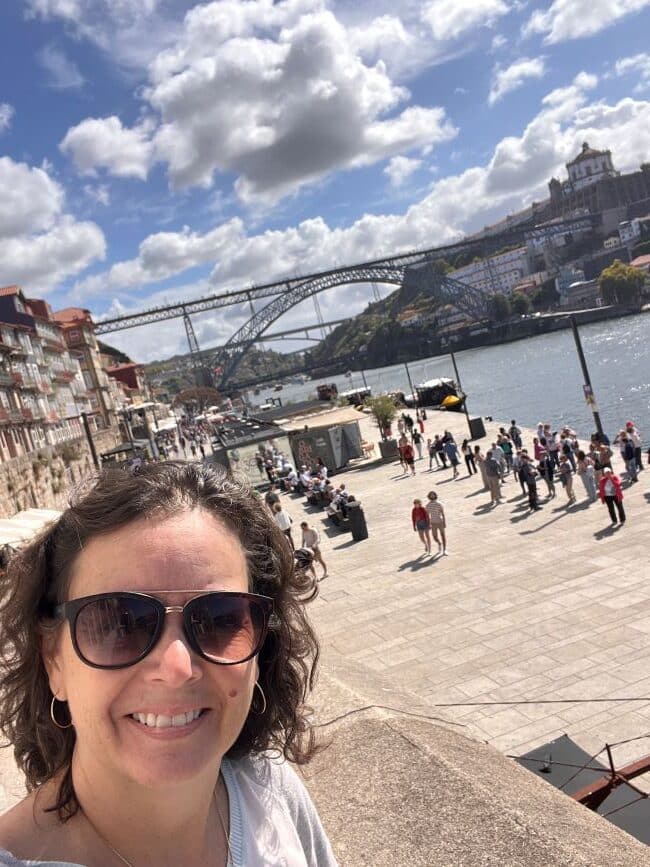
Don’t make the Dom Luís I Bridge your only goal. Take your time walking along the waterfront in its direction.
The colorful buildings are packed together behind you, boats move along the Douro River, and Vila Nova de Gaia sits directly across the water.
There are cafés and restaurants along the way and plenty of little things that give you an excuse to stop.
You’ll even pass another McDonald’s down here. Apparently I was unintentionally keeping track of Porto’s McDonald’s locations by this point.
You’ll also see Trolley Infante, one of Porto’s historic trams.
Just keep walking along the river in the direction of the bridge. There’s no reason to hurry this part.
Igreja de São Nicolau
Before continuing toward the bridge, stop at Igreja de São Nicolau, or Church of Saint Nicholas.
Yes, another church. But at this point, why not?
The church sits near Ribeira and is dedicated to Saint Nicholas, traditionally the patron saint of sailors and merchants, which makes its location near Porto’s historic riverfront especially fitting.
If it’s open, pop inside before continuing along the waterfront.
Then keep following the Douro toward the bridge.
Walk Across the Dom Luís I Bridge
Eventually, you’ll reach the Dom Luís I Bridge.
You can cross it on two levels, but I chose the upper level.
It’s high. Really high.
But those views.
From up there, you can look down over the Douro River and Ribeira, with Porto’s rooftops climbing the hills behind you and Gaia on the other side. And later that evening, this bridge would give me one of my favorite views of the entire trip.
The upper level is shared with the Metro, with pedestrian walkways along the sides. There are barriers, but if you’re uncomfortable with heights, just know that you definitely feel how high you are.
Cross the Dom Luis Bridge and you’re in Vila Nova de Gaia, usually just called Gaia.
You’re technically in another city even though all you’ve done is walk across a bridge.
Spend Some Time Wandering Around Vila Nova de Gaia
Vila Nova de Gaia is where you’ll find Porto’s famous Port wine cellars lining the Douro.
But there are also shops, cafés and restaurants everywhere along the waterfront.
I didn’t have a long list of things I needed to see before my Port wine tour.
I wandered.
Some of the shops are definitely touristy, but that doesn’t mean they aren’t fun to look around.
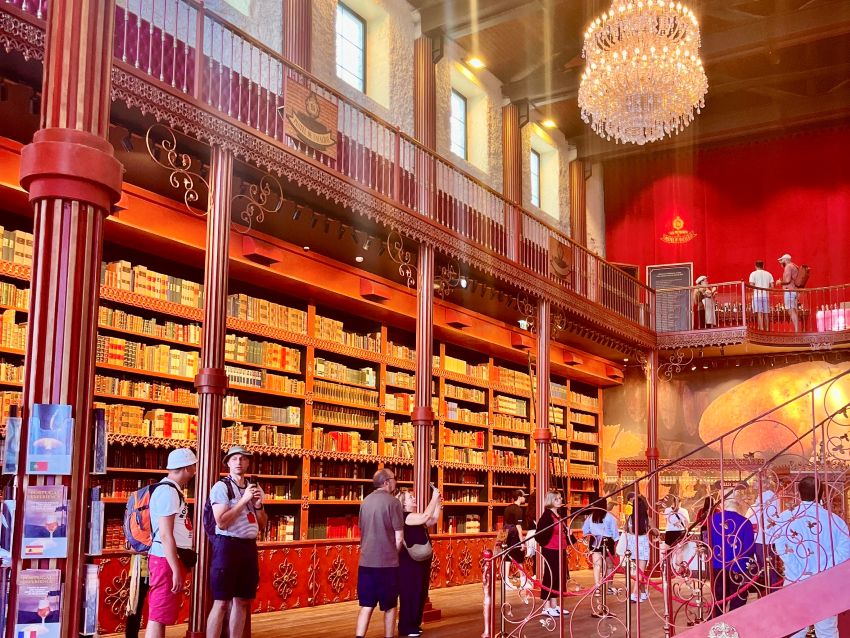
I went into one filled with row after row of fancy tins of sardines and other canned fish.
Was it touristy? Absolutely.
Did I still wander around looking at all the tins? Also yes.
After touring the Pinhais factory the day before, I had a whole new appreciation for Portugal’s tinned sardines anyway.
Find the Half Rabbit
Then I stumbled across something completely different.
The Half Rabbit is a huge piece of street art by Portuguese artist Bordalo II made from trash and discarded materials.
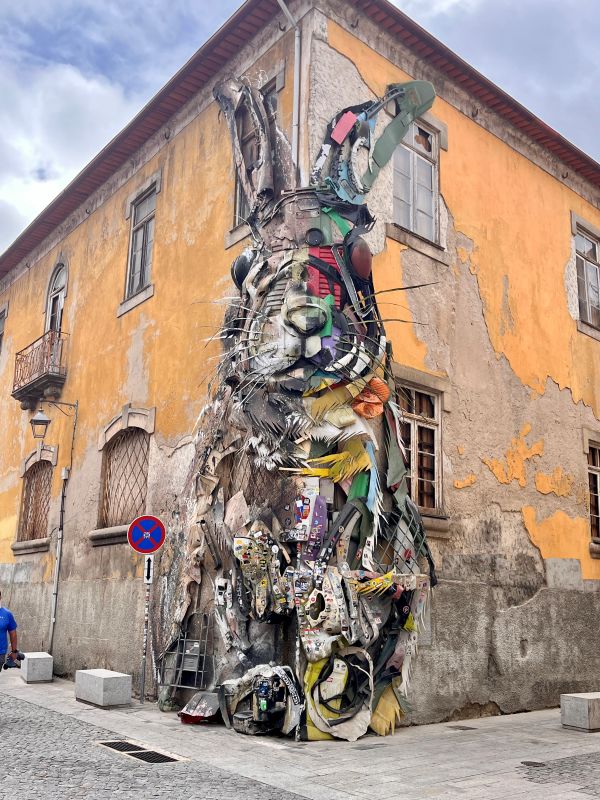
I hadn’t gone looking for it, which made finding it even more fun.
One half is brightly painted while the other lets you see the discarded materials used to create it. Get close and you can start picking out all sorts of random pieces making up the rabbit.
Stop at Mercado Beira-Rio
At this point, stopping at a market had pretty much become part of my Porto itinerary.
I stopped at Mercado Beira-Rio for lunch.
It’s near the Gaia waterfront and has different food stalls under one roof, so you can walk around, see what looks good and grab something without turning lunch into a long restaurant stop.
There are plenty of shops around this area too, so I spent some time wandering in and out of those before my wine tour.
Should You Take the Gaia Cable Car?
When you cross the upper level of the Dom Luís I Bridge into Gaia, you’ll see the Teleférico de Gaia, or Gaia cable car.
One important thing to know: the cable car does not cross the Douro River.
It stays entirely on the Gaia side.
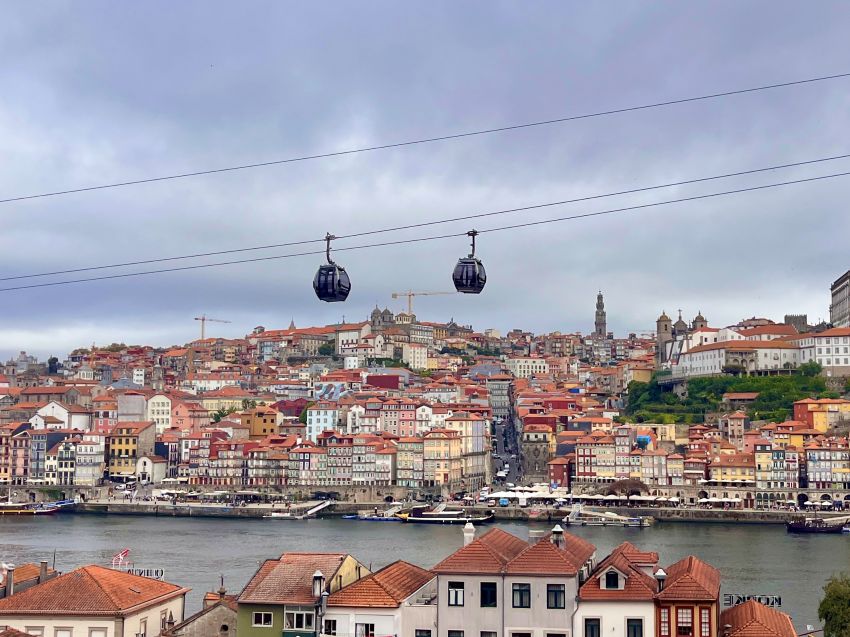
It connects the upper area near Jardim do Morro and the Dom Luís I Bridge with the lower Gaia waterfront, where you’ll find the Port wine cellars, Mercado Beira-Rio, shops and restaurants.
A one-way adult ticket is currently €7, or €10 round trip.
I considered it.
For €7 one way, I didn’t think I needed to. The walk really wasn’t that bad.
I can see the appeal, though. You get elevated views over Gaia, the Douro and Porto, and there’s the novelty of riding a cable car over the rooftops.
For me, walking won.
Take a Cálem Port Wine Tour
You can’t spend much time in Gaia without noticing the Port wine cellars.
They’re everywhere.
I booked a tour at Cálem, one of the historic Port houses along the river.
I knew almost nothing about Port wine before I went, so I put together a full guide to the Cálem wine tour for anyone wondering what the experience is actually like.
So you definitely don’t need to know anything about Port wine before taking a tour.
The Cálem tour starts in an interactive museum before taking you into the cellars. I learned how Port is made, why some Port wines age in large vats while others age in smaller barrels, and just how much wine is stored down there.
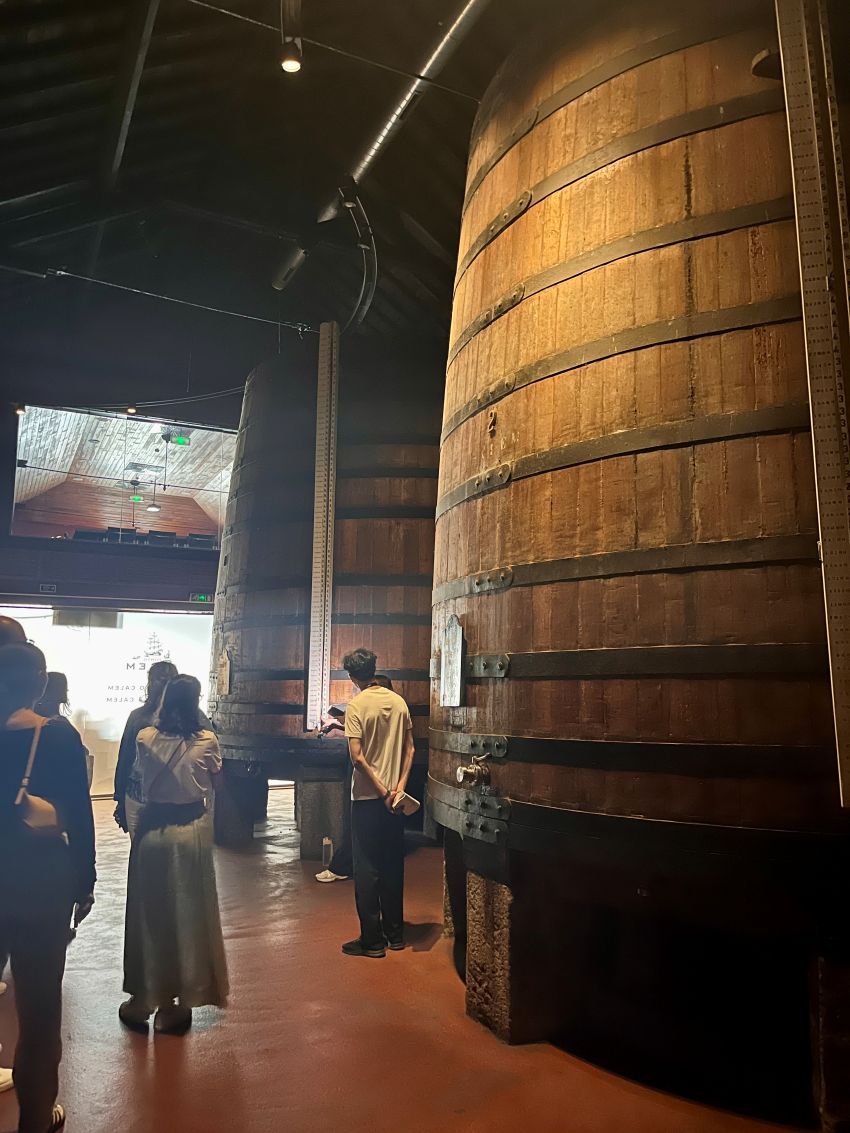
Then, of course, there’s the Port tasting.
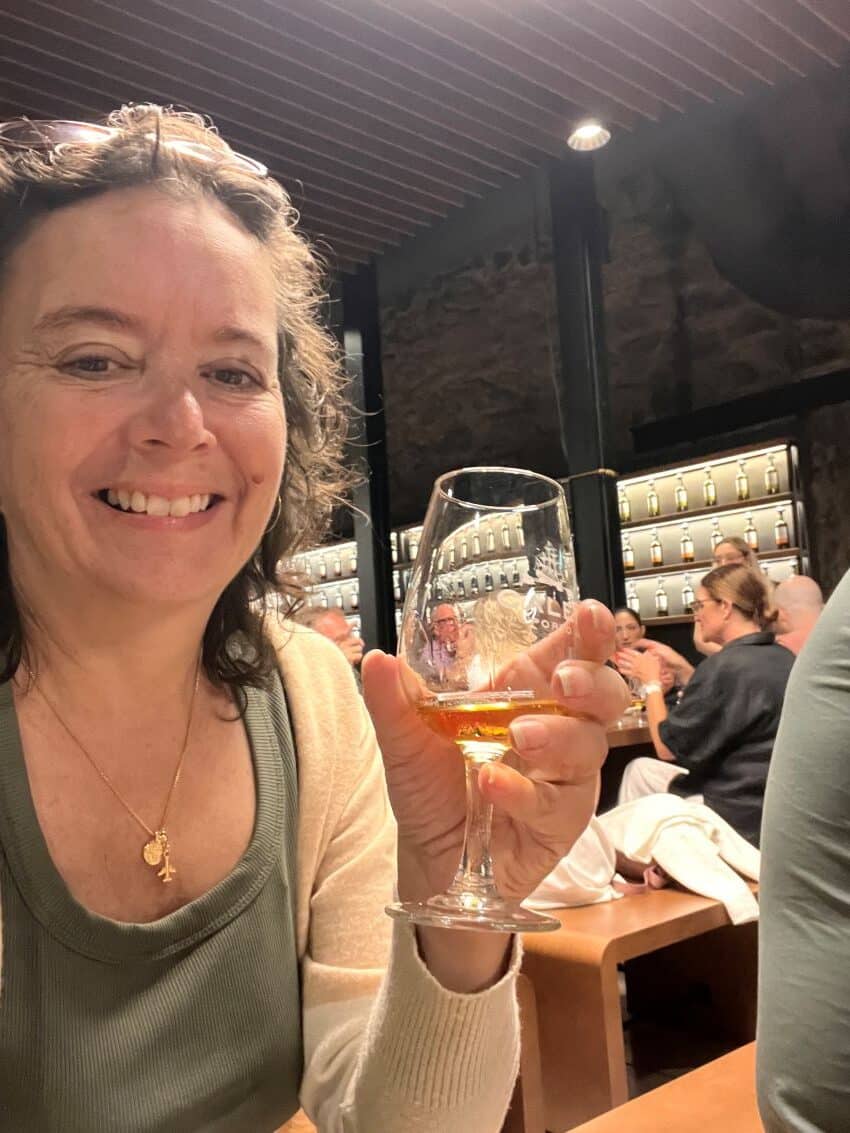
Port wine is stronger than regular table wine, generally around 19 to 22% alcohol, so those little tasting glasses aren’t quite as innocent as they look.
And after all that, guess which one I liked best?
The white Port.
So much for always preferring red wine.
If a Port wine tasting is on your Porto list, you can book the same Cálem wine tour I took here.
Watch the Sunset at Jardim do Morro
If there’s one thing I would tell you not to miss during three days in Porto, it’s sunset from Gaia.
Head up to Jardim do Morro, the grassy hillside near the upper level of the Dom Luís I Bridge.
It’s popular. Very popular.
But this is one time when I didn’t mind the crowd at all.
People were spread out across the hillside waiting for sunset. Vendors walked around selling snacks and drinks, there were a couple of carts nearby, and live music was playing.
I found a spot under a tree and leaned my back against it.
Music playing. A soft breeze. Everyone just enjoying the evening.
But then the clouds started rolling in, and it looked like the colorful sunset I’d been waiting for wasn’t going to happen after all.
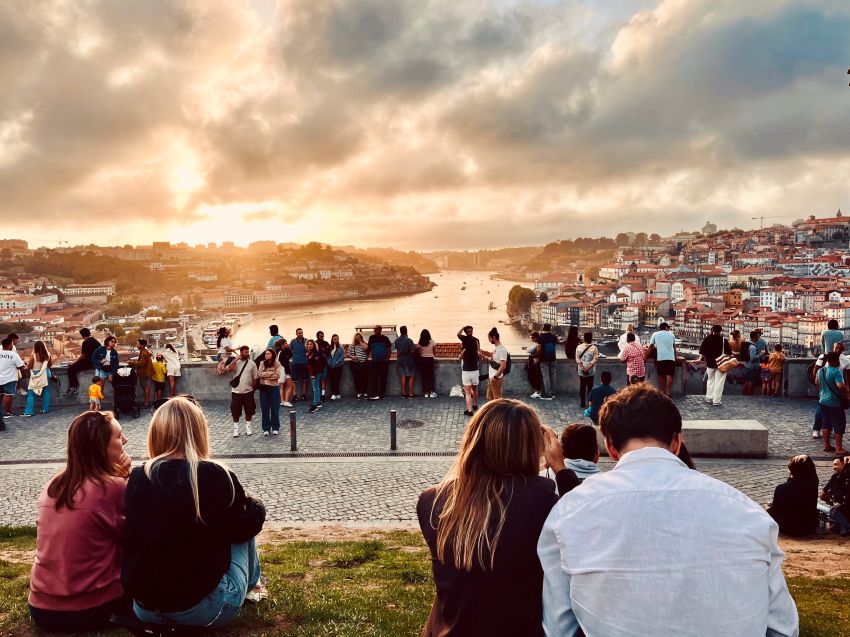
I figured I’d start walking back across the Dom Luís I Bridge and head to dinner.
And then, just as I got to the bridge, the sky completely changed.
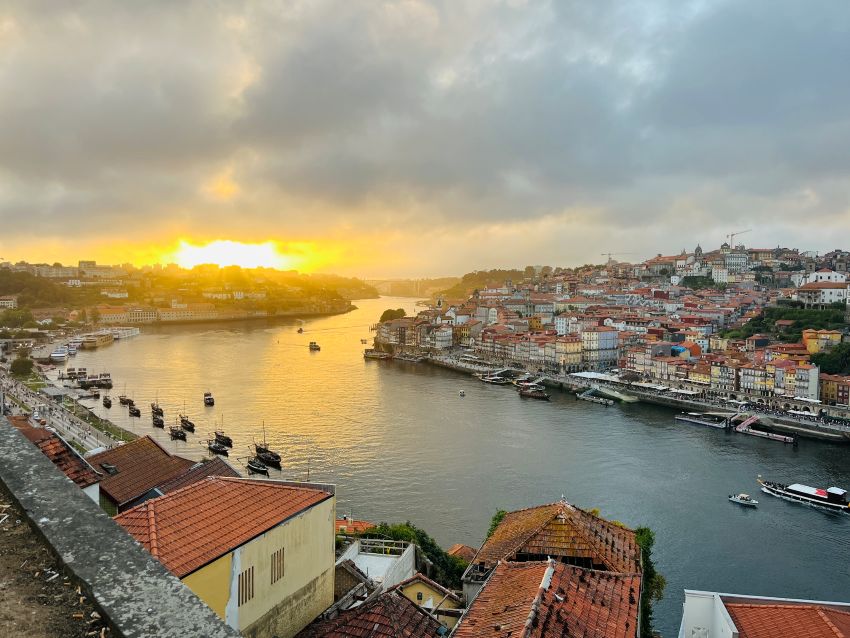
The clouds opened up enough for the warm evening light to come through, and suddenly there it was, the sunset I’d been hoping for over Porto.
That view from the bridge is still one of the moments I picture first when I think about Porto.
Dinner at Adega São Nicolau
For dinner, I went to Adega São Nicolau, a small Portuguese restaurant I’d noticed earlier while wandering around Ribeira.
There was a bit of a wait. Worth it.
I started with bread and olive oil, then ordered the garlic prawns.
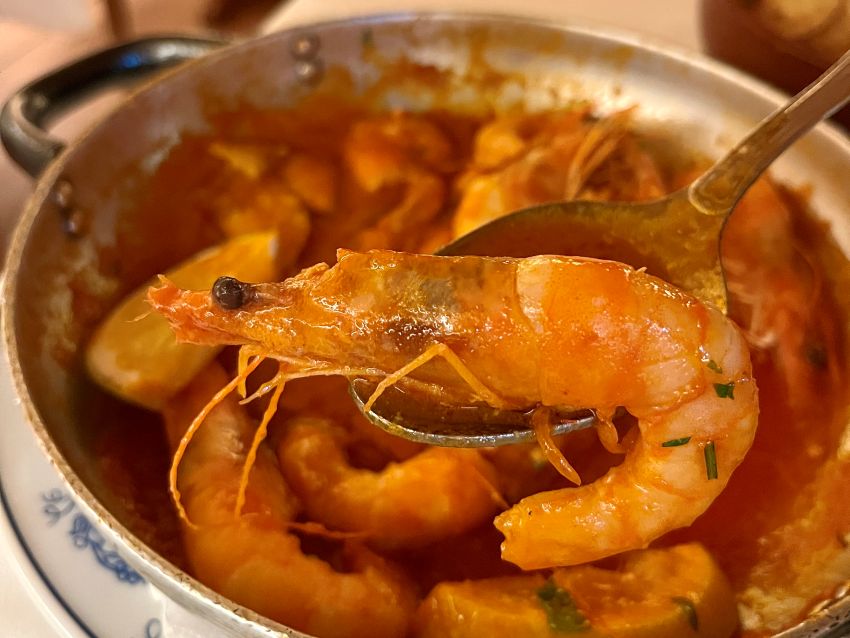
They came out hot, garlicky and full of flavor, with plenty of sauce for soaking up with the bread.
Add a glass of cold Vinho Verde, and I was very happy with my dinner choice.
And yes, I still ordered dessert.
They also serve octopus rice, one of their signature dishes, so if you haven’t managed to try it yet, here’s another chance.
After Port tasting in Gaia, that sunset over the Douro and dinner back in Ribeira, I couldn’t think of a much better way to finish my last full day in Porto.
Should You Take a Douro Valley Day Trip?
A Douro Valley day trip is one of the most popular day trips from Porto, and I seriously considered doing one.
In the end, I didn’t.
Most of the tours I looked at would take up almost an entire day, and I wasn’t sure I wanted to spend that much time with a group of strangers. Traveling solo, there’s also always that possibility of ending up surrounded by couples and feeling a little like a third wheel.
I decided I’d rather keep that day for Porto.
And I’m glad I did.
With only three full days, there was plenty I wanted to see in the city and nearby Matosinhos. I still got to learn about Port wine and do a Port tasting in Gaia without giving up a whole day.
That doesn’t mean I wouldn’t visit the Douro Valley. I absolutely would.
If seeing the valley and its vineyards is high on your list, you could easily swap my Matosinhos day for a Douro Valley tour.
Ready to add it to your itinerary? You can book a Douro Valley tour from Porto here.
Are Three Days in Porto Enough?
For me, three days in Porto was enough, especially because my early flight gave me that extra arrival day.
I didn’t see everything.
I didn’t try to.
Three days gave me enough time to experience Porto without feeling rushed. I saw the major sights I cared about, got out of the city for part of a day, spent time in Gaia, ate a ridiculous amount of Portuguese food, and still had room to wander without constantly checking the time.
If you only have three days and no bonus arrival day, I’d move the walking tour to the morning of Day 1 and adjust the church wandering afterward.
You don’t need to follow this itinerary minute by minute.
And if you have four full days? Even better. That’s when I’d start considering one of the longer day trips from Porto, including the Douro Valley.
If Porto is just one stop on your trip, you can also see how I planned the rest of my Portugal trip along with all of my Portugal guides in one place.
My Final Thoughts on Three Days in Porto
Porto ended up being a city I enjoyed almost immediately.
I loved that I could have a plan for the day without needing to plan every minute of it. There was always another tiled building to notice, a church door to open, a café to stop at, or a street that made me curious enough to see where it went.
And then there was that sunset.
Sitting against a tree in Gaia with music playing, a soft breeze and the evening sun falling over Porto is still the moment that comes back to me first.
Three days in Porto felt like enough, and having that bonus arrival day made the whole trip feel even more relaxed.