This post contains affiliate links. If you make a purchase, I may earn a small commission at no additional cost to you. As an Amazon Associate, I earn from qualifying purchases.
If you’re wondering how many days in Hoi An you need and whether it really is as charming as it looks in photos, let me just say this: three days is a great start, and yes, go!
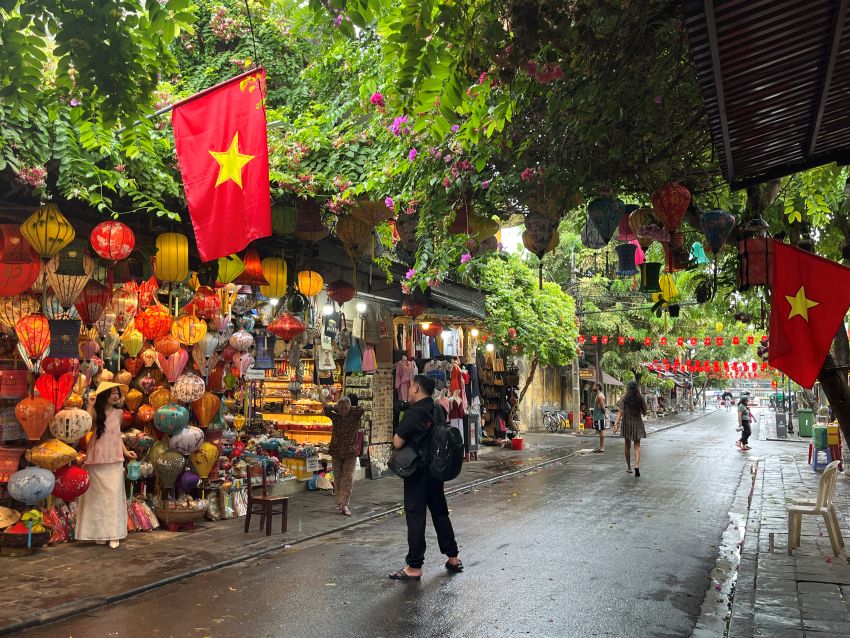
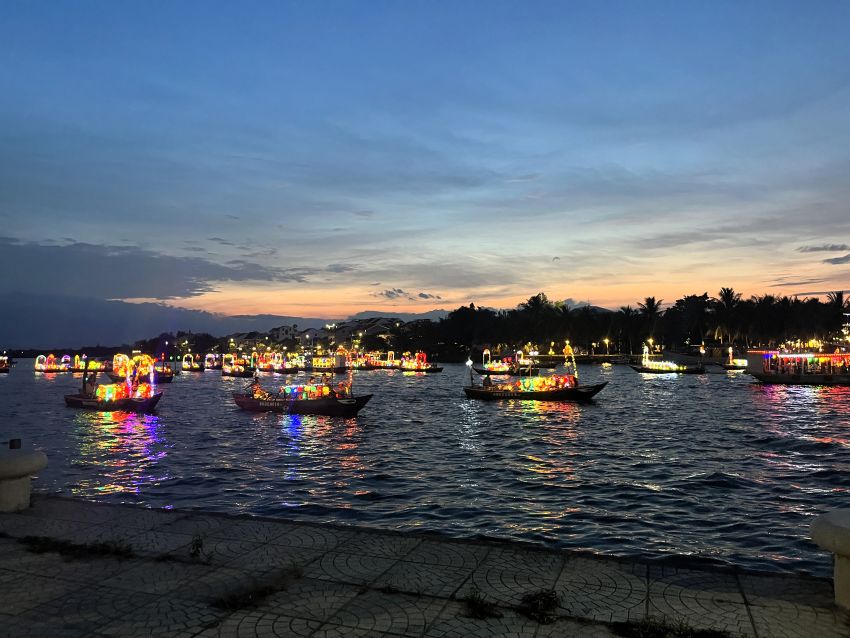
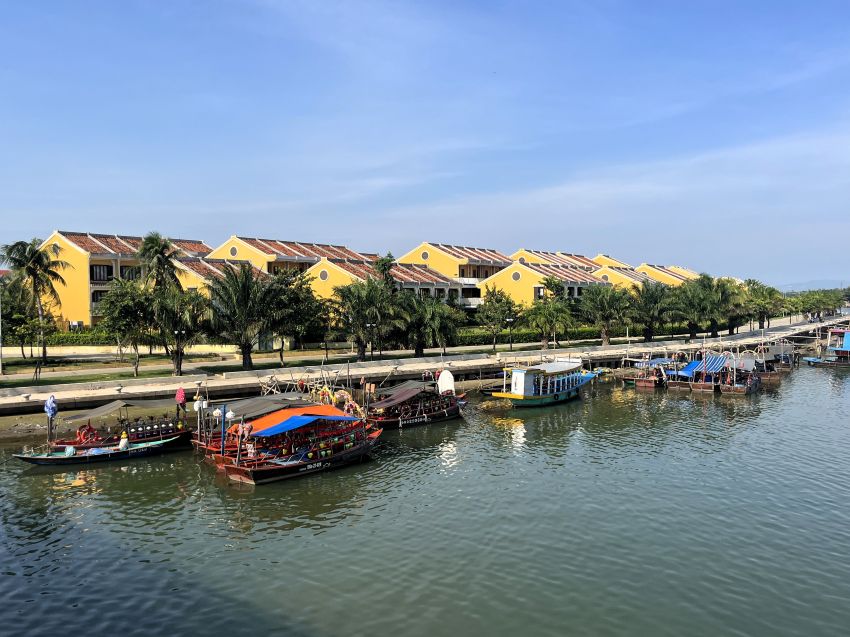
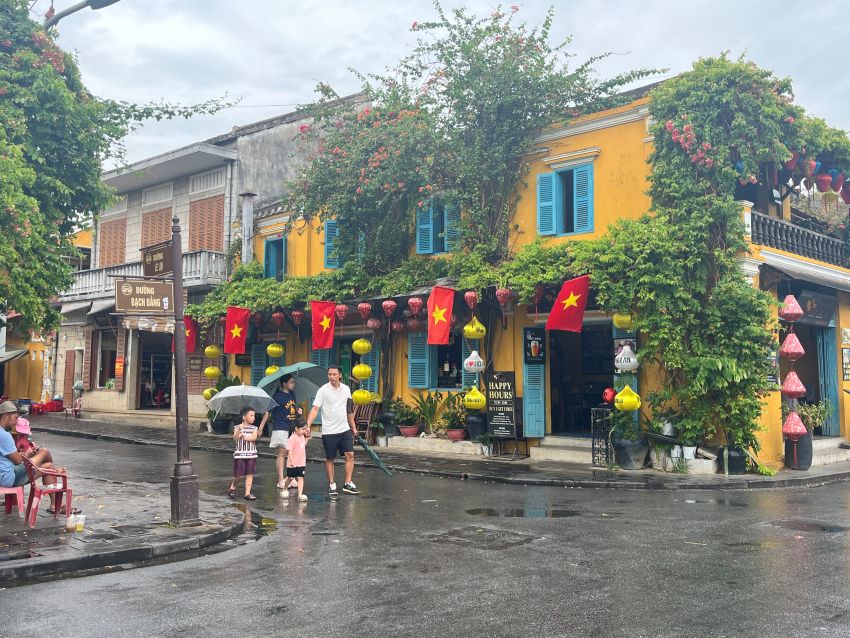
Lanterns hang above narrow streets lined with faded yellow buildings. Wooden boats glow on the river after dark. Just beyond Ancient Town, paved paths wind through green rice fields where water buffalo graze beside the road. Add food you probably won’t find anywhere else in Vietnam, and Hoi An becomes much more than a pretty place to take pictures.
I spent three nights here during a longer 10 day solo trip through Vietnam, and this is the itinerary I’d recommend to a friend. It includes the places I loved, the things I’d do differently and plenty of room to wander into whatever catches your eye.
So, how many days in Hoi An do you need? For a first visit, three days is just right.
The quick answer: Three days in Hoi An gives you enough time for Ancient Town, local food, either the countryside or beach, plus a stop at Marble Mountains without packing every hour. Add another day for My Son Sanctuary, a cooking class, custom clothing or a full day at An Bang Beach.
Table of Contents
Three Days in Hoi An at a Glance
Arrival afternoon: Check into your hotel, get your first look at Ancient Town and watch the lanterns come on.
Day 1: Explore Hoi An’s historic buildings in Ancient Town and take an evening food tour.
Day 2: Cycle through the rice fields and visit Trà Quế Vegetable Village, or head to An Bang Beach.
Day 3: Visit Hoi An Central Market, stop at Marble Mountains and continue to Da Nang.
This works especially well if you’re staying three nights and continuing through central Vietnam. If Hoi An is still your base after Marble Mountains, no problem. Just arrange for your driver to bring you back or take one of several organized tours to Marble Mountains.
Where to Stay in Hoi An
Do yourself a favor and stay within easy walking distance of Ancient Town. You’ll want to go over early, come back for a break when the heat kicks in and head out again for dinner without dealing with transportation every time.
I stayed at Moire Hoi An, Vignette Collection by IHG, directly across the river from Ancient Town, and I would stay there again without hesitation. You really couldn’t ask for a better location.
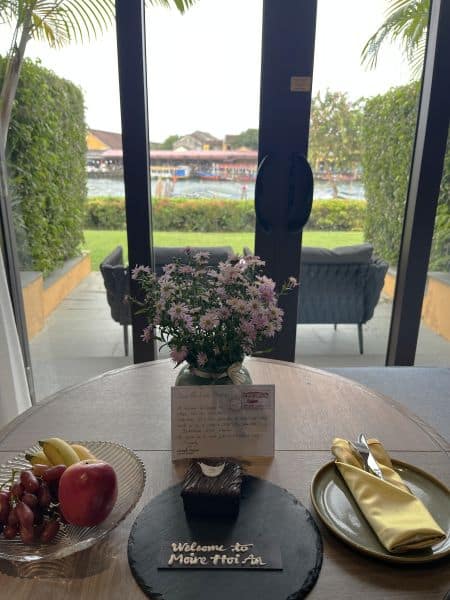
Moire is a higher-end property and more of a splurge than my usual hotel, but it was such a nice way to begin the trip after a long flight. Walking into my king river-view room with its private patio made me feel a little bougie, and I loved every minute of it!
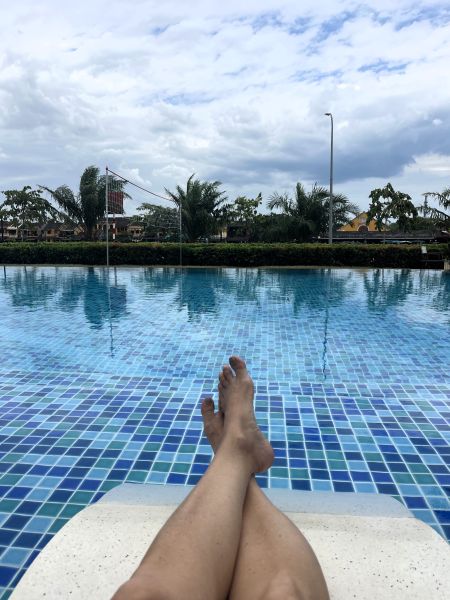
There’s also an incredible breakfast, a riverfront pool, a spa, free bicycles and complimentary guest activities. I was looking forward to the free Vietnamese coffee-making class but waited too long to register. Learn from me and sign up when you arrive or during breakfast.
The small touches were so well done too: a welcome drink when I arrived and a beautiful presentation of fruit, chocolate cake, fresh flowers and a handwritten card in my room. The staff even gave me an extra conical-hat painting kit to take home for my granddaughter. And if you’re wondering about staying here alone, I felt completely safe and comfortable.
Why stay here: Moire gives you river views and quick access to Ancient Town without placing you directly in its busiest evening streets.
Getting from Da Nang Airport to Hoi An
Getting from Da Nang Airport to Hoi An was much easier than I expected. My hotel offered pick up service but I used Grab, which works just like Uber, and the drive took about an hour.
Once you leave the terminal, walk straight outside, cross at the crosswalk and turn left toward the covered Grab pickup area. The signs are good, so you shouldn’t have trouble finding it. Wait until you’re there to request the ride. It will make things easier for both you and the driver.
My ride arrived within five minutes and cost about $13. Payment went through the Grab app, so no cash was needed.
Not comfortable figuring out Grab after a long international flight? Moire offers airport transfers, or you can book a private transfer ahead of time.
Read my guide to using Grab before your trip, or find it in my list of the best travel apps for Southeast Asia.
Arrival Afternoon: Wander Through Ancient Town
Keep your arrival day easy. Check in, freshen up and go get that first look at Ancient Town you’ve been waiting for.
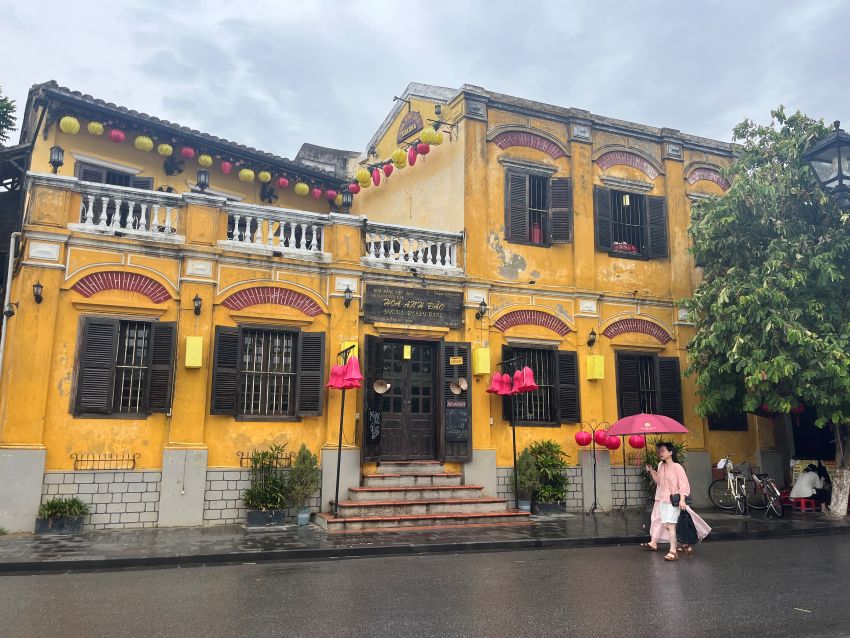
Don’t even bother with a route yet. Cross the bridge and start wandering. Follow the lanterns, peek down the side streets and stop whenever something looks interesting. You can worry about the historic sites tomorrow. For now, just enjoy that wonderful I can’t believe I’m really here feeling.
If jet lag is catching up with you, getting outside can help you stay awake until a reasonable bedtime. My tips for avoiding jet lag explain why I keep arrival days light but active.
Eat at Morning Glory Original
For your first meal, head to Morning Glory Original. Chef Trinh Diem Vy, known as Ms. Vy, created the restaurant to share the home cooking and street foods of Vietnam with visitors.
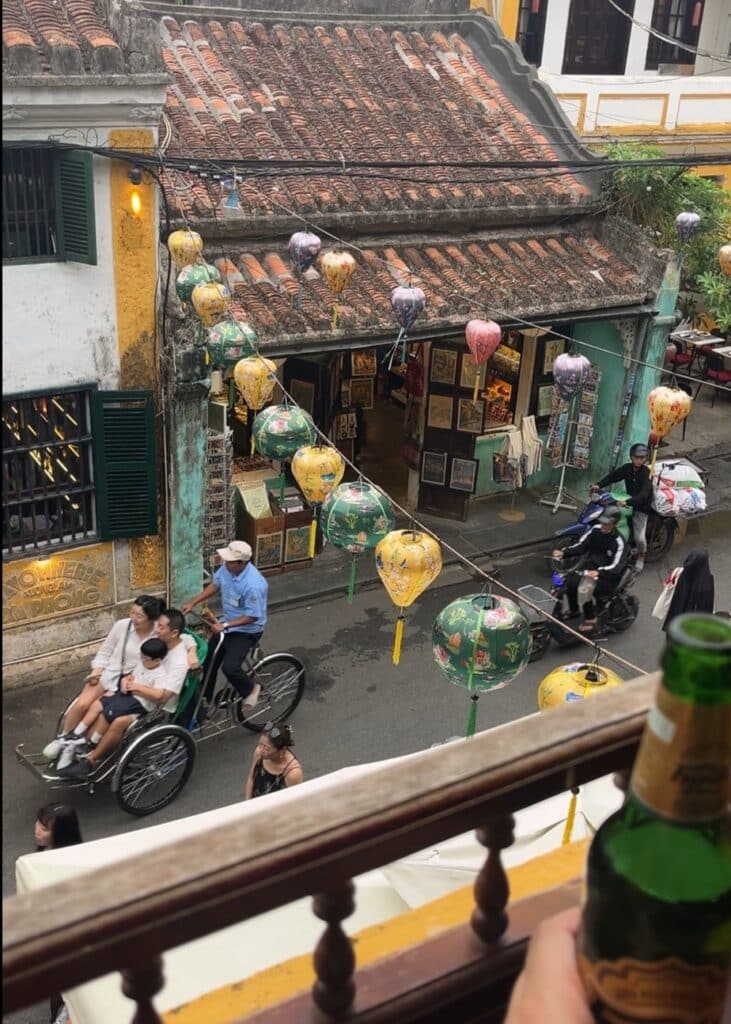
Here’s the important part: ask for a table on the small upstairs balcony. There are only a few, and the staircase is steep and narrow, but sitting above the street with a cold drink is such a great way to begin your time in Hoi An.
If you like fish, order the cá nướng nghệ. It’s cooked inside a banana leaf with glass noodles, mushrooms and turmeric. The banana leaf gives it a slightly smoky flavor, and don’t worry, it isn’t spicy.
My fish and beer cost less than $10, but the best part was simply sitting above the street with a cold drink and nowhere else to be.
Stay for the Lanterns
Try to stay in Ancient Town until dusk. This is when the lanterns begin to glow and Hoi An turns into the place you’ve seen in all those photos.
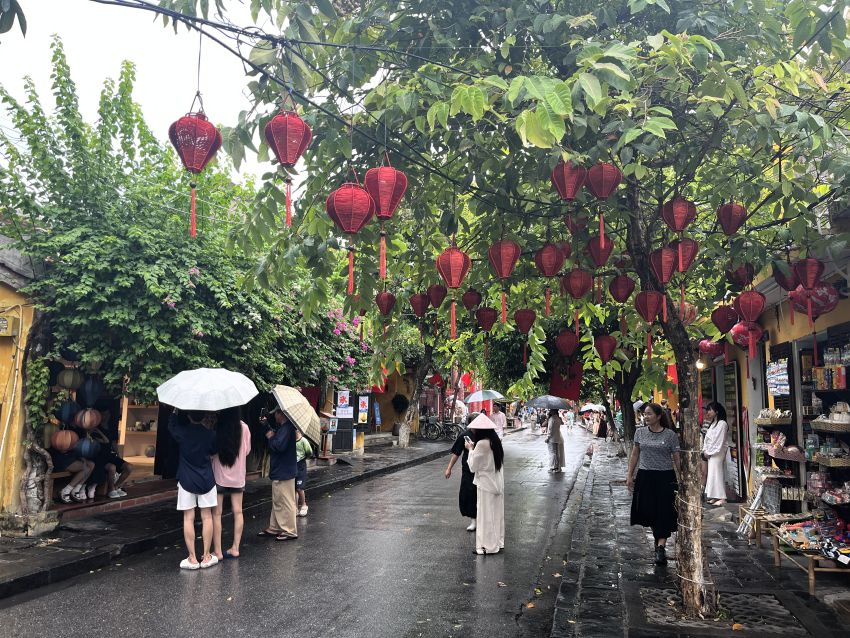
Expect the atmosphere to change too. Crowds grow noticeably around 6 p.m., and the riverfront becomes packed with souvenir stalls, boat tour sellers and social media photo shoots. Many people even rent beautiful traditional áo dài for photo shoots.
You absolutely should see it, but you don’t need to stay in the thick of it all night. Take in the lanterns, then wander back through the quieter streets when you’ve had enough.
Day 1: Ancient Town and a Hoi An Food Tour
Please don’t sleep through the morning in Hoi An. Ancient Town feels completely different before the tour groups and photo shoots take over, and this was the version I loved most.
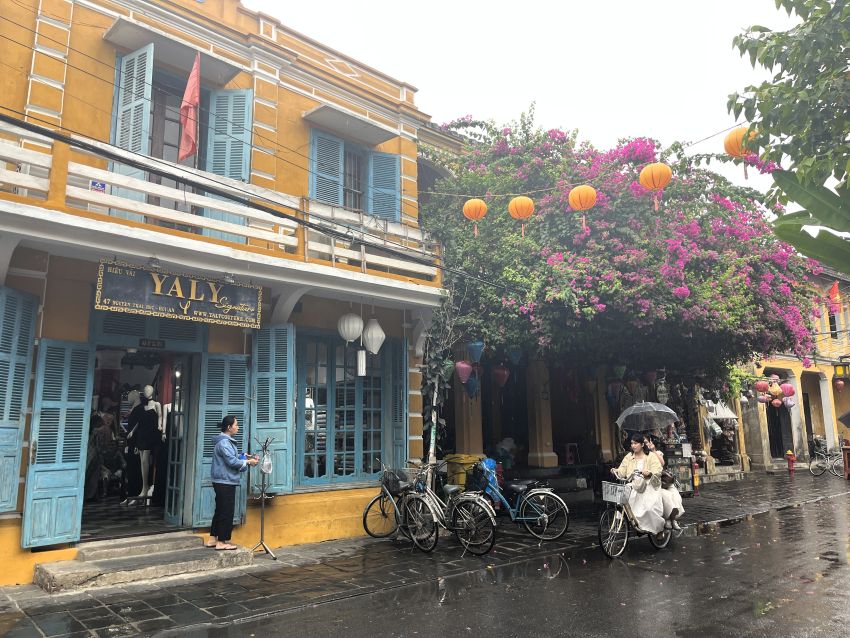
Ancient Town was once a major international trading port. Its Vietnamese, Chinese, Japanese and later European influences remain visible in the wooden homes, temples, assembly halls and original street plan. More than 1,100 historic timber-frame buildings are preserved within this UNESCO World Heritage Site.
You don’t need a rigid walking route. Hoi An is compact and easy to navigate, so follow whichever streets catch your attention and pull up the map when you’re ready to find your way back.
Getting a little lost is part of the fun.
Buy an Ancient Town Ticket
Walking through Ancient Town is free, but many historic houses, temples, assembly halls and museums require a ticket.
Pick up a ticket for 120,000 VND in cash from one of the booths around town. You’ll get a map and entry to five participating attractions. Staff scan the QR code whenever you go inside one.
Ticket tip: You don’t have to select your five attractions in advance. Carry the map and use an admission whenever something interests you.
These are the three I happened to visit as I wandered:
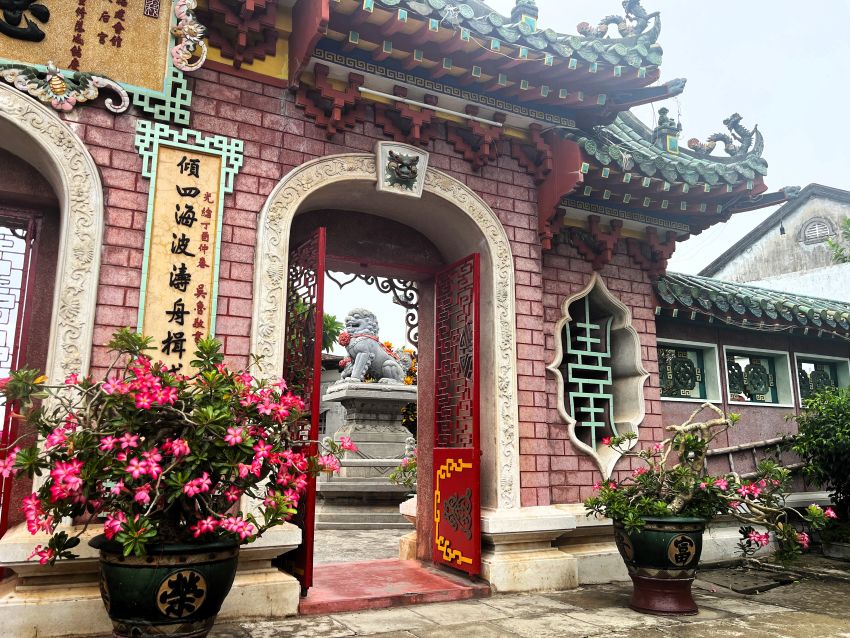
Phuc Kien Assembly Hall: Come for the bright colors and ornate courtyard, then look up at the huge spirals of incense hanging from the ceiling. This was my favorite ticketed stop.
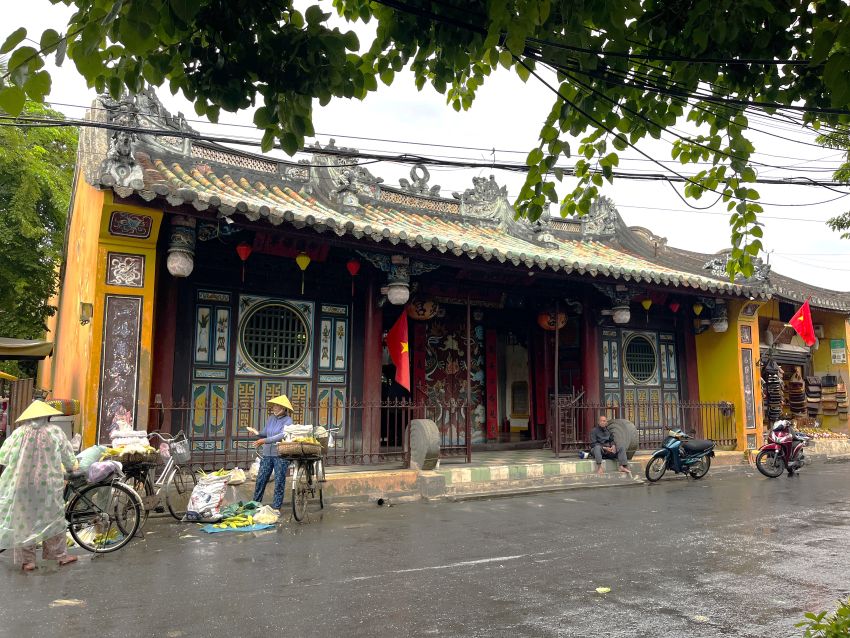
Quan Cong Temple: Conveniently located near Hoi An Central Market and easy to add without changing your route. Inside, deep red walls, gold details and an imposing statue of Quan Cong give the temple a much moodier feel than the colorful Phuc Kien Assembly Hall.
Old House of Tan Ky: One of Hoi An’s best-known historic homes, although the trinket tables inside made it feel less like stepping into the past than expected.
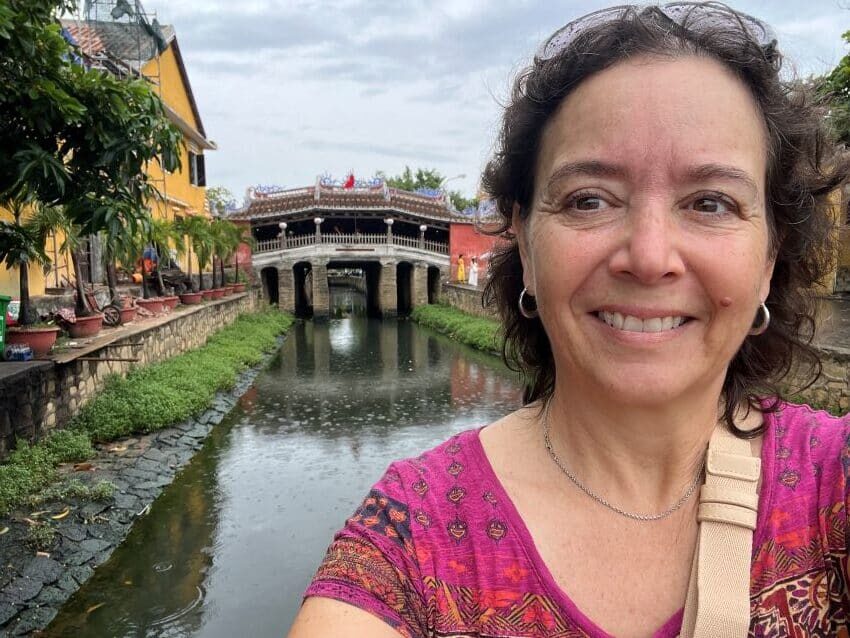
Stop at the Japanese Covered Bridge as you wander. It represents the Japanese merchant community that once lived in Hoi An and the cultural exchange that shaped the town. A small temple is built into the bridge, but seeing the exterior may be enough if other ticketed attractions interest you more.
And about those famous Hoi An tailors: go for it if custom clothing sounds fun to you. It isn’t my thing, so I skipped it without a second thought. I learned a long time ago that you don’t have to do something just because it appears on everyone else’s list.
Rest Before the Evening
Once the heat starts building, have lunch and go back to your hotel for a while. Trust me, this isn’t wasted time. You’ll enjoy the evening so much more after a swim, shower or simply putting your feet up in the air conditioning.
Take the 12 Flavors Food Tour
Now for the experience I would tell you not to miss: book the Hoi An Food Tour: 12 Flavors of a Former Trading Port. It starts at White Rose Restaurant and spends three hours moving through local restaurants, Central Market, family homes and streetside setups with those tiny plastic stools seen throughout Vietnam.
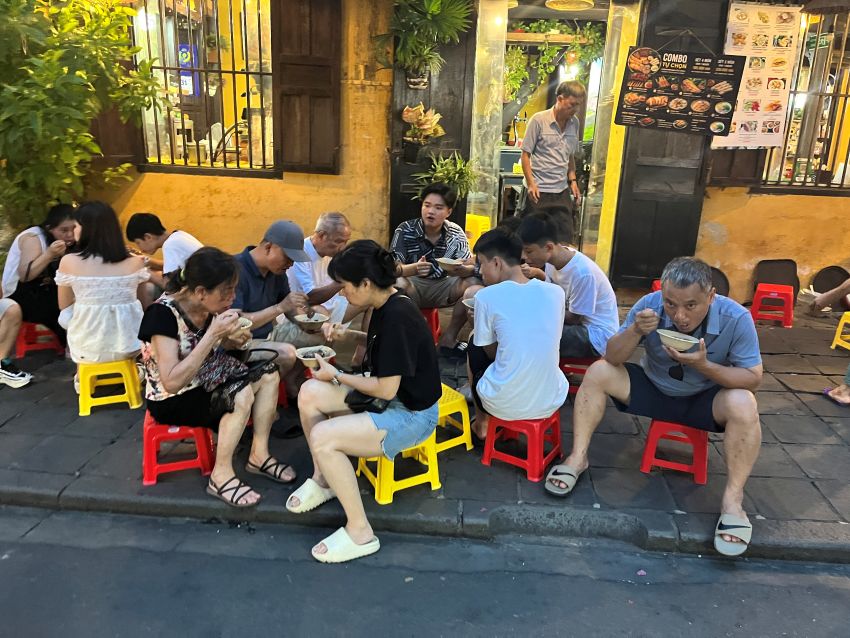
My 4 p.m. tour cost $22 and had only four guests. Every dish was prepared fresh, and the guide explained how Hoi An’s trading history influenced its food.
Come hungry: This is a full dinner and more. The portions were much larger than expected, so don’t make dinner reservations afterward.
What I loved most was that this wasn’t the predictable phở-and-bánh-mì tour. Those foods are delicious, but you already know about them.
Instead, you’ll try regional specialties, dumplings made with different flours, market food and traditional desserts. Several stops were places I never would have found on my own, and that is exactly what I want from a food tour.
What You’ll Eat on the Food Tour
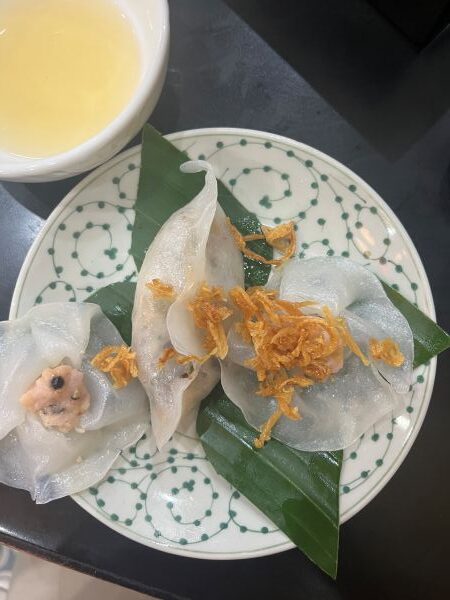
The tour begins with Hoi An’s famous white rose dumplings and fried wontons at White Rose Restaurant. You even watch a demonstration of the whole dumpling making process. It’s all by hand!
From there, you’ll move into the side streets, stopping at simple places with those little plastic stools and trying foods you probably wouldn’t order on your own.
Will you love every single texture? Maybe not. I didn’t. But that’s part of the fun, and you aren’t stuck with an entire plate if something isn’t for you.
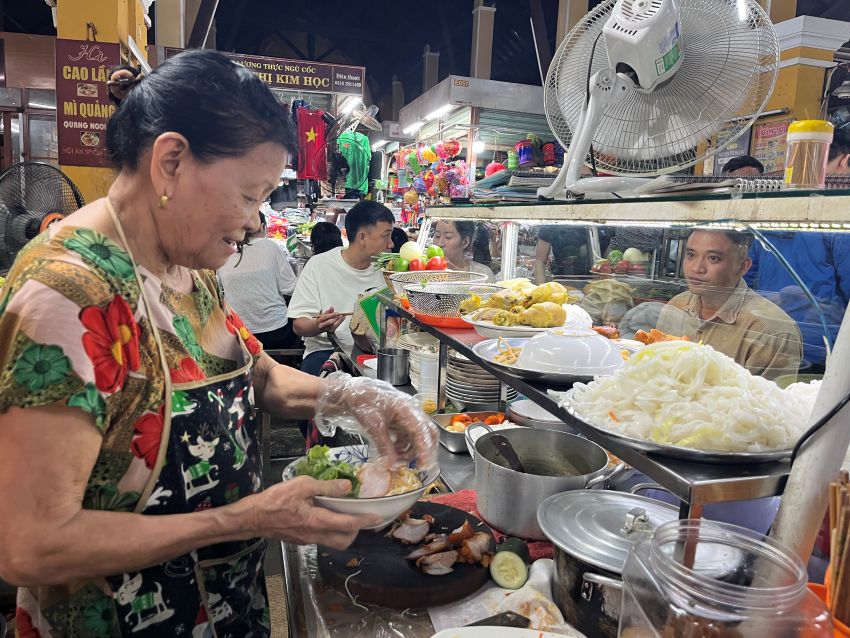
Inside Hoi An Central Market, you’ll also have the deeply flavorful soup at Hai Chien, the same stall Anthony Bourdain once visited. This was my favorite dish of the night!
The most surprising stop comes near the end. Xí mà is a warm black sesame dessert soup served in the courtyard of a family home that has been making it for decades. It’s rich without being overly sweet and unlike the typical desserts most travelers expect.
Not taking the tour? Use one of your Ancient Town admissions to visit the Black Sesame Soup Demonstration and try xí mà. It’s one of the locations you can stop at.
Food tours work especially well for solo travelers. You get company for dinner, a chance to sample several dishes and an easy way to enter places you might otherwise walk past. My tips for eating alone while traveling include more ways to make solo meals enjoyable.
Day 2: Cycle Through Rice Fields or Visit An Bang Beach
Day 2 is when you get out of Ancient Town and see a completely different side of Hoi An. Here’s the choice I’d give you:
Countryside option: Cycle through the rice fields and visit Trà Quế Vegetable Village.
Beach option: Take Grab to An Bang Beach and spend the day by the water.
You can combine them, because I did, but I wouldn’t recommend it. My grand plan was to bike through the rice fields, continue to the beach, and then stop at the vegetable village on the way back. But the heat caught up with me before I made it to Trà Quế vegetable village so I skipped it and headed back.
Option 1: Rice Fields and Trà Quế Vegetable Village
If the rice fields are calling your name, leave around 7 a.m. while traffic is light and the temperature is still manageable. Moire’s bicycles are free and first come, first served, so grab one after breakfast.
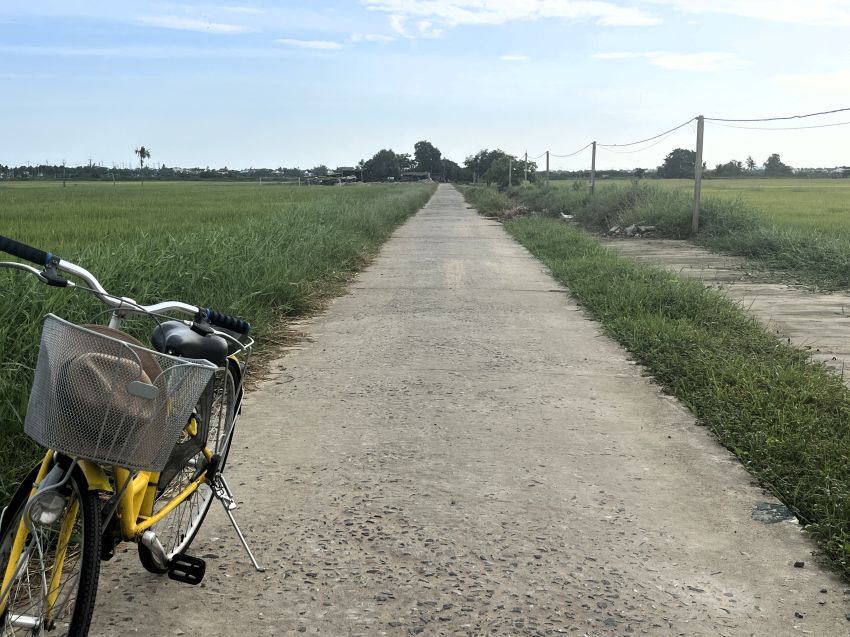
The route is surprisingly straightforward and almost completely flat. Once you reach the main road toward An Bang, look for small paved paths leading into the rice fields. Motorbikes use them, and bicycles can too.
Turn down whichever little path looks interesting. Yes, you really can do that. They wind between the fields, and you may find water buffalo grazing right beside the road like it’s no big deal.
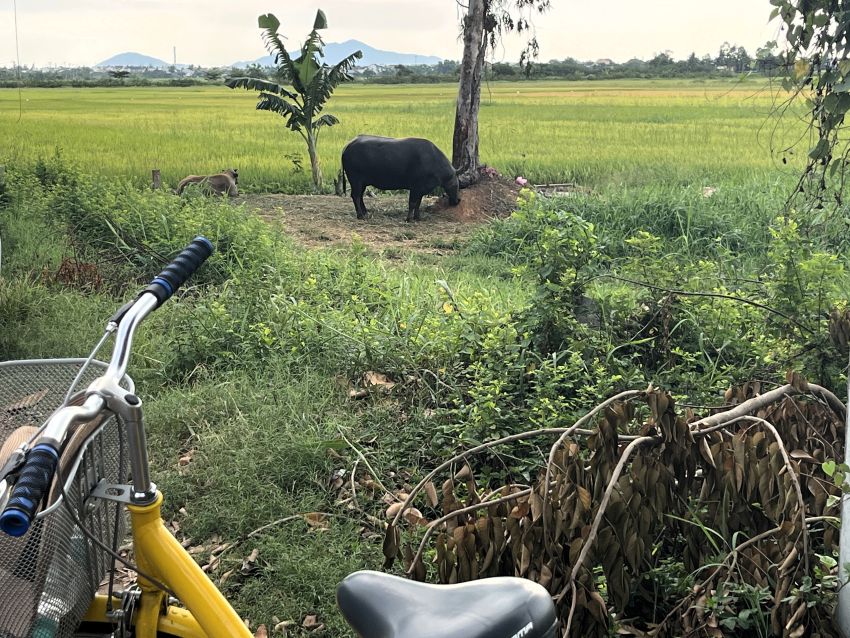
After exploring, use Google Maps to find the vegetable village. A large roadside sign points toward Trà Quế Vegetable Village, where you can see the farming methods behind many of Hoi An’s fresh herbs and vegetables.
I regularly cycle at home and felt comfortable riding alone. Traffic was quiet on the way out but considerably busier near Hoi An on the return.
Choose a guided tour if: You don’t ride regularly, haven’t experienced Vietnam’s motorbike traffic or want someone to explain what you’re seeing. A small-group countryside tour adds context while removing the stress of navigating alone.
Option 2: Spend the Morning at An Bang Beach
If the beach sounds more like your kind of day, take Grab to An Bang and save your energy for the water, a long lunch and stroll through the side streets.
The beach is free, with palm trees along the sand and mountains visible in the distance. Rent a lounger and umbrella or set yourself up on the sand.

If you arrive by bicycle, a covered parking area near the entrance charges 20,000 VND. Just remember, riding the bike there also means riding the bike back.
Don’t spend the whole time around the busy entrance though. Wander down one of the small paved paths leading toward the water and see what you find.
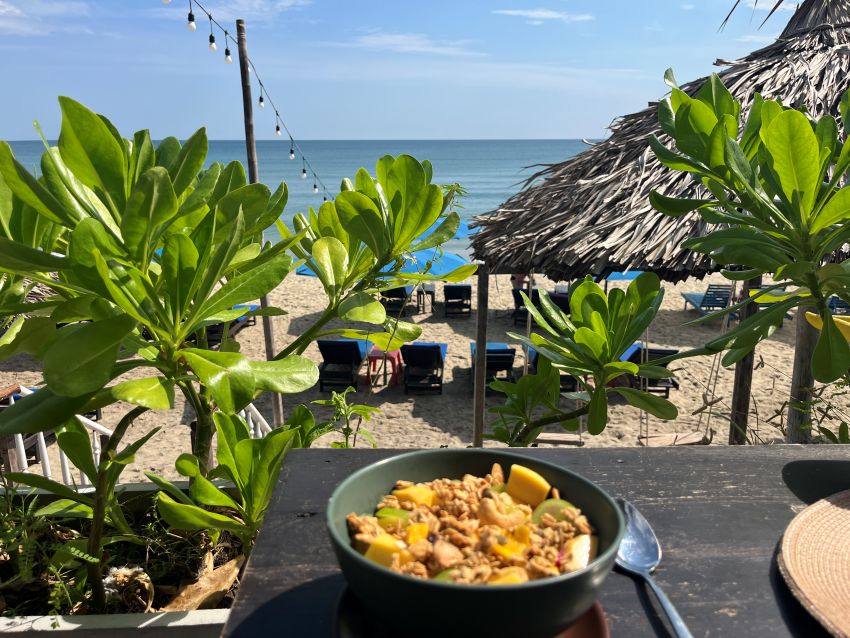
I stumbled upon Phuong’s Cafe, which sits right beside the beach and has amazing views. My smoothie bowl with granola and fresh fruit cost 80,000 VND and was a perfect pick-me-up.
My Recommendation:
Cycle to the rice fields and Trà Quế, or take Grab for a proper beach visit. Trying to do all three by bicycle became too much once the sun and heat intensified.
If you do cycle, bring water and plenty of sunscreen. These small silicone travel containers make it easy to carry sunscreen in a day bag or bicycle basket.
Day 3: Hoi An Market and Marble Mountains
This route works especially well if you’re taking the Heritage Train from Da Nang to Hue like I did. Marble Mountains lies between Hoi An and Da Nang Railway Station, so a private driver can wait with your luggage while you explore and then continue to the station.
If I wasn’t heading to the train station, I would have just booked this day tour from Hoi An to Marble Mountain which includes more time at Marble Mountain than other tours.
Start at Hoi An Central Market
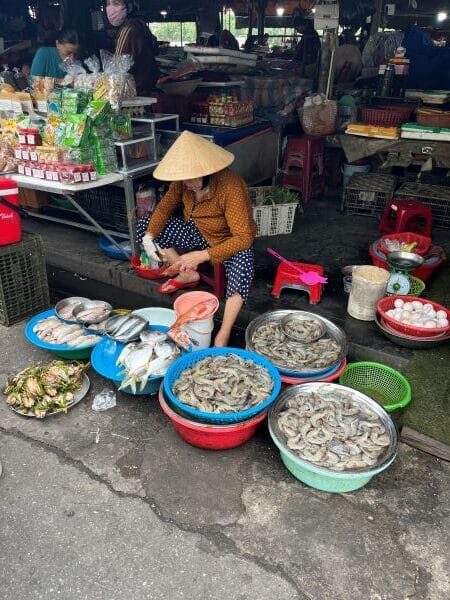
Start the day with a quick walk through Hoi An Central Market after breakfast. Morning is when you’ll see fish, meat, poultry, fruit and vegetable sellers busy with local customers.
The narrow street is crazy busy with shoppers, bicycles and scooters, yet everyone somehow keeps moving. Stand off to the side for a minute and take it all in. This is everyday Hoi An, and it is so much more exciting than another souvenir stall.
You don’t need long. Allow about an hour to walk there, explore and return to your hotel.
Head to Marble Mountains
With luggage in tow, a private driver makes this incredibly easy. Moire arranged a hotel vehicle and driver for less than $30 during my stay.
The driver kept the suitcase in the vehicle, walked me to the Marble Mountains ticket booth, showed me an easy meeting place after I was done, and then drove me to the Danang train station. Again, I loved the bougie feeling.
Allow Three Hours for Marble Mountains
Marble Mountains is a cluster of limestone and marble hills filled with caves, temples, pagodas and viewpoints. It’s definitely one of the best things to see while visiting Hoi An.
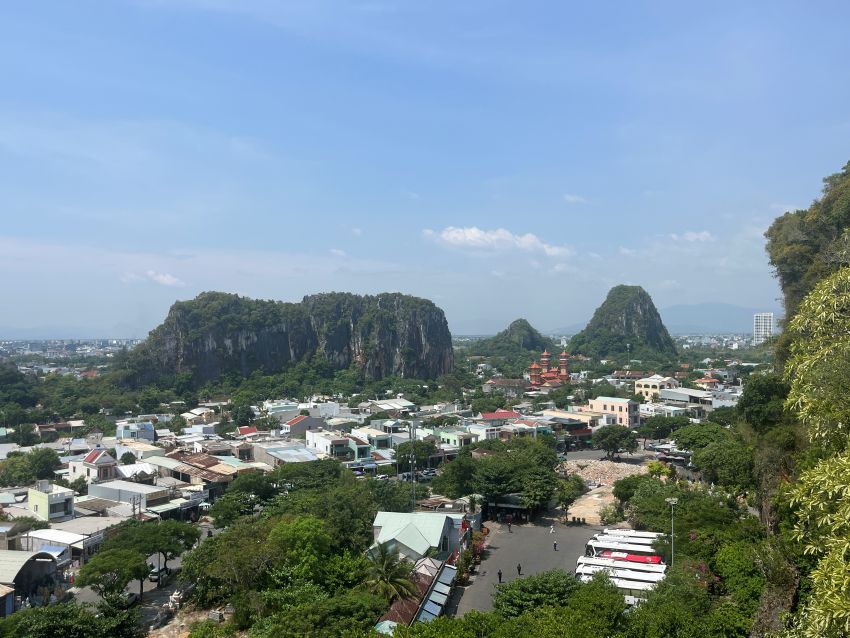
Rainwater naturally formed the caves by slowly dissolving the limestone. Many later became places of worship, which is why Buddhist and Hindu shrines appear inside them.
Admission cost 40,000 VND, and the elevator was an additional 15,000 VND each way.
I used the elevator both ways but don’t be fooled. There are still tons of steps when you get off.
Don’t worry about checking off every cave and temple here either. Just start walking. Around almost every corner, another staircase leads to a shrine, pagoda or opening in the rock. There is so much packed into one place.
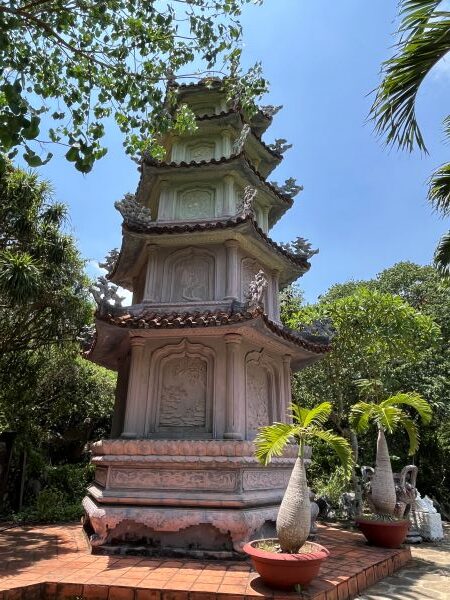
The one place I do think you should look for is Huyền Không Cave. Natural openings in the ceiling can send dramatic shafts of sunlight into the enormous cavern. The sunbeams depend on timing and conditions, but the cave and seated Buddha are impressive even without them.
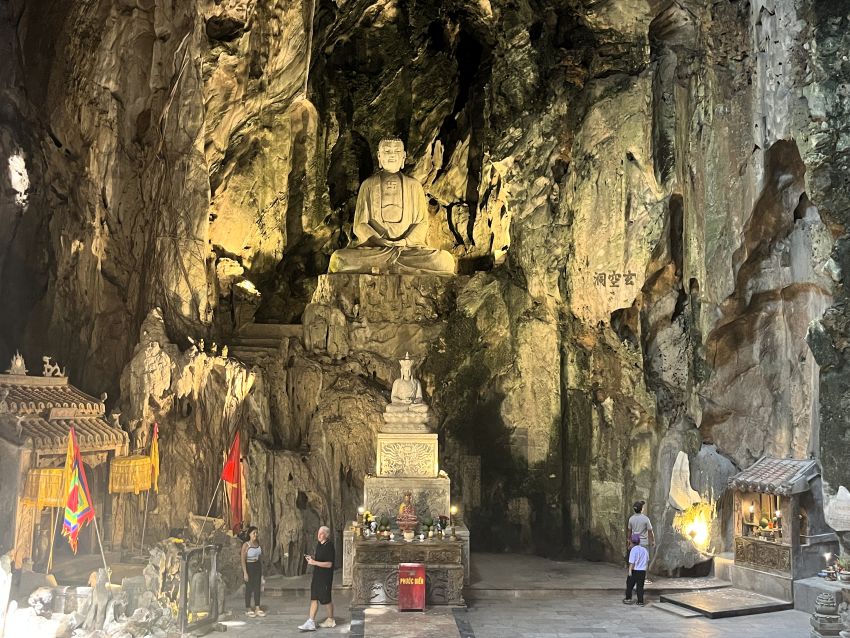
Two and a half hours is enough if your schedule is tight. Three hours gives you time to explore without rushing.
Wear supportive shoes: stone steps and uneven surfaces make grip and stability important. Brooks trainers worked well for me. Choose hiking sandals if you prefer sandals, not a flat everyday pair.
From Marble Mountains, I continued to Da Nang Railway Station. Arriving around 2 p.m. left plenty of time before the 3:20 p.m. heritage train to Hue.
Check availability for a small group tour to Marble Mountains.
One Side of Hoi An Most Visitors May Miss
One last thing, because I wish someone had told me this: don’t assume everything worth seeing is on the Ancient Town side of the river.
Along the river, across from Ancient Town and near Moire, simple local restaurants set plastic tables and chairs beside the water while fish and chicken cook over open grills. You can watch the illuminated boats without standing in the middle of the busiest part of the waterfront. It looked like exactly the kind of place I would have loved.
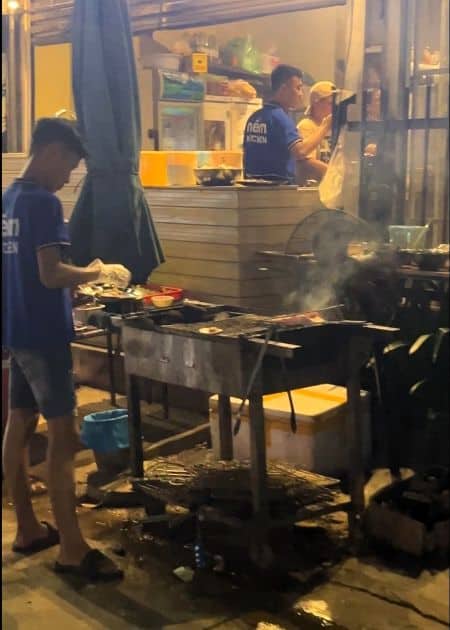
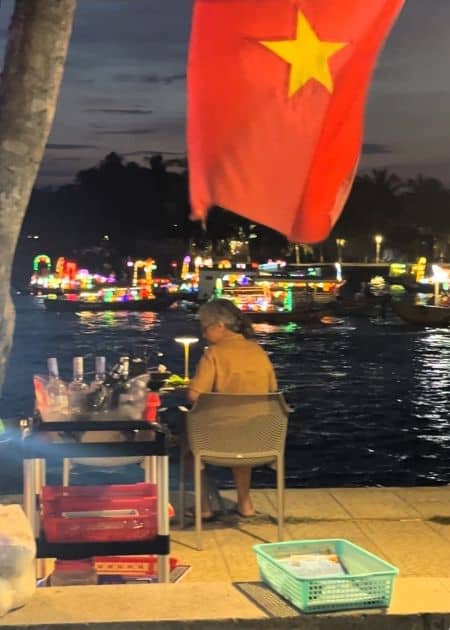
I discovered this area after already eating dinner on my final night and immediately wished I had found it sooner.
Add this to your itinerary: Spend one evening walking along the river on the side opposite Ancient Town. Follow the smell of the grills and choose whichever local place looks busy.
Practical Tips for Visiting Hoi An
Carry cash. Cash was accepted everywhere, while some businesses wanted to add almost five percent for card payments.
Explore early. Ancient Town is quieter and cooler before the crowds arrive.
Rest in the afternoon. The heat can be intense. Save your energy for the evening.
Look for WC signs. Public toilets are easy to find near the main attractions.
Pack a few wipes. They’re useful in public toilets and for a quick freshen-up. These are the wipes I always carry with me.
Leave room to wander. You don’t need to plan every street or meal.

Is Hoi An Safe for Solo Female Travelers?
Hoi An felt safe throughout my visit, including at night and while cycling through the countryside alone.
Traffic can be intense at times. Motorbikes, bicycles, cars and pedestrians often share narrow spaces. Use Grab or join a guided cycling tour if you aren’t comfortable moving with the traffic.
Staying within walking distance of Ancient Town also makes evenings easier. You can enjoy dinner and the lanterns, then return to your hotel without arranging a late ride.
If you’re preparing for your first trip alone, my Planning Your First Solo Trip guide will help you work through the details.
Is Hoi An Too Touristy?
I’m not going to lie and say Hoi An isn’t touristy. It is. Especially along the riverfront after dark. But that shouldn’t stop you from going.
Go early enough to hear the streets before the crowds take over. Cycle beyond the historic center. Eat something you can’t pronounce while sitting on a tiny stool. Wander down the path that looks interesting. That is where the good stuff is.
Continuing Through Vietnam?
Read my guides to the best things to see in Hue, spending two days in Ninh Binh and three days in Hanoi.
How Many Days in Hoi An Is Enough?
For most first-time visitors, three days in Hoi An is enough.
You can see Ancient Town during its quiet mornings and lantern-lit evenings, taste dishes specific to the former trading port, cycle into the countryside and choose between the beach or vegetable village. Marble Mountains fits naturally into the final day if you’re continuing through Da Nang.
Stay four or five days if you want to add My Son Sanctuary, a cooking class, custom clothing, a full beach day or more time beside the pool.
Three days gives Hoi An enough time to become more than a pretty nighttime stop. You’ll see the lanterns, of course, but it’s the quiet mornings, incredible food and green countryside that make me want to come back.